
DIY stick clip: avy probe + Super Clip
Avalanche probes aren’t just for winter. Here's how you can make a low cost, compact, and lightweight stick clip for rock climbing from an avy probe.

This article may contain affiliate links to HowNOT2. If you purchase through them, Alpinesavvy may earn a small commission at no extra cost to you. Your support helps me improve this website, the world’s largest collection of climbing tips.
I learned this #CraftyRopeTrick from Brent Barghahn, founder of Avant Climbing Innovations. Connect with Brent on Instagram, @avant_climbing_innovations. He said he learned it from Wilson Cutbirth @wilstone8. Thanks to both for this clever idea.
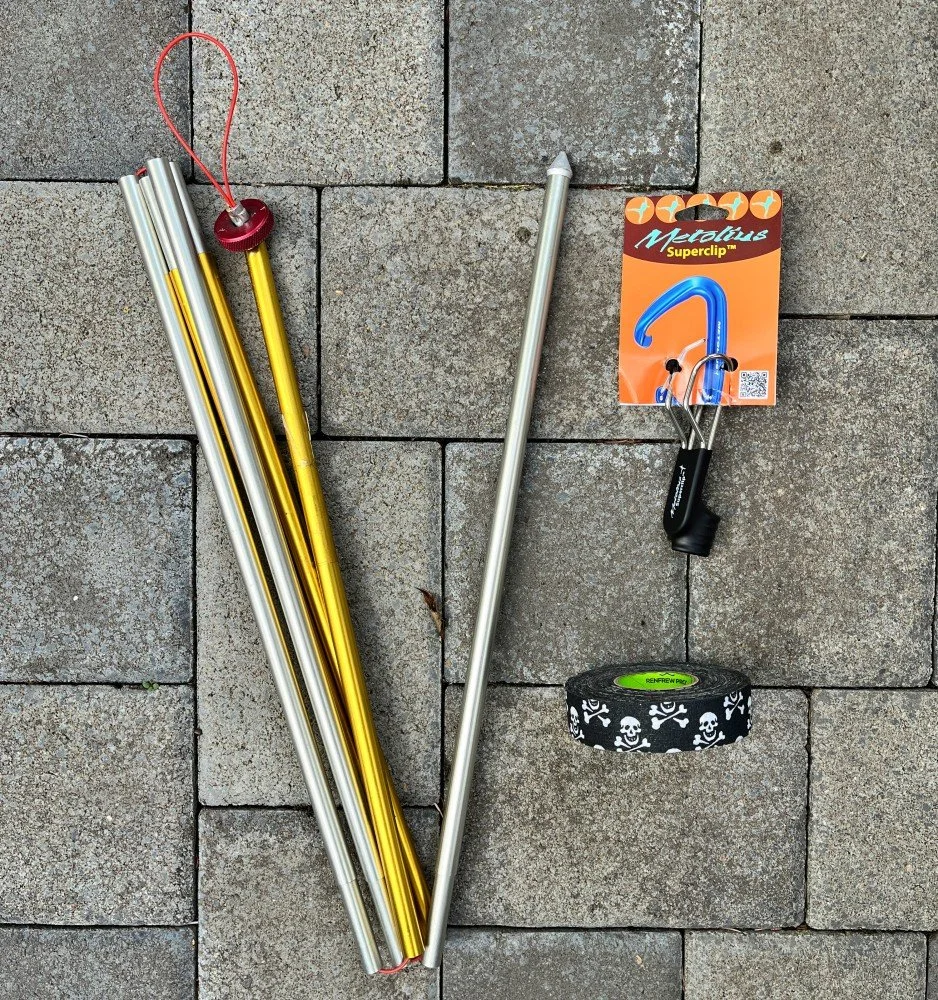
Here's how to make a low(ish) cost stick clip that’s lightweight, compact, and works great.
Yeah, I know, stick clips are for weenies who can't climb the route “for real”. I guess that's me. Stick clips are also for people who value minimizing risk and maximizing fun. Cool, that's me too! =^)
This version is fairly small and should easily fit in your pack. It’s an option for big wall climbers who may occasionally need a “cheater” stick, but don't wanna bring a giant extendable pole.
It doesn't need to be a fancy carbon fiber probe; plain aluminum works fine. It's probably gonna get beat up a bit, so don't plan on using this for ski touring. I bought a used avy probe on Facebook marketplace for $20.
Avalanche probes vary in length. Get the longest, around 320 cm (125 inches).
(The cheapo probe I got is a standard 240 cm / 96 inches model for more recreational use. I wish it was longer, especially for some of those really high first bolts where I usually climb at Smith Rock.)
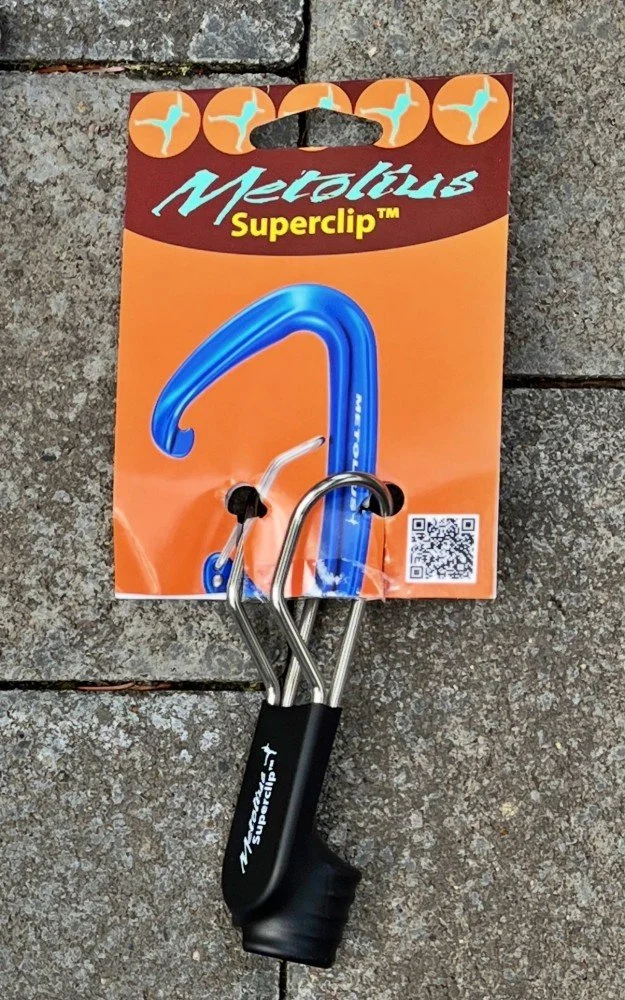
Along with the probe, you'll need a Metolius Superclip. (And some tape.)
The Superclip is a device threads onto the top of a painter’s pole. It holds the top carabiner of a quickdraw open, so you can reach up and clip the first bolt.
Cost:
$20 for a used avy probe, and $25 for the Superclip, $45 total
Compare that to around $100 for a designated stick clip
To attach the Superclip to your probe, take some good quality tape (I’m using hockey tape: sticky, grippy, and comes on cool patterns like pirate =^), and put a few wraps around the end of the probe. Once you get enough tape on the probe, push / screw on the Super Clip.
To be sure it stays in place, put on an extra wrap to two of tape around the clip.
Now, go enjoy your sport climb, with no chance of a grounder before you reach that first bolt!
If you use a stick clip a lot, and you have a fairly short walk to your local cliff, then using the standard extendable painter’s pole will probably be more durable over time.
But, if you want a lower cost DIY option, that you might use more occasionally, or for a longer approach hike where weight is an issue, or maybe on a big wall, consider the avalanche probe version.
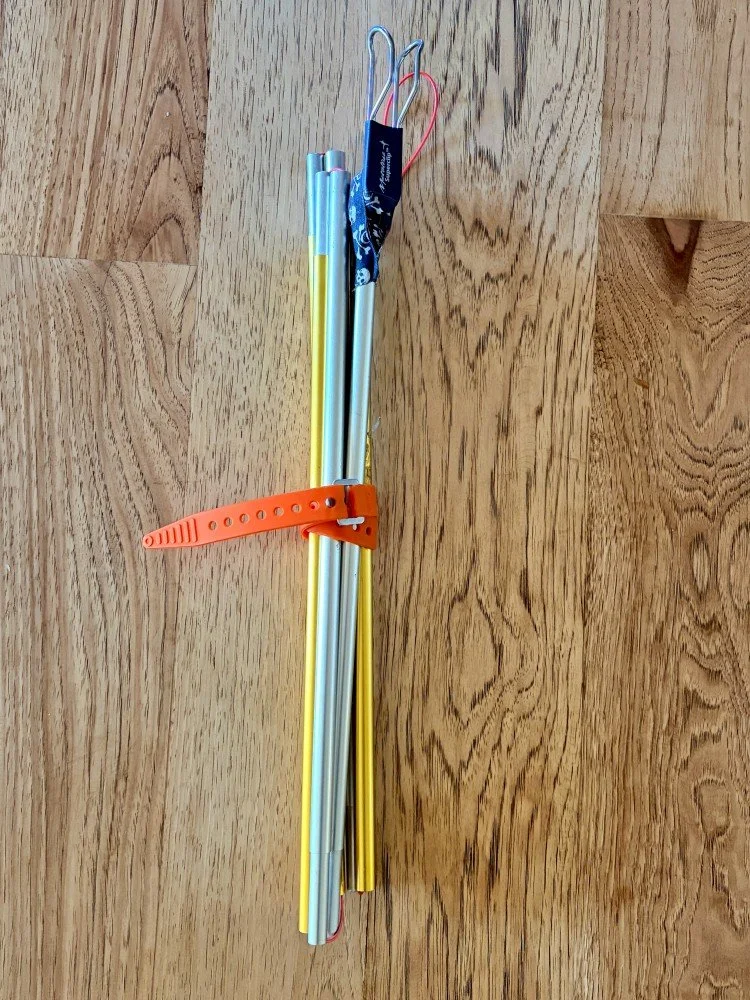
Here's what it looks like assembled. I put a ski strap around it so it behaves in my backpack.
The “reverse stack pull down” rappel
The “reverse stack pull down” rappel is a long name for a simple idea. While this breaks a cardinal rule of rappelling, it’s a great trick in the right situation. Learn about it here.
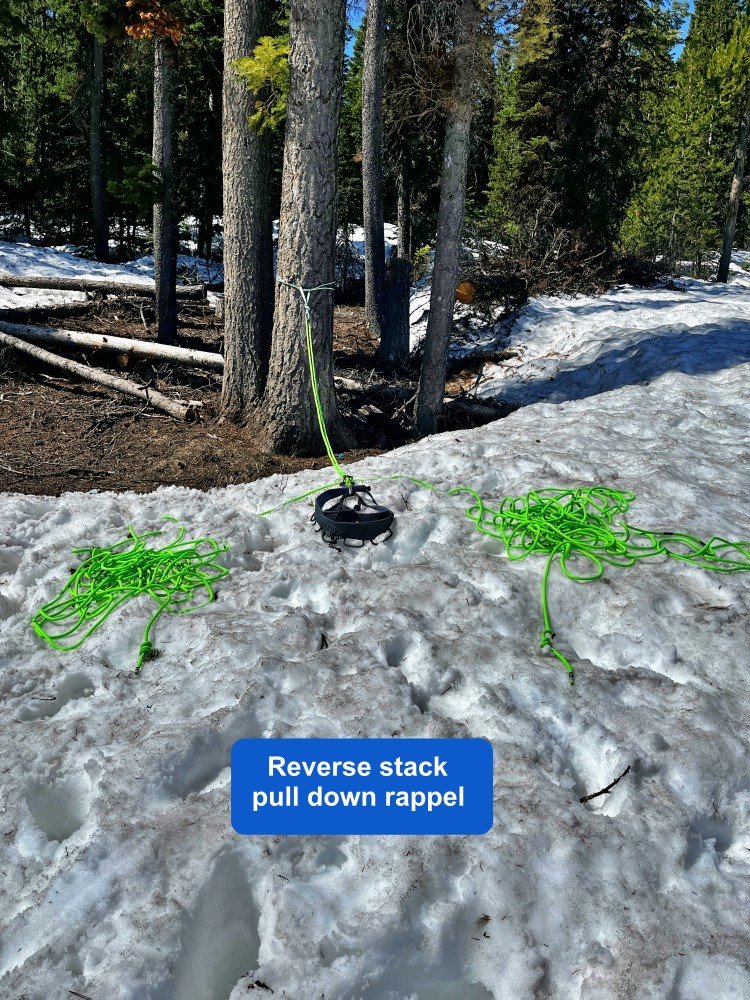
You don't always have to throw your rappel ropes down.
With the “reverse stack pull down”, you keep the ends at the top and pull them down with you as you descend.
Scenario:
You need to rappel down a low angle rock slab or fairly steep snowfield.
Maybe you have a double rope rappel. Making two separate tosses of 60 meters each will be a hassle, because the terrain below you isn’t steep enough to make a clean rope throw.
Might be time for the reverse stack pull down method; a fancy name for a simple idea.
Flake each half of the rope into two separate stacks, starting with the ends of the rope on the bottom. (That's the “reverse stack” part; typically, you flake the rope so the ends are on the top.)
Tie a stopper knot in each end to close the system.
Try to keep the rope piles well separated from each other so there's no chance they can tangle together.
Start rappelling, and the ropes are “pulled down” as you go.
This is breaking one of the main rules of rappelling, which is never descend past the ends of the rope. That way if the rope end is snagged on anything, you can detangle it on your way down.
You can break this rule in this situation because you have a smooth rock slab or a snowfield. This means there aren’t any terrain features that could grab your rope above you, or loose rock that you could pull down on top of you.
I’ve used this on a few high angle snow rappels, and it works great!
Keep it in your toolbox of #CraftyRopeTricks to break out in the right situation.
Here’s a nice Instagram video from IFMGA Certified Guide Dale Remsberg showing how it's done.
https://www.instagram.com/reel/DGncVxtuKNa/?igsh=ZTB5bnR5eGVhYW15

Rappelling with a (slightly) damaged rope
Did your rope get whacked by a rock and suffer minor damage to the sheath, but the core is still intact? You can probably (repeat, probably!) safely rappel on that.
If your rope sheath is slightly damaged, AND the core is intact, you might be able to safely rappel.
If you rappel carefully without jumping around too much, you're not gonna put much more than about half your body weight on one strand of the rope. The core of the rope is where the real strength is, so if that’s still intact, you're probably in good shape.
If the core is still in good condition, you can wrap some tape tightly around the damaged sheath. This helps hold the sheath together and keeps the core from being further damaged. Use a small amount of tape so the rope can more easily feed through your rappel device.
However, if the core itself is damaged, even a little, you might need to resort to more advanced rappel shenanigans, like tying off the damaged part of the rope in a knot (see below) using the damaged side as a pull cord, knot blocks, passing knots if it’s a single strand, etc.
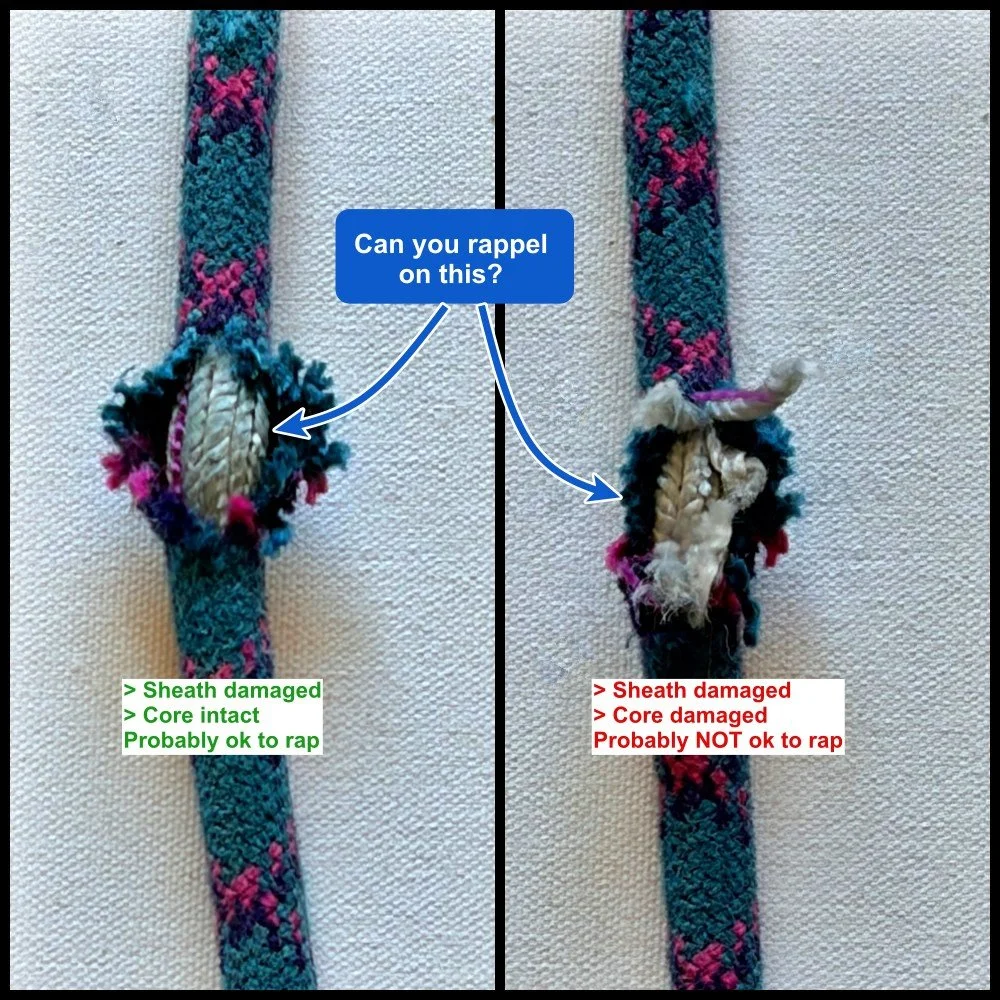
Do you have a damaged rope? Here are some options.
Is the damage near one end? Consider cutting the rope and losing a few meters, provided you can still reach the next rappel anchor.
Is the damage in the middle? Consider cutting out the whacked part of the rope and tying the two ends together. (Yes, this complicates leading, but still allows you to rappel.)
If you're concerned about preventing damage to rope in the first place, consider a Unicore rope. Here's a complete article about that.
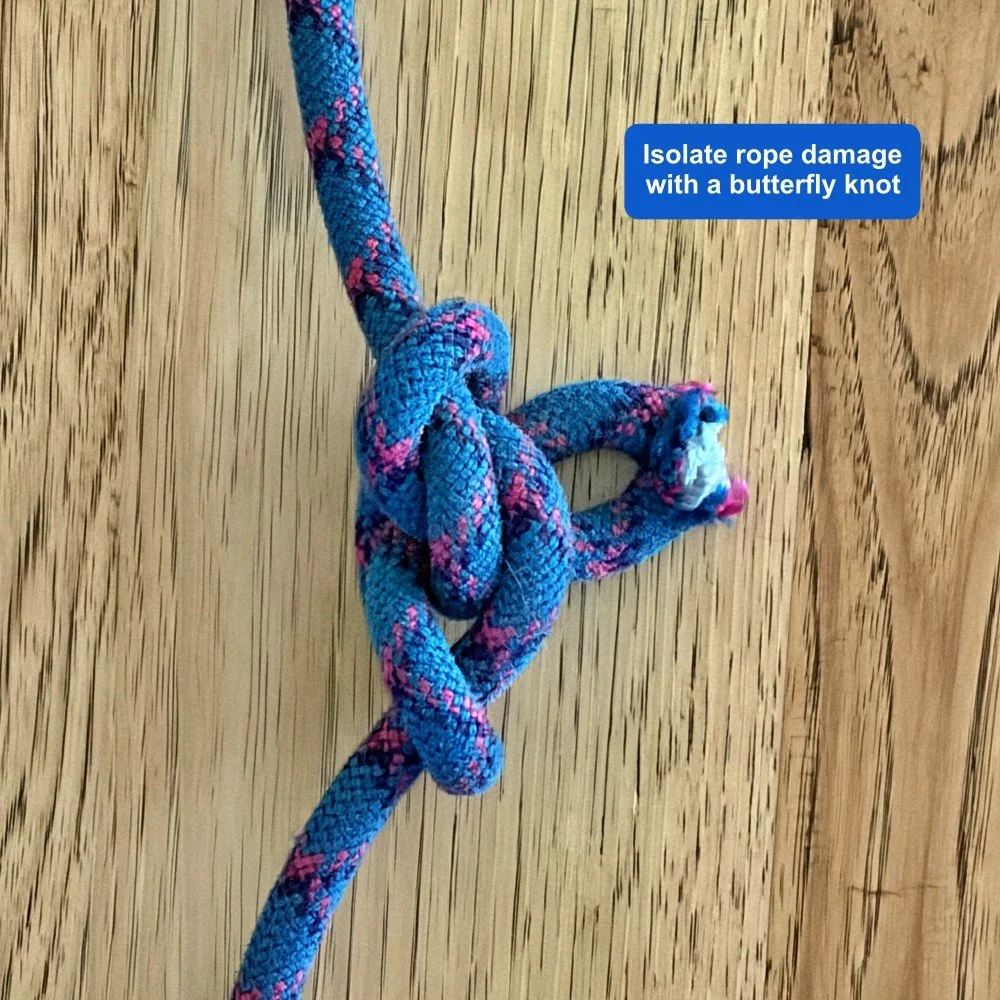
If you do have to isolate a damaged part of the rope, you can tie a bight knot with the damaged part in the loop. The standard knot for this is the butterfly, because it holds well in both directions of pull.
This is a very good time to be conservative. If you have the slightest doubt about the strength of the rope, the best plan is probably to isolate it like in the photo below, and deal with the knot on your way down.
How strong is a slightly damaged rope?
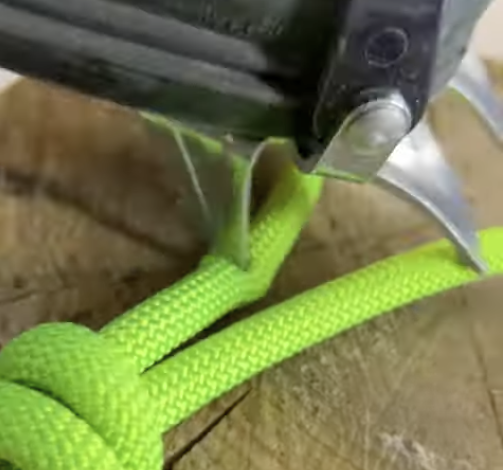
Image: HowNOT2, Youtube, “Crampon vs Rope”
It's hard to answer because there are so many variables, but I think the general answer is: stronger than you think.
Check out this video I made with my friend Ryan Jenks, founder of HowNOT2. Probably everyone who is set foot on a glacier has crampon-spiked a rope at some point. And, we've all probably wondered, does this really hurt the rope?
Even after I spiked the rope with my crampon, AND Ryan hammered multiple nails through the rope, it tested close to full strength!
I also cover this in my series of article called “How Strong Is it?”, you can read that one here. #NoGearFear

Munter hitch brake strand - does it need to be parallel?
Have you ever heard that you need to keep the brake strand of a Munter hitch parallel with the load strand, or else you somehow won't have enough friction and might drop the load? Turns out that's not quite true.
There is a bit of a myth about belaying, lowering, or rappelling with a Munter hitch - “You need to keep the brake strand up and parallel with the load strand all the time.”
Turns out: this isn't really true.
Yes, you do get maximum braking with the brake strand held out in front of you parallel with the load strand.
However, with the brake strand 180° opposite the load strand, friction is reduced by about 25%. In most cases, this is still an adequate amount of friction to control your load.
The hitch doesn't somehow magically fail if you decide to hold your brake strand in a more comfortable position, like down by your hip.
Of course, the amount of friction depends on lots of variables, like the amount of weight you need to hold, shape of your carabiner, rope diameter, age of the rope, etc.
There's a lot of well-meaning instruction I've heard over the years that implies your Munter hitch will somehow malfunction if you don't always hold both rope strands parallel.
That’s not true.
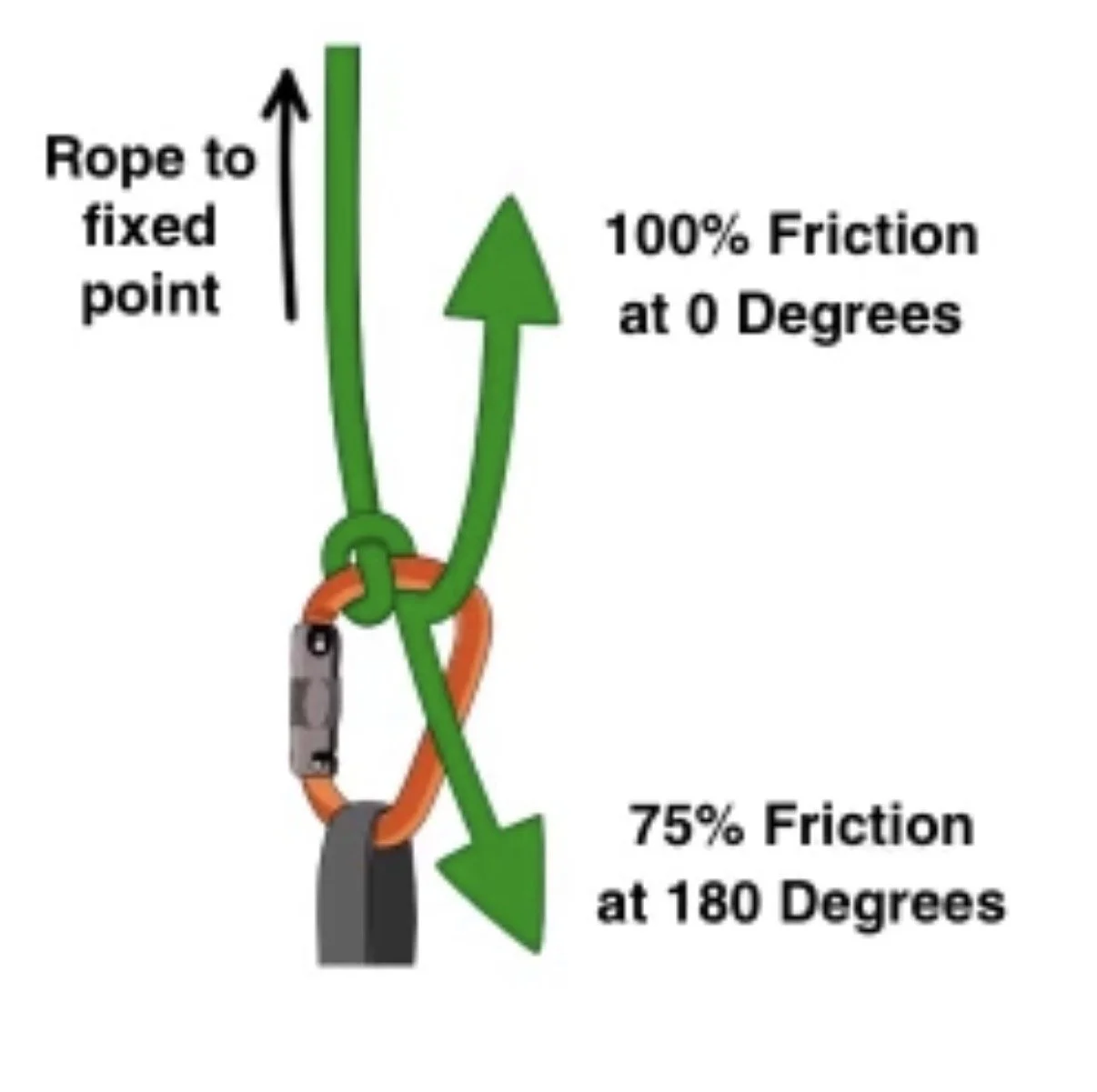
image : https://www.vdiffclimbing.com/ shared with permission

My two pieces of (unconventional) cragging gear
There are a couple of oddball pieces of gear that I bring for a day of casual rock climbing. (Yes, they’re a bit goofy, and I don't really care what other people think about it. =^) Learn about ‘em here.
When I'm headed out for a day of sport climbing at Smith Rock (my local crag) I almost always bring these two (kind of strange) items.
They’re unconventional, but they both make my day a little easier.
Awhile back, I read some snippet of pop psychology that said we achieve greater happiness by eliminating small annoyances than by chasing the next shiny thing. For me, two big annoyances at the crag are repeatedly changing shoes, and rummaging through my pack looking for some item. Here's my way to banish those small bothers.
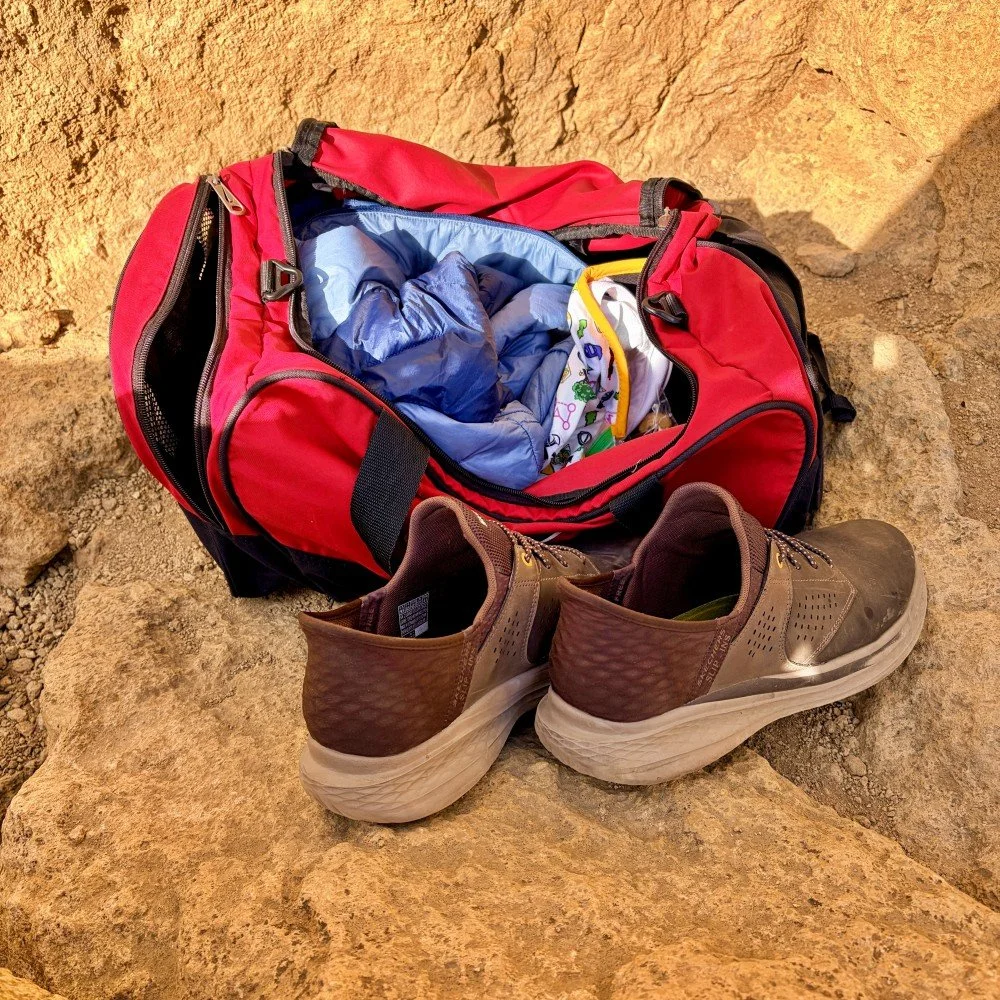
Duffel bag
This is your standard medium size, lightweight gym duffel bag. It rolls up small and goes inside my main backpack when I'm walking to the cliff.
When I get there, I transfer things like clothing, hat(s), sunscreen, dog treats, snacks, water etc. - things I need regular back-and-forth access to during the day.
I find this way more convenient than repeatedly burrowing through my top loader 40 liter pack to find that water bottle that always burrows to the bottom.
Yeah, I know about those cleverly designed crag packs that have a giant U-shaped zipper so you can open it and instantly grab what you want. I don't have one of those. =^)
Slip on shoes
Putting on and taking off lace-up shoes 10 different times over the course of the day is a big drag. With slip on shoes, I can pop off my velcro rock shoes, and instantly step into these barefoot. For taking a longer walk to the next route, I can slip on some running socks. The shoes have good support, and decent grip for walking on trails.
What about other kinds of shoes?
With good trail access I don't need my sticky rubber approach shoes.
I don't like open toed sandals because I constantly get pebbles underfoot, no fun.
Crocs or similar shoes can work, but those are usually too floppy to be much use on the approach and then you end up bringing three pairs of shoes, which seems kind of silly.
This works for me. Your mileage may vary. Yeah, it might look a little goofy, but I've been at this long enough so I don't really care what other people think about my gear choices. =^)

How can you descend a loaded rope?
How can you descend a rope that’s fully weighted? Hopefully a situation you will never encounter, but it's possible in a self rescue scenario. Here's one way to do it.
Note - This post discusses techniques and methods used in vertical rope work. If you do them wrong, you could die. Always practice vertical rope techniques under the supervision of a qualified instructor, and ideally in a progression: from flat ground, to staircase, to vertical close to the ground before you ever try them in a real climbing situation.
Rare situation, but possible: you need to descend a loaded rope.
Maybe your partner rappelled first, got stuck or incapacitated, and you need to go down and sort it out. The problem is, because the rope is loaded, you can’t install your typical rappel device.
Here is one way to do it, using gear that you probably already have with you and without tying any exotic knots.
Put two friction hitch loops onto the loaded rope. (This can be a short hitch cord attached to a 60 cm sling, or as shown below, a single 60 cm sling, probably tied with a Klemheist friction hitch.)
Clip the top friction hitch/sling to your belay loop with a locker. (If you have an adjustable tether of some kind, use that in place of the 60 cm sling for better adjustment.) Depending how tall you are, you may need to adjust the length of this connection.
Girth hitch a 60 cm sling to your belay loop. Clip this to the bottom friction hitch with a locker.
Clip a third 60 cm sling to the locker on the bottom friction hitch. This will be your foot loop. You can tie a clove hitch or a girth hitch in the sling to secure it around your foot.
Remember the primary rule of rope ascending, which in this case is rope descending: you always have two separate connections to the rope.
Now, it's time to inchworm your way down the rope. Load the top friction hitch. Slide the bottom friction hitch down. Step in the foot loop, which should give you slack on your top friction hitch. Release this top hitch and slide it down. Load the top friction hitch, and repeat. It’s slow, but relatively low risk.
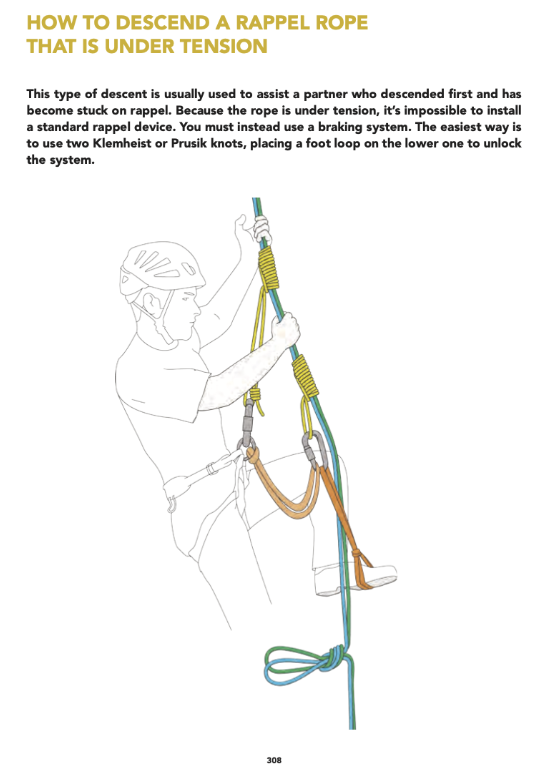
image: UIAA Alpine Summer Skills Handbook
There is one more method I know of to actually rappel on a loaded rope. It was shared with me by an IFMGA guide, who learned it at ENSA (the French National Mountain Guide School).
It involves putting a locking carabiner on each strand, passing one carabiner through the other, and then rappelling on that.
In my brief experimenting with this, it seems quite easy to lose tension on the whole system, and have a rather dramatic failure. For that reason, I'm not gonna teach that.
If you're curious, ask a French guide. =^)

Secure a water bottle to your harness
Here's a simple and unconventional way to securely attach a small water bottle to your harness.
This tip is from the excellent book “Alpine Rock Climbing Handbook” by Austrian Guide Jürgen Reinmüller. Connect with Juergen on Instagram, @alpinstil.at, and get his book here (printed version in German, eBook in English).
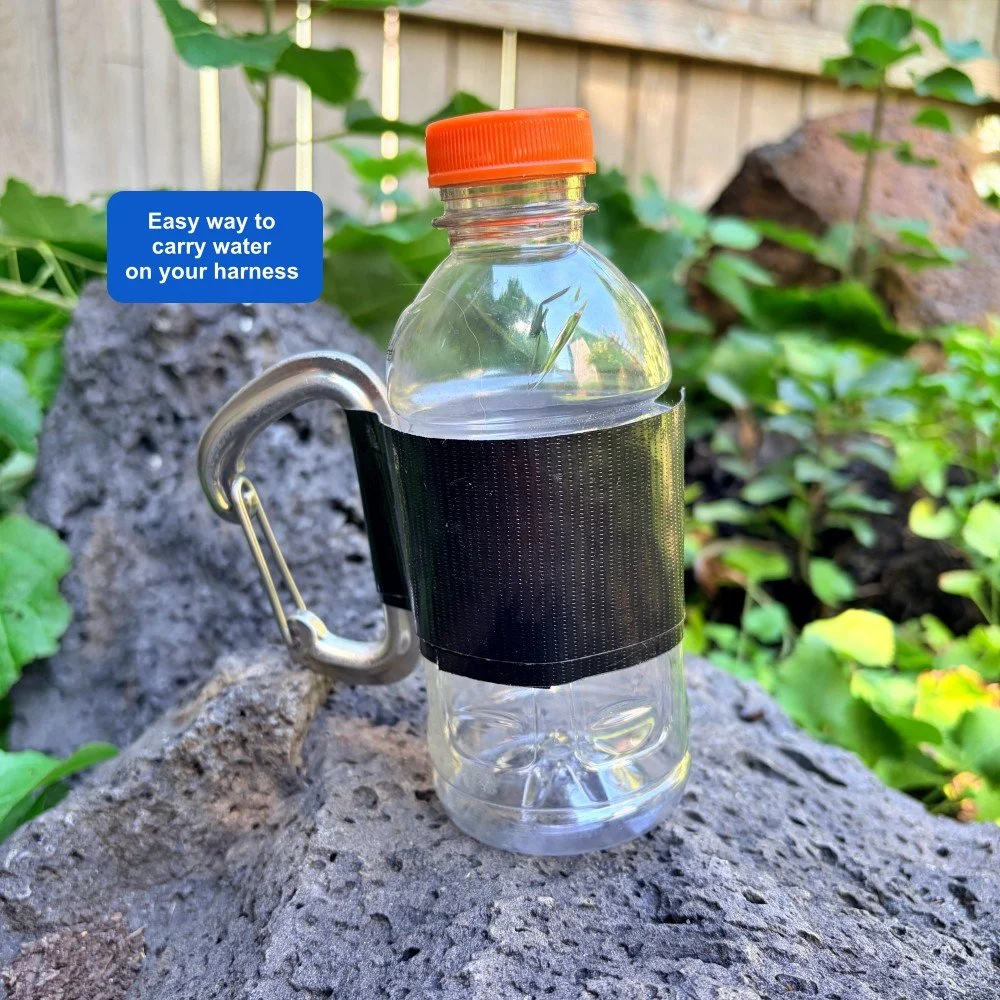
Here’s an easy way to carry a small water bottle on your harness.
Clipping a water bottle to your harness? You need to be SURE it's firmly attached. If it's held on by some skimpy cord or plastic tab, and it comes loose, you create a big potential hazard for anybody below you.
If you have a small bottle (like my favorite, a 12 ounce / 350 ml Gatorade bottle) you can rig it as shown here.
Take some good quality tape (like Gorilla tape, not the cheapo gray duct tape) a small carabiner, and tape it as shown. This keeps your bottle secure to your harness without bouncing around or dangling too far down.
If you have a large bottle (like more than 500 ml), put it in your pack. For most people, that's too much weight to have clanking around on your harness, in addition to the obvious dropping hazard.
Notes . . .
The cap isn’t attached to anything. If you're worried about dropping it, bring an extra cap.
Remove any label on the bottle so the tape sticks better.
If you're on a longer route on a warmer day, bring a second larger bottle in the backpack and refill this one as needed.
Feel free to add any sort of electrolyte mix you like. If it gets smelly, you can recycle the bottle and start with a new one.
Not a fan of plastic water bottles? Use the same technique on a small-ish metal bottle.
While some people think they’re great, I am generally not a fan of “hydration systems” with a pouch and a hose. Here's an article all about that.
Managing and carrying water on a big wall is a bit more involved. Here's my article on that.
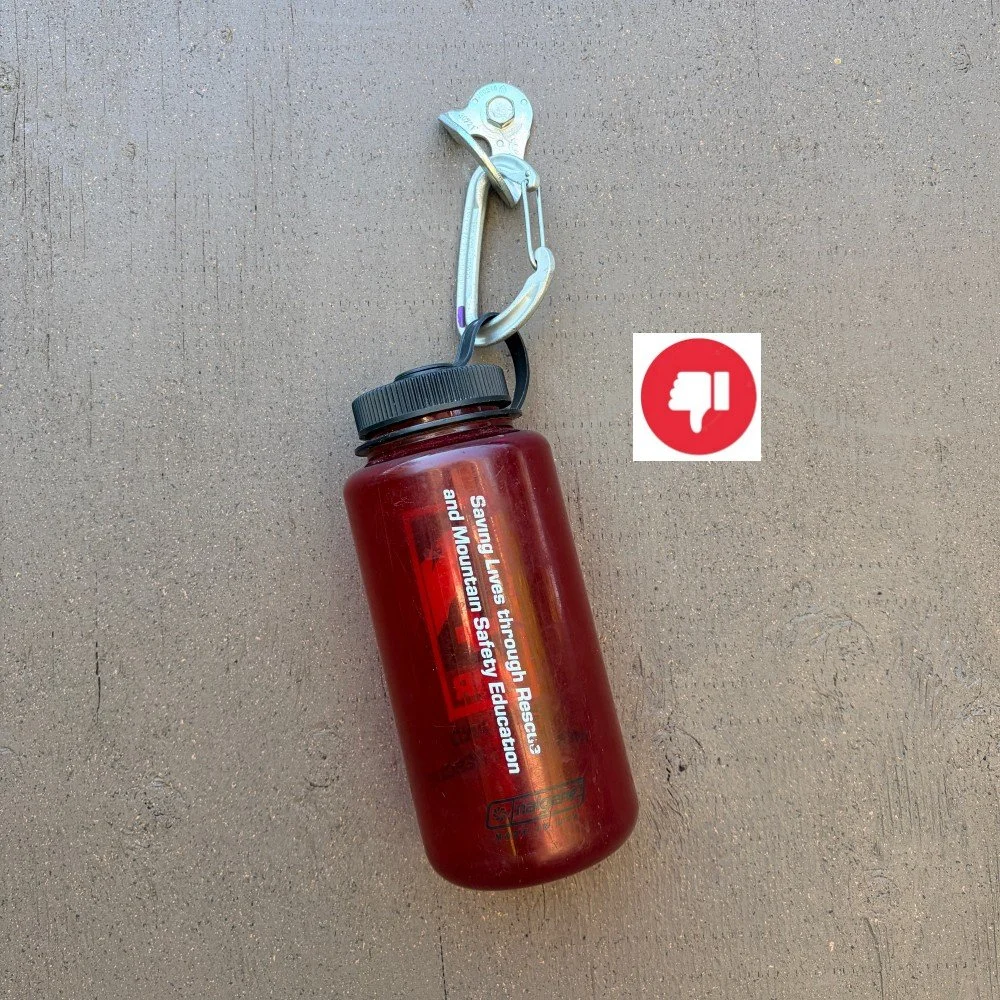
Here's a not-so-great (but still common) way to carry water on your harness. This has a couple of problems.
The bottle is too big and heavy; it’ll clank around and annoy you.
That plastic loop can break, and when it does you lose your bottle. Not good, and maybe dangerous for anyone below you.

Load transfer to Traxion pulley on a weighted rope
Scenario: You’re belaying your partner with a plaquette style belay device from the anchor. For whatever reason, you need to haul them up. Here's how to transfer the load from your device onto a progress capture pulley, for a much easier haul.
This post discusses techniques and methods used in vertical rope work. If you do them wrong, you could die. Always practice vertical rope techniques under the supervision of a qualified instructor, and ideally in a progression: from flat ground, to staircase, to vertical close to the ground before you ever try them in a real climbing situation.
(I think) I saw this on the Instagram of Vladislav Babikov, an Israel based EMT and rescue expert. Thanks Vlad! Give him an Insta follow: @babikov_vlad
In certain rescue situations, it might be helpful to transfer a loaded rope from your belay device onto a progress capture pulley such as the Petzl Traxion.
Here's a simple way to do that.
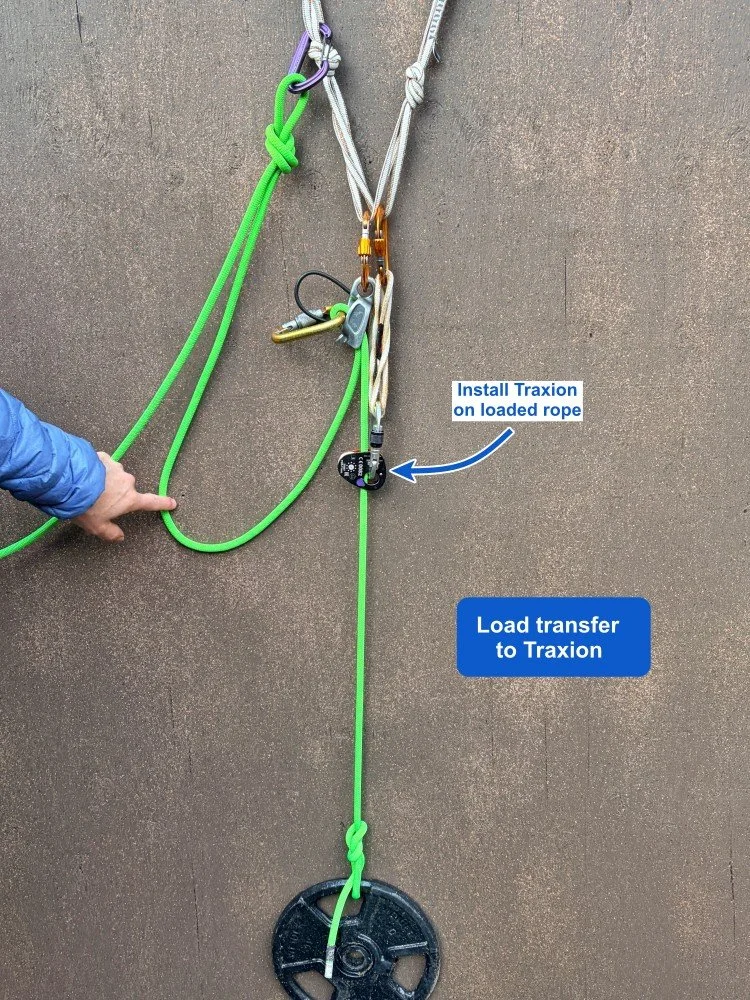
The key technique: the Traxion can be installed on a loaded rope.
Let's assume you’re belaying your partner directly from the anchor with a guide plate belay device, like a Black Diamond ATC Guide.
When might you need to do this?
It's rare for recreational climbers to actually have to haul up their partner any significant distance. For most rescue scenarios it's usually better to lower (descend with gravity), not pull someone up against gravity.
However, if you do need to haul someone / something up, it's better to do it off of a high-efficiency pulley on your master point rather than a high friction belay device.
This is a good application of a general principle in self rescue: you can extend your master point down a bit to create a new system of some kind, and then transfer the load / rope from the old system to the new system.
1) You need to go hands-free, so tie a hard backup knot in the brake strand and clip it to the anchor.
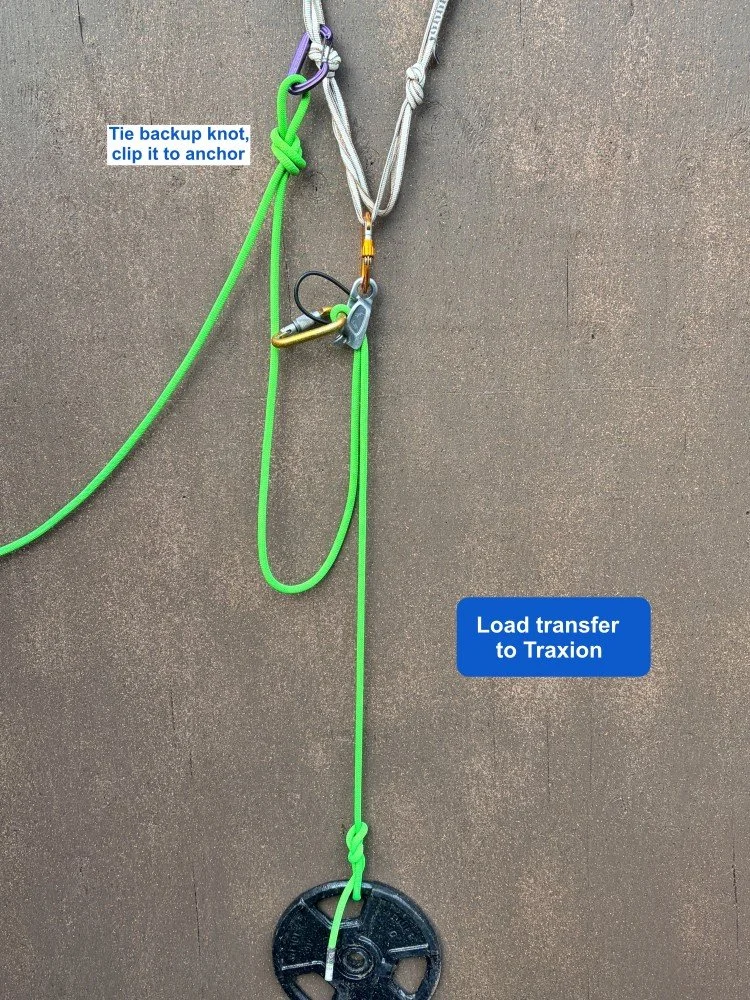
2) Get a 60 cm sling, triple it, and clip it to a new anchor point with a locker. Clip another locking carabiner to the other end of the sling. (A locking quickdraw would also work here.) You want this sling fairly short.
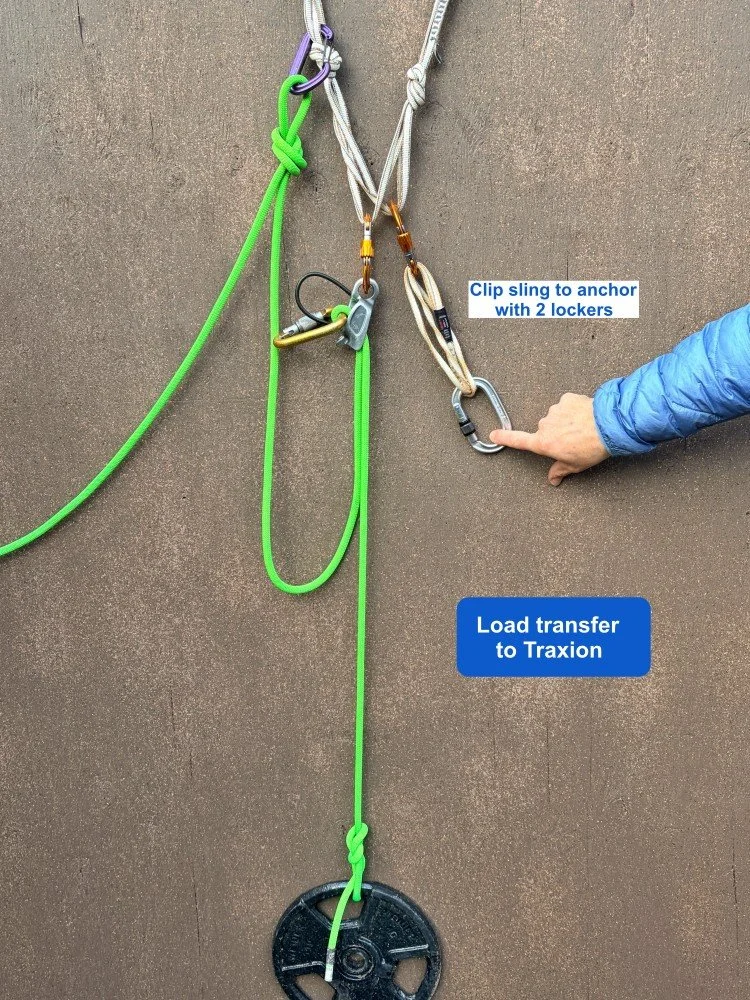
Install your Traxion on the loaded rope going down to your partner. Be careful not to drop it or let it slide down the rope, and to install with the teeth facing up, or away from the load. Clip the Traxion to the locker on the sling.
Push the Traxion down the rope toward the load to remove slack in the sling.
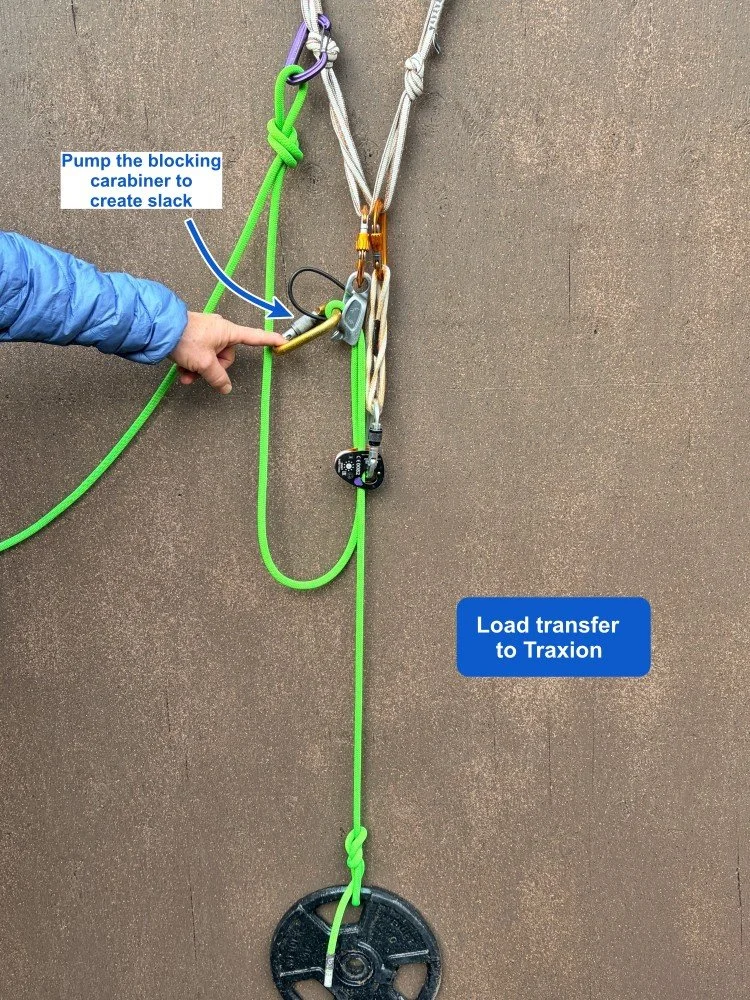
Transfer the load to the Traxion by pumping the blocking carabiner on the ATC up and down several times.
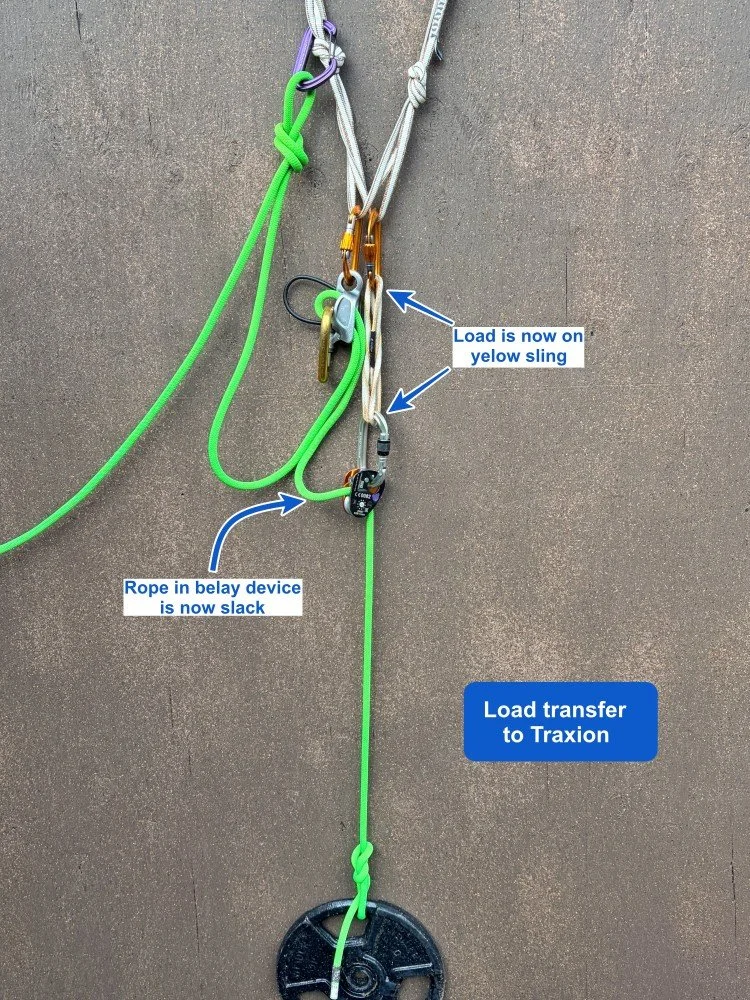
You now have slack in the green rope in your belay device, and the load should now be on your Traxion.
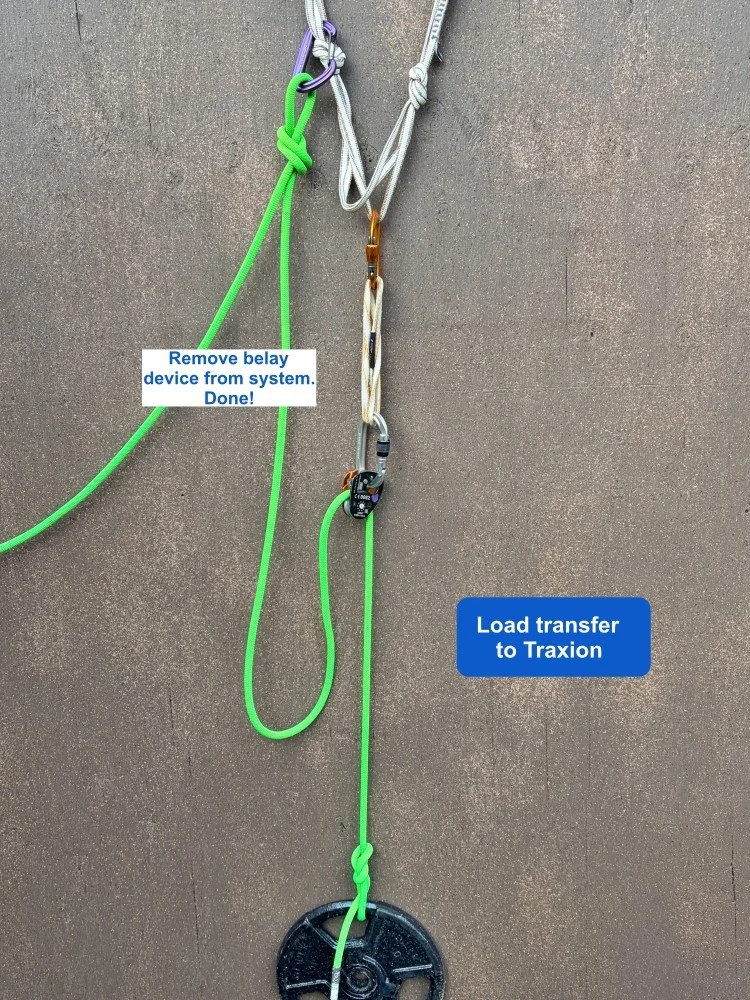
Remove the belay device and carabiners from the system. The load is now on your Traxion; give yourself a high five!
If you need to set up a mechanical advantage system for a lift, you're in a great position to do that. (Tie a friction hitch on the loaded rope below the Traxion, clip the slack rope to the hitch, and you have a 3:1.)
If you decide you want to lower, you can put the green rope through a munter hitch on the anchor, have the person below unweight the green rope for a moment (if possible), and unclip the sling and Traxion from the anchor. (There are a few more advanced options, like setting up the Traxion on a releasable hitch, but for this example we’ll keep it simple.)

Caution on “all good” check in with sat com devices
Using a satellite communication device to check in with concerned people at home is great. However, you want to avoid the problem of triggering an unnecessary rescue if you miss your check-in text.
This tip was shared with me by a friend on a Search and Rescue (SAR) team.
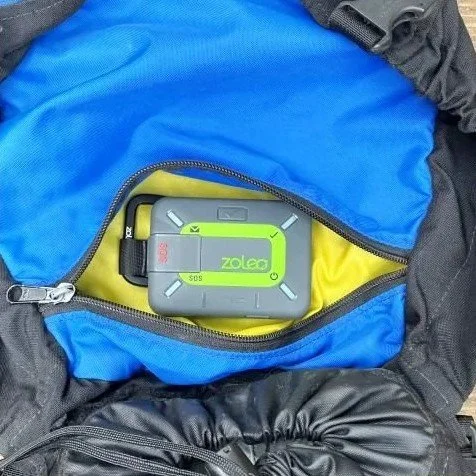
Many people like to use satellite communication devices to check in with concerned people at home and let them know everything is okay.
This is typically done with a pre-arranged check-in time window, or by using high frequency tracking, which shares a series of waypoints showing your travel path.
It's fine to send a quick daily message or have folks at home track your progress.
But don't let a LACK of check-in, or waypoints showing the device isn’t moving, become the basis for a rescue.
If you forget to check in, your sat-com device breaks, gets lost, you missed the software update, the device runs out of batteries, and you’re fine (or maybe taking a nap next to a lake instead of hiking those last few miles to the next campsite) the last thing you want is to trigger an unnecessary “rescue” because your someone didn’t receive your daily “All good” message.
This happens often!
Make it clear to anyone receiving your messages that not checking in, or lack of movement, doesn’t mean you need a rescue.

Do screamers really work?
The “screamer” load limiting sling is the climbing gear with the coolest name. It's designed as sort of a shock absorber, used when placing questionable trad or aid gear. Do they work? Here's some break testing on how well they actually function.
This article may contain affiliate links to HowNOT2. Your purchase earns a small commission for Alpinesavvy, at no extra cost to you. Your support helps improve this site, the world’s largest collection of climbing tips.
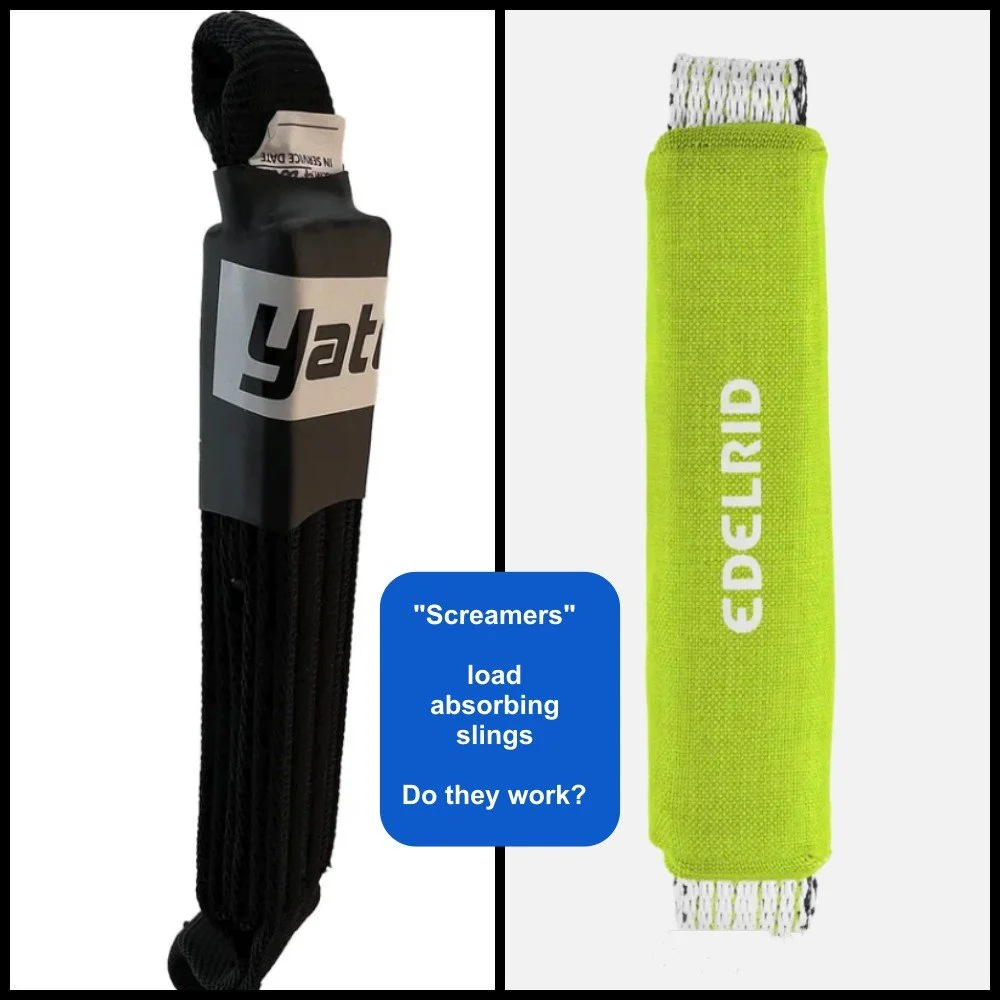
The climbing gear with the coolest name is a screamer.
It's a specialty sling that’s sewed together to be sort of shock absorber, intended to minimize the fall force that gets applied to sketchy trad or aid climbing gear.
Many aid climbers (me included) have wondered if they actually work, and are worth the cost.
HowNOT2 tested different screamer flavors, made by Yates, Edelrid and Petzl.
On a standard anchor with no screamer they found that dropping a 205 pound / 93 kg rock generated about 8 kN on the anchor.
When a screamer was added, that force on the anchor was reduced to between 3.8 kN and 6-ish kN, depending on manufacturer. (The Edelrid G screamer tested the best, with Yates not far behind.)
So yeah, up to about a 50% reduction in peak load, that’s a significant improvement! That’s still enough force to pull out a tiny piece of aid gear, but it's enough force reduction so it could definitely help with a piece that's slightly stronger.
Do you need to run out and buy a bunch of them? Probably not. But, if you’re doing more advanced trad or aid climbing on small gear, having a couple of these might be a good idea.
If you want to really nerd out on screamers and see all the break test results, here's the video from HowNOT2.

Rope gets stuck belaying second; what’ya do?
Scenario: a leader is bringing up their partner on a multipitch, and the rope between them somehow gets stuck. How would you solve this? Here's one way.
I once heard the following story:
Two climbers were on a multi pitch alpine route. While the leader was belaying up their partner, the rope slithered into an Evil Crack and got stuck.
The leader couldn’t pull the rope up, and the climber couldn't ascend because they weren't really on belay anymore.
Yikes, problemo! What would you do in this situation?
Here’s one way you could handle it.
Having good verbal communication between partners is very helpful here!
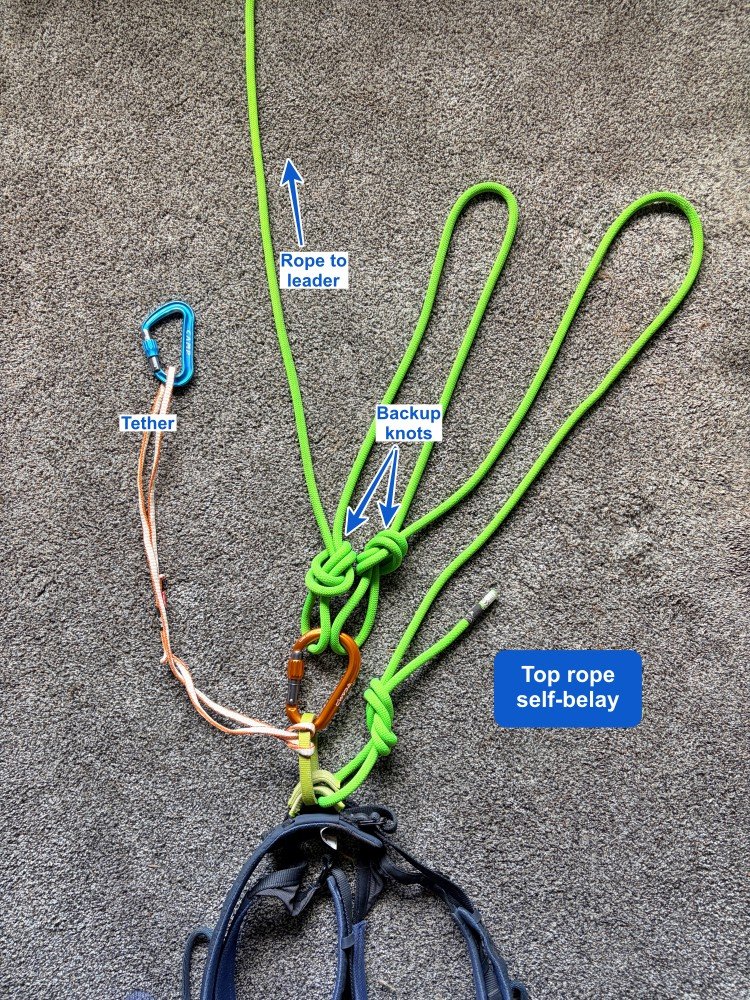
Because the leader can’t pull up the rope, the second needs to self-belay to where the rope is stuck.
A simple way to do this: tie a series of bight knots as you climb, clipping them to a large HMS carabiner on your belay loop. (This is common practice in aid climbing when the second cleans the pitch.)
Yes, you might need two hands to tie the knots. Make yourself a tether, and clip it to gear to go hands-free when needed.
Another option is a friction hitch (prusik) that you slide up the rope as you climb. This need to be backed up with a bight knot of some kind.
When you get to the stuck rope, pull it out.
Then, with clear communication to your partner above, start removing your back up knots one at a time, while the leader takes in the slack rope.
When you’re back on a proper belay with your original tie in knot, continue climbing.

Fixed point belay - step by step changeover
The fixed point belay has several advantages for belaying a leader. Here's a nice series of diagrams from Austrian guide Jürgen Reinmüller showing a simple way to transition from bringing up your partner to leading out on the next pitch.
These diagrams are from the excellent book “Alpine Rock Climbing Handbook” by Austrian Guide Jürgen Reinmüller. Connect with Juergen on Instagram, @alpinstil.at, and get his book here (printed version in German, eBook in English). Diagrams are shared with permission.
The fixed point belay is slowly becoming more common in the US. It has some advantages, especially if there is a high chance of a fall onto the anchor on a multi pitch route.
I have a detailed article on the fixed point belay, you can read it here.
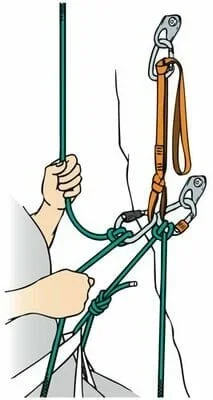
image: climbgermany.com / Georg Sojer
A common question: what are the transition steps for bringing up your partner, securing them, and then heading out onto the next pitch, belaying directly from the anchor the whole time?
It’s a better show than a tell; here’s a series of nice diagrams from Jürgen Reinmueller, @lpinstil.at showing one way to do it.
Jürgen is an Austrian guide who published the “Alpine Climbing Handbook” in both German (printed) and English (eBook). It's a terrific book, you can buy it here.
A few notes . . .
This diagram shows the anchor as a single bolt. Common in some parts of Europe, not in the US.
The leader is bringing up their partner with a Munter hitch. You could use any sort of guide style belay device here if that's your preference.
In this example, the partners are block leading, with the same person leading several pitches in a row. This same system could easily be changed for swing leading.
1 - Leader belays their partner up to the anchor, here with a Munter hitch.
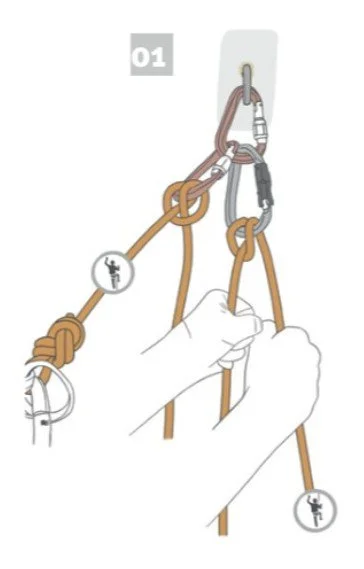
Image: “Alpine Rock Climbing Handbook” by Jürgen Reinmüller
2 - Partner arrives at anchor. Partner clips a locker to the master point carabiner and ties a clove hitch. Partner is now secure and off belay.
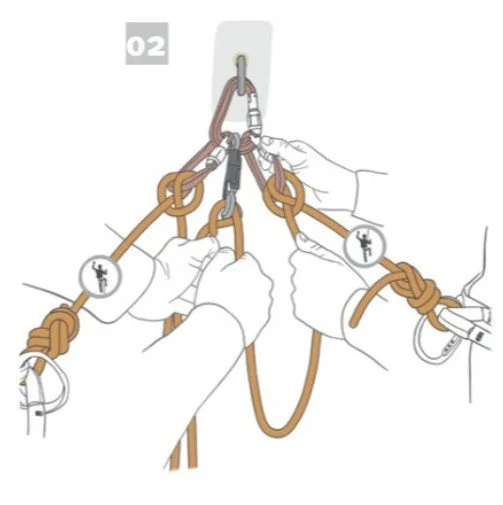
Image: “Alpine Rock Climbing Handbook” by Jürgen Reinmüller
3 - The Munter hitch is removed from the gray carabiner.
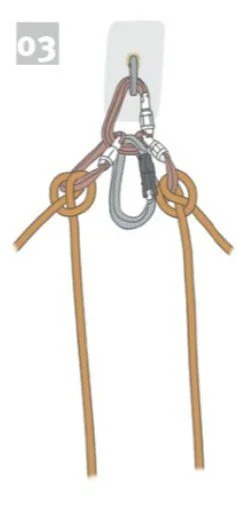
Image: “Alpine Rock Climbing Handbook” by Jürgen Reinmüller
4 - The second (on the right) puts the lead climber (on the left) on a fixed point lead belay with a munter hitch on the gray carabiner.
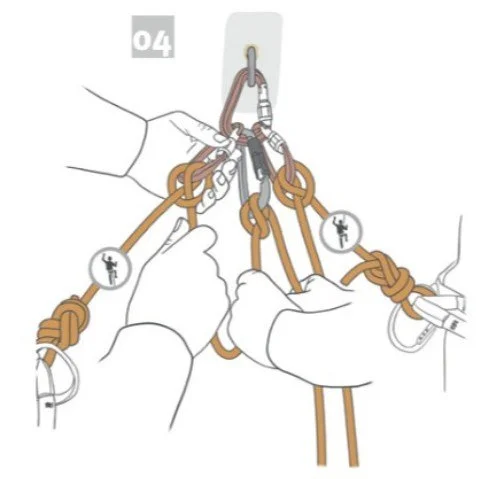
Image: “Alpine Rock Climbing Handbook” by Jürgen Reinmüller
5 - The lead climber unties their clove hitch, removes the carabiner, and starts out on the next pitch.
Clean, fast, simple!
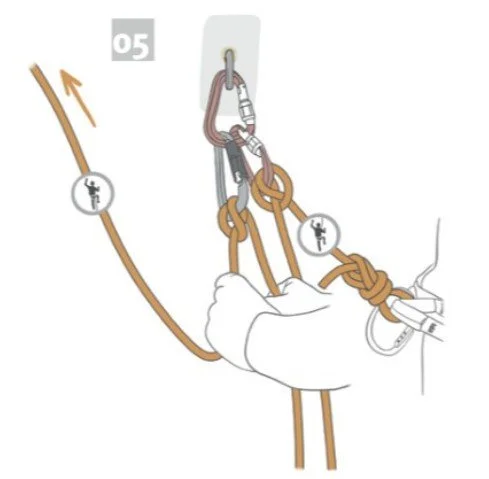
Image: “Alpine Rock Climbing Handbook” by Jürgen Reinmüller

Get to know your LCO (Local Climbing Organization)
In your favorite climbing area, there's probably a small group of dedicated volunteers with one goal: trying to put in good hardware to keep you safe. Find out who these fine folks are and support them in whatever way you can.
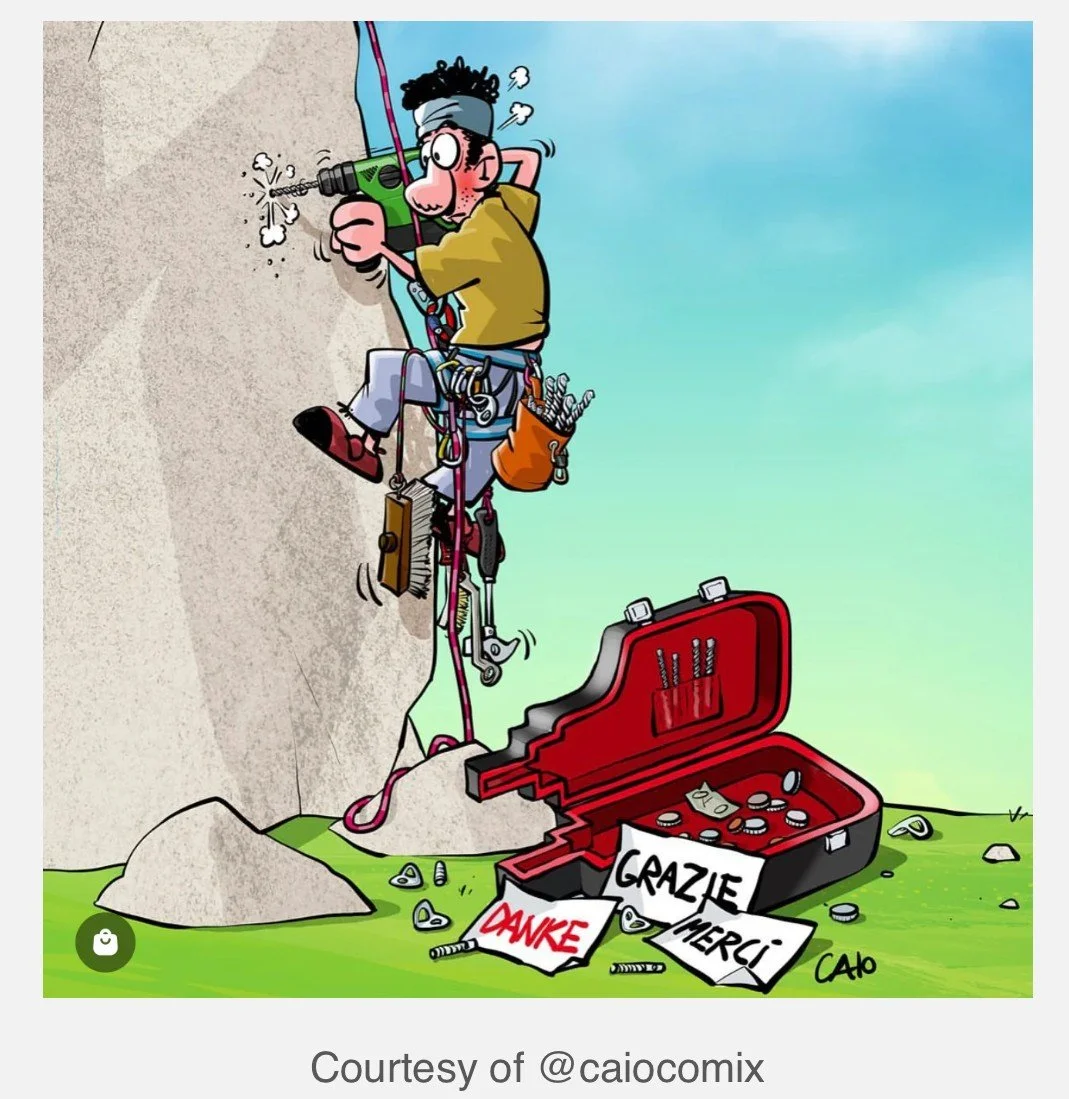
Who maintains the anchors where you climb? Get to know and support these good people.
Many of us, myself included, often take bolts and anchor hardware for granted at our local crag. Sort of like critical utilities (electricity, water, internet?) they're always available when you need them, and most of us don't give much thought as to how they got there.
At most climbing areas in the United States, hardware is installed and maintained by small groups of dedicated and hard-working folks who have ONE noble mission: trying to save your ass!
In my neighborhood in Bend, Oregon, this is the High Desert Climbing Alliance @highdesertclimbers.
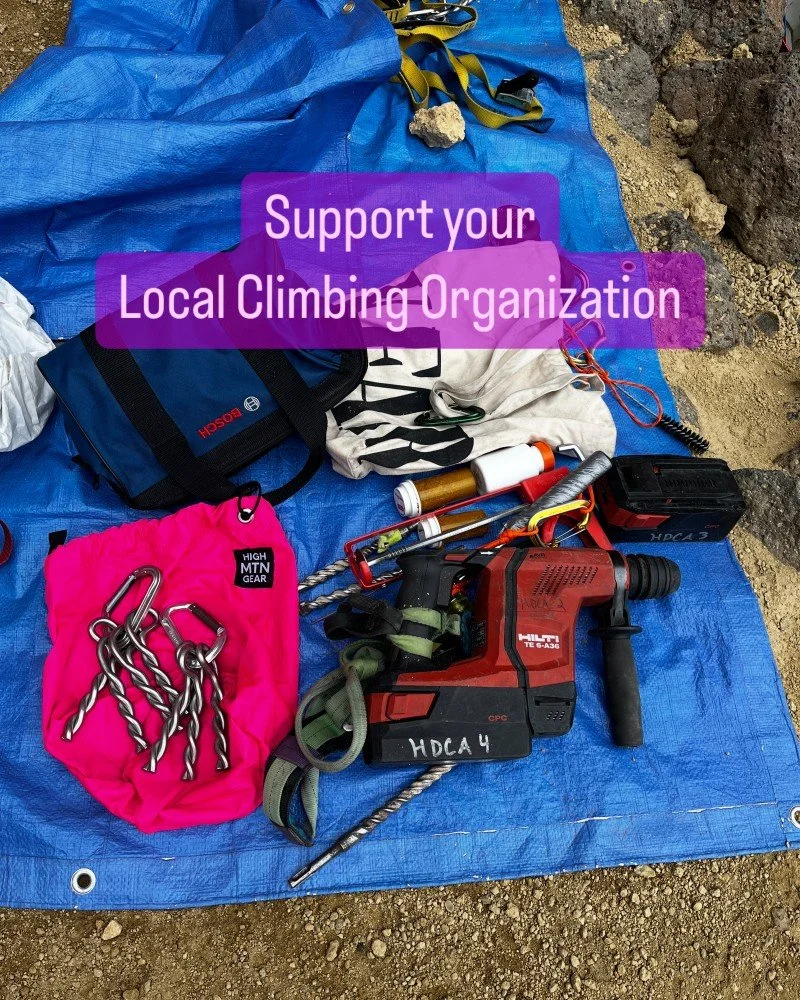
Awhile back, I went to my first volunteer re-bolting session with them at Smith Rock. I learned a lot.
The main lesson: five piece expansion bolts are a substantial hassle to remove, and, at least at Smith, glue ins are the way to go. Check out those sweet new ones in the photo above.
My sport climbing harness sucks for hanging hours at a time, maybe bring a bosun’s chair next time.
Be useful when you can, stay out of the way when you can't, don’t drop anything, and bring cookies.
The big wall gear bag I donated from @highmountaingear works great for hauling up cookies and bolting hardware.
Donate what you can to help them out, whether that's your volunteer time, gear, or money. Asking around at local climb shops is probably the best way to find your LCO.

A simple, strong alpine anchor
Check out this elegant alpine anchor from IFMGA Guide Marc Hanselman. While no anchor is perfect for every application, in the right rock type this one is pretty sweet.
IFMGA Guide Marc Hanselman shared this anchor with me. Connect with Mark on Instagram, @pro.alpine
Provided you have strong, smooth rock, this anchor style could be a good choice.
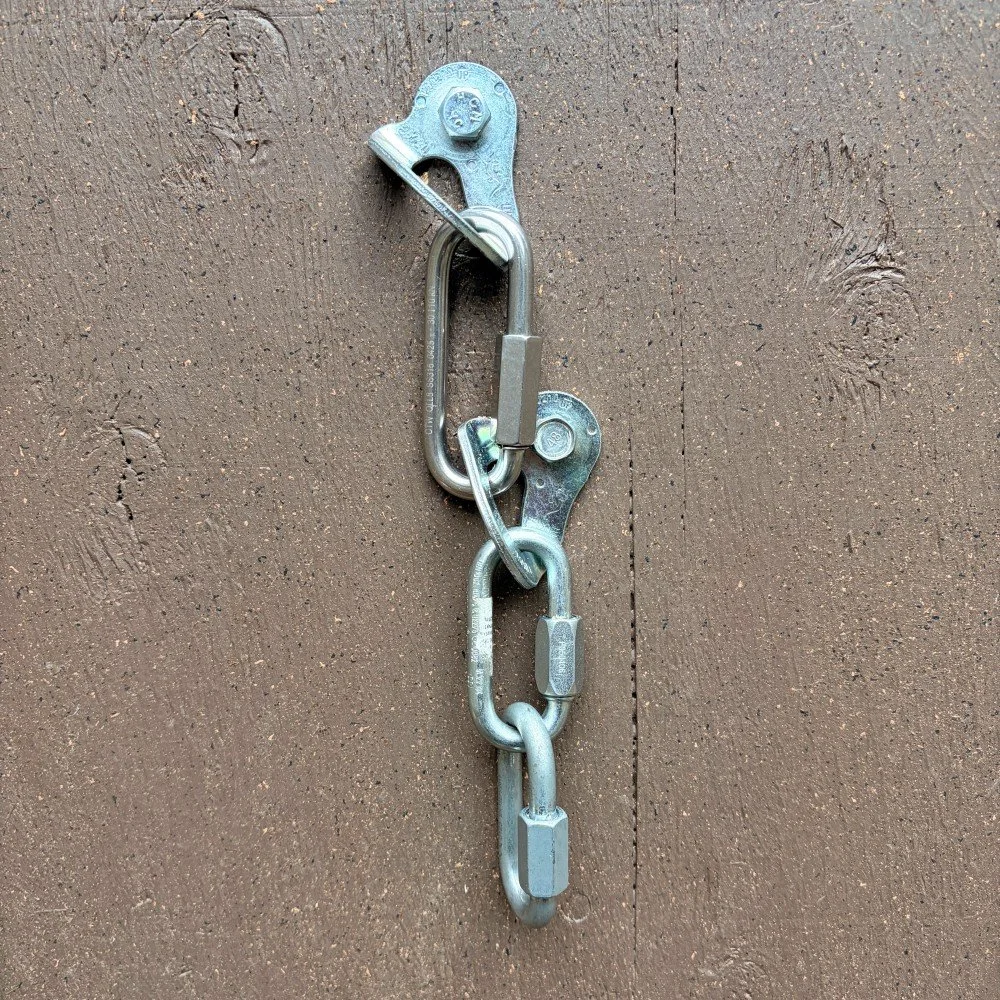
Here’s what Marc says about this anchor:
“This is my permanent alpine anchor, where weight (remote setting), safety, longevity and clean pulls on the rap are at the forefront.
In solid rock the spacing between holes needs to be 10x the diameter of the hole, or about 4”. This accomplishments that.
Installation order is key: prebuild the anchor, drill one hole, hold anchor in place of the 1st hole, mark the 2nd hole and drill. If you attempt to assemble after bolts are installed, you could be in a pickle.
I believe this is the best solution for this scenario, where economy of gear is necessary and the anticipated amount of traffic is relatively low, compared to a sport crag. I call it the “alpine ferroutage” anchor”
A few things to note . . .
This anchor has redundancy, but not equalization. All the load is on the bottom bolt. The top bolt is a backup, in the highly unlikely event that the bottom bolt fails. It's called a series anchor. I have a detailed article on those; read it here.
Yes, the bolts are close together. With a 3/8 inch bolt, 4 inches (10x hole diameter) is about the minimum spacing. If you have a half inch bolt, you'd want about 5 inches of spacing, and this method is not optimal for that.
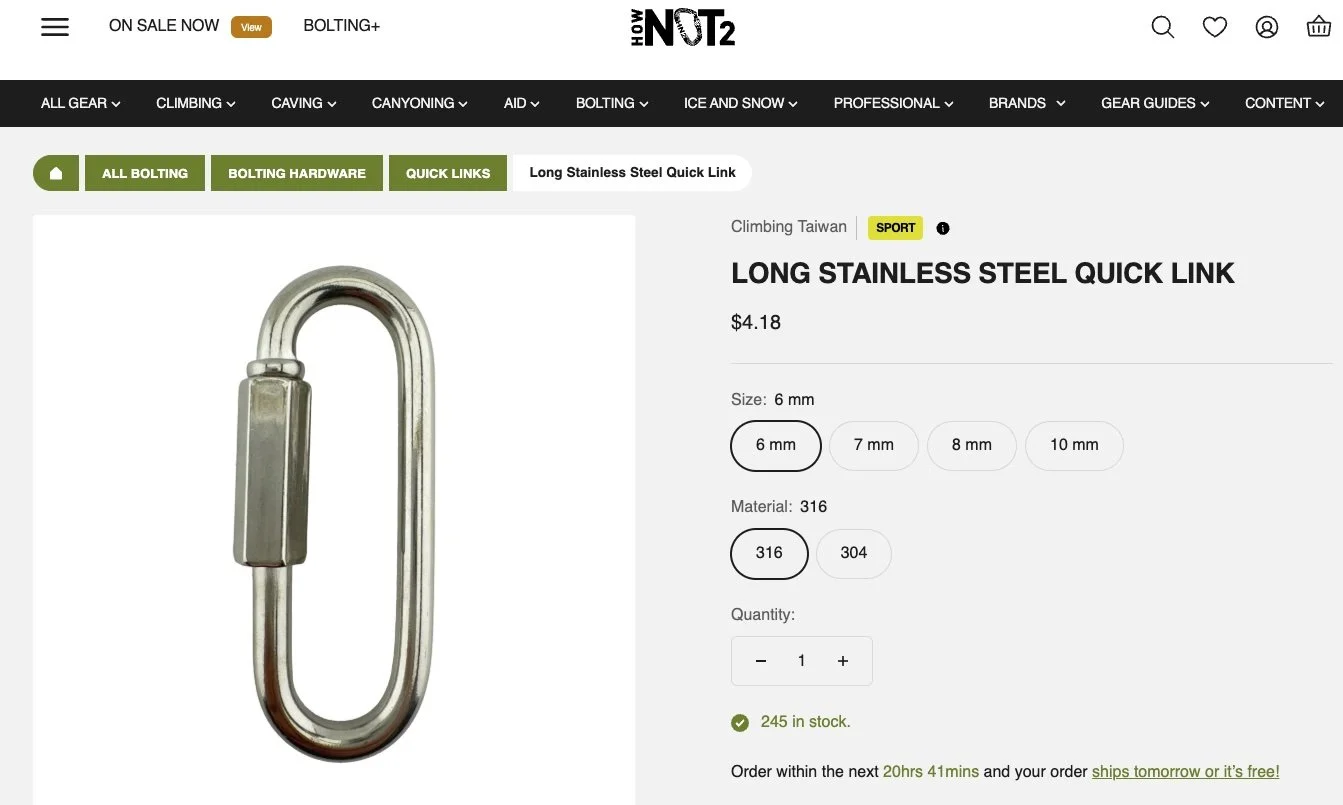
The top quick link is an 8mm long link. This gives that necessary 4 inch minimum spacing between the bolts. These can be hard to find; buying info is below.
There are two quick links on the bottom hanger. This second link hangs perpendicular to the rock, which gives you less friction and twists on the rope pull. The second link could also be a welded ring.
What's up with the name? Marc explains: “Ferroutage” means “piggyback” in French. It’s a nod to the origins of the idea - “Chamonix anchor” (as in my concept piggybacks on theirs) as well as the actual structure of the anchor (one bolts piggybacks on the other).”
If the rock was lower quality and you wanted the bolts farther apart, or had lots of bumps and protrusions, which might make it hard to get the spacing correct, you could try the “Chamonix anchor”. It’s similar to this, but instead of a long link connecting the two bolts, you have a length of 7 or 8 mm cord. This method, which is widely used in many parts of Europe, has it’s pros and cons. Here's my more detailed article about it.
Get long stainless steel quick links like this from HowNOT2.
These come in different sizes. The 6 mm is more than strong enough, they test somewhere around 35 kN. The 8 mm is slightly longer, which is what Marc prefers.

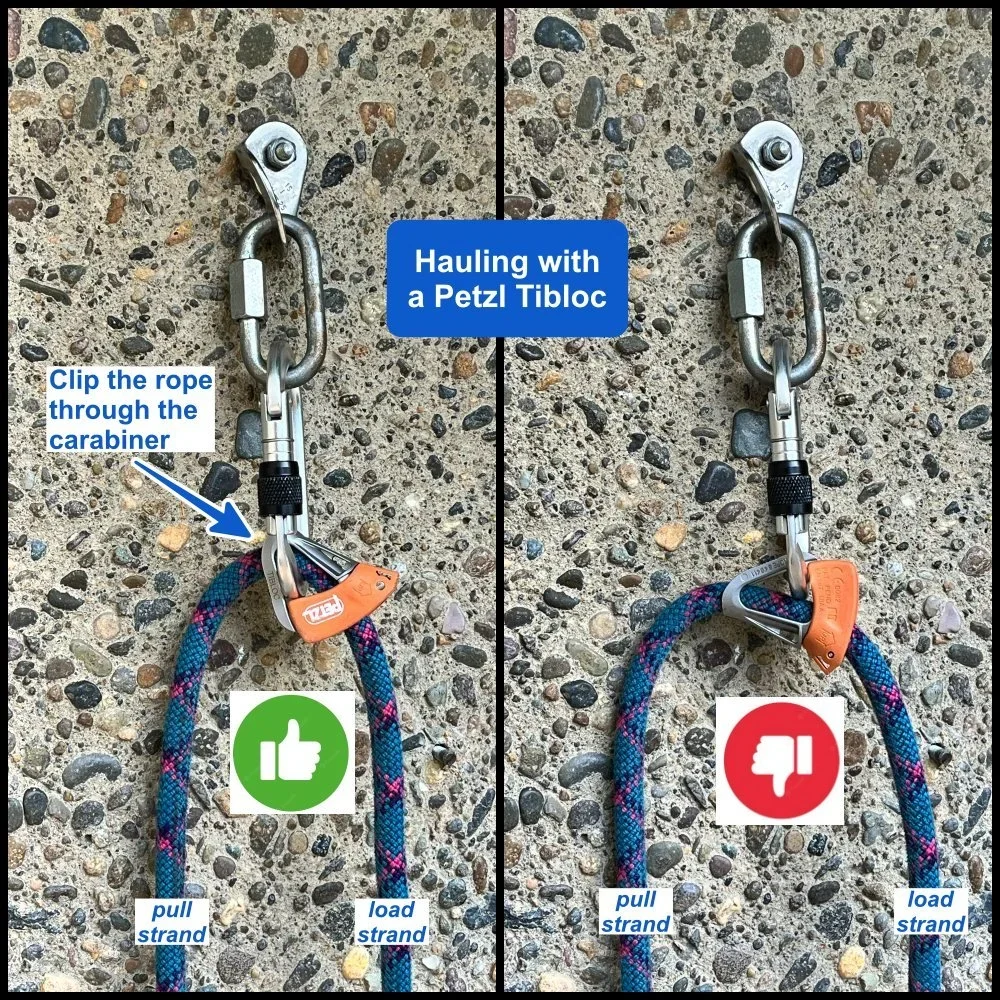
Slick progress capture hauling system with a Tibloc
The Petzl Tibloc is great as a micro ascender for going up a rope. But did you know you can also use it as a progress capture in a hauling system? Here’s a slick way to set it up that's compact, efficient, and uses some fairly common gear.
I first saw this on the Instagram of Vladislav Babikov, an Israel based EMT and rescue expert. Thanks Vlad! Give him an Insta follow: @babikov_vlad
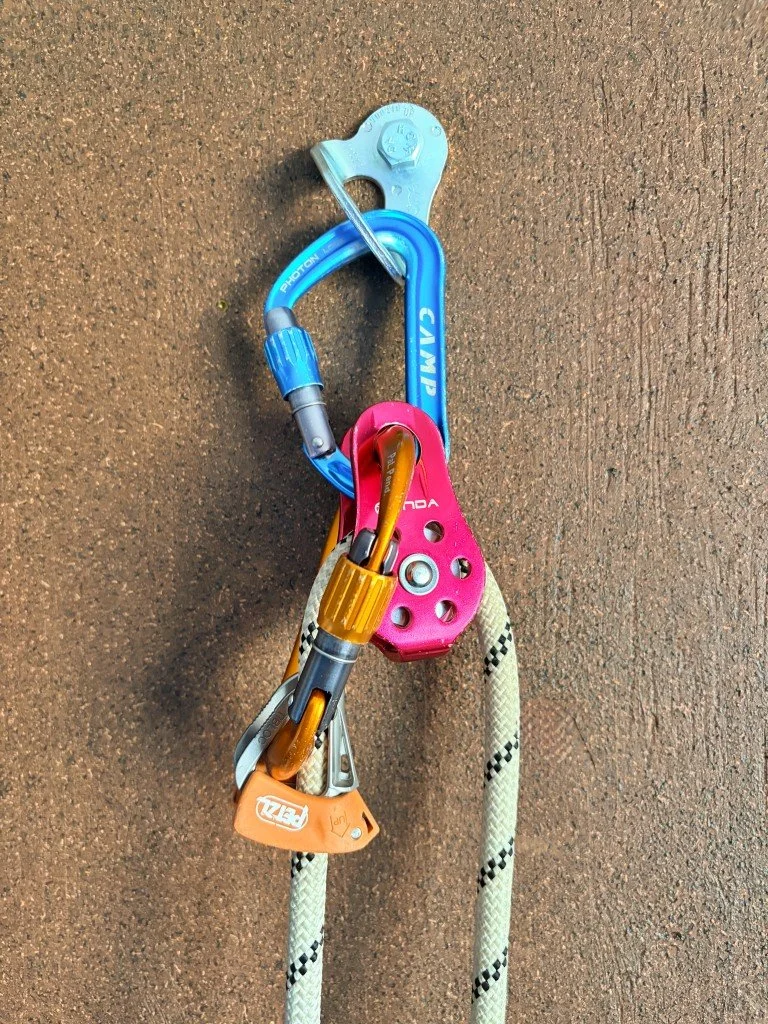
Here’s a compact and efficient progress capture haul system that uses a Petzl Tibloc as a rope grab and a fixed side plate pulley.
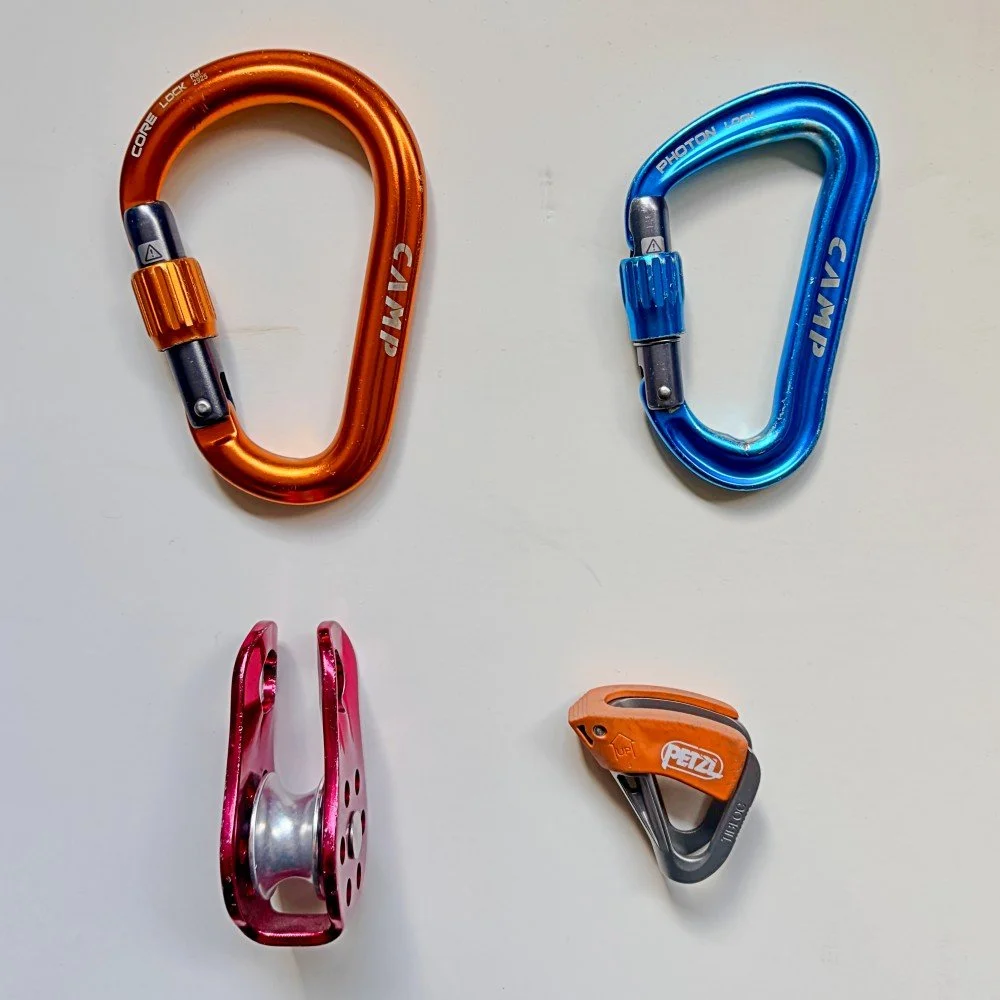
Here’s the gear you need:
A large HMS carabiner
A second locking carabiner of any flavor
Petzl Tibloc
Pulley with fixed side plates
Note the pulley with the fixed side plates. This is important. I tried this with a small swing arm pulley, and didn't work.
(If you want a name brand fixed side plate pulley, the Petzl Fixe would be a good choice. I have a cheapo from the interweb.)
If you want to know more about the Tibloc, check out this detailled article.
I will admit that it took me a rather embarrassingly long time to figure out how to rig this from the photo that Vlad posted . . .
I'll save you some time with this step-by-step photo sequence that worked for me. =^)
Step 1 - Place the Tibloc on the rope, with the top of the Tibloc pointing down, toward the load. Clip the pulley with the large HMS carabiner as shown.
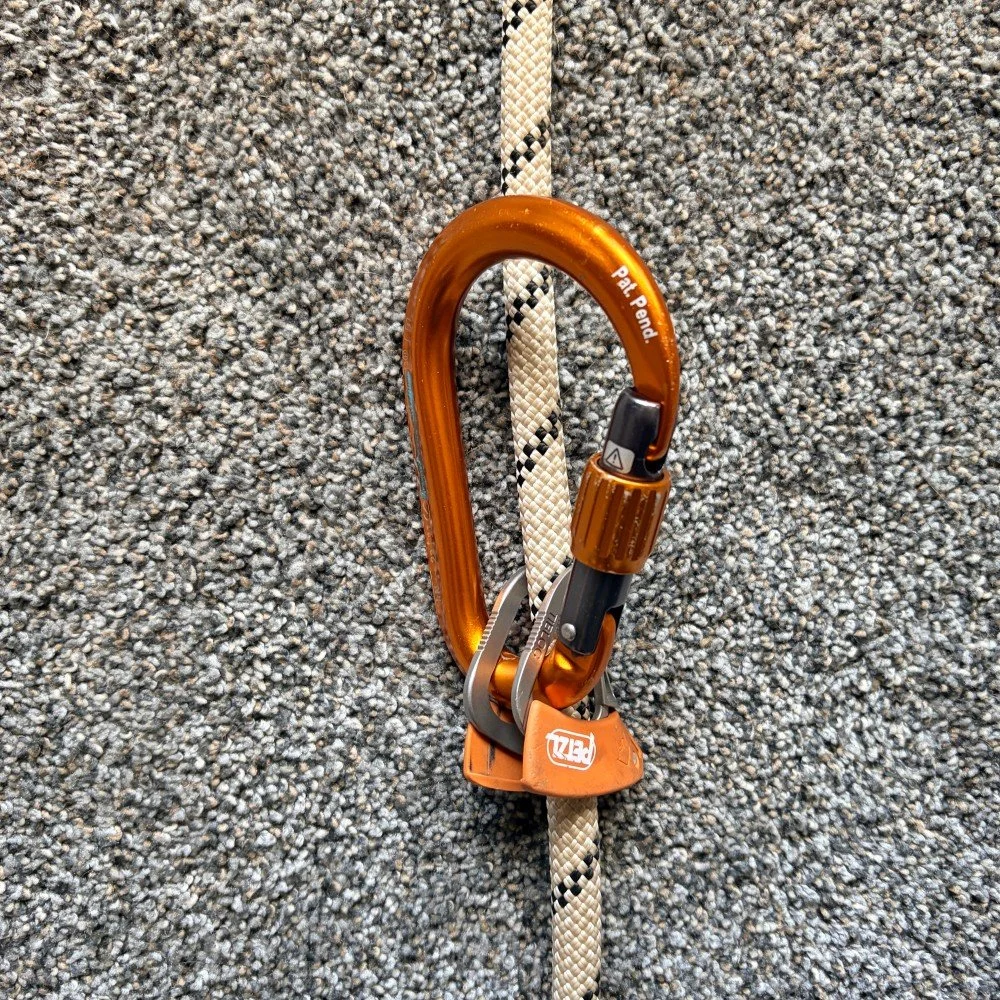
Step 2 - Place the rope through the pulley as shown.
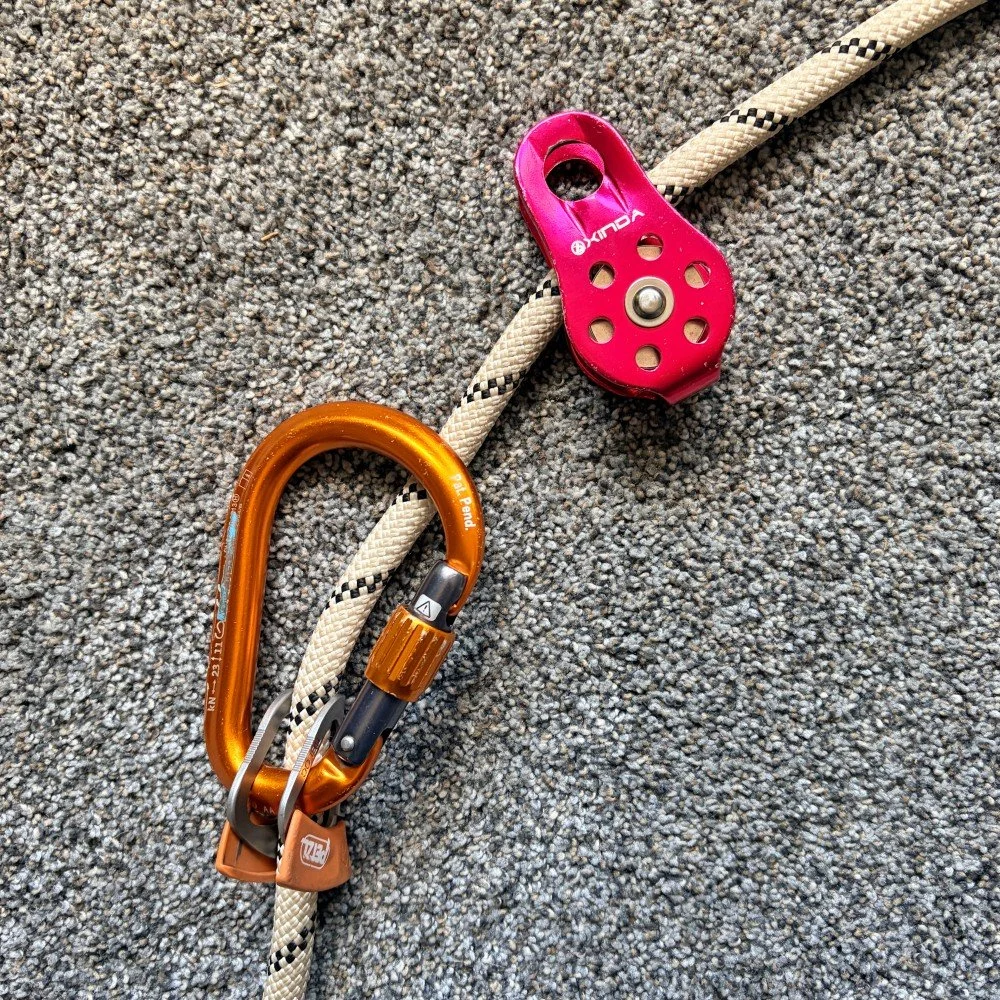
Step 3 - Clip the HMS carabiner through the pulley as shown, aligned like this.
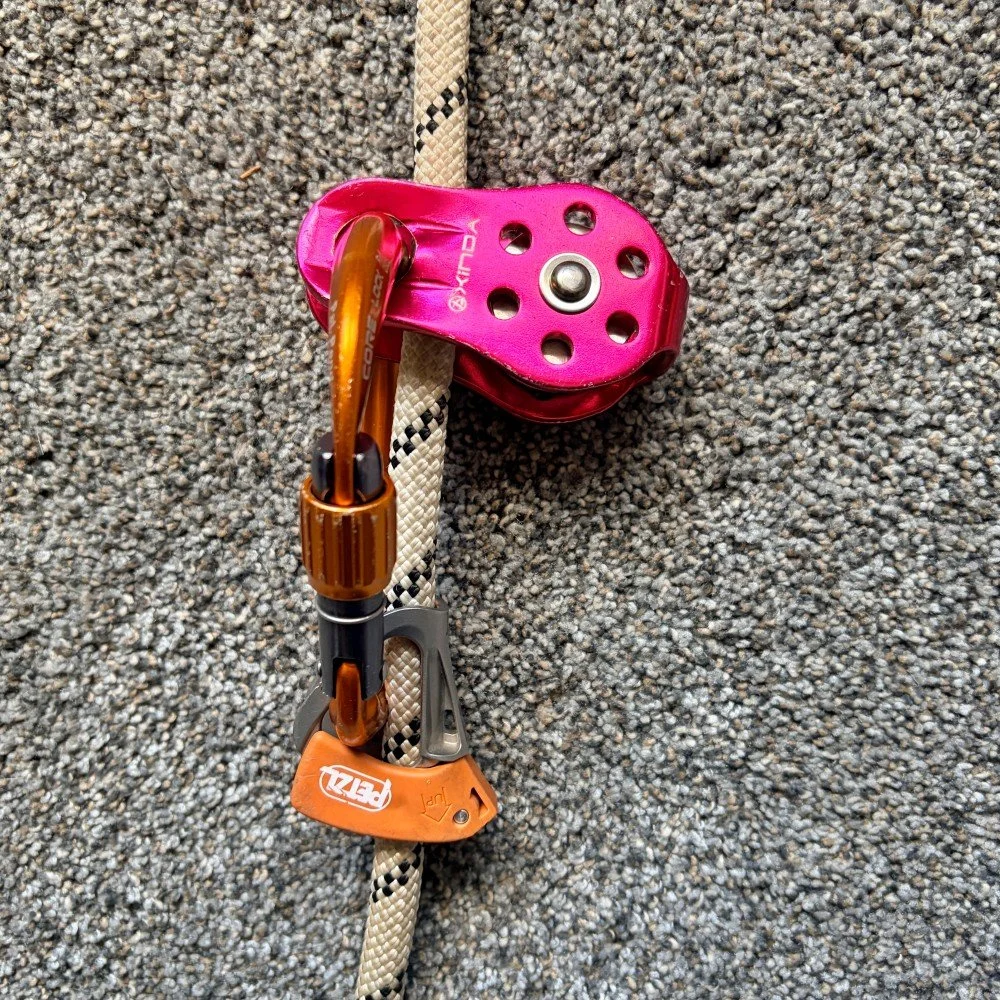
Step 4 - Clip the second carabiner (blue) as shown. (This is why you need that fixed plate pulley; it has enough room to clip the blue carabiner in so it doesn't rub on the rope.)
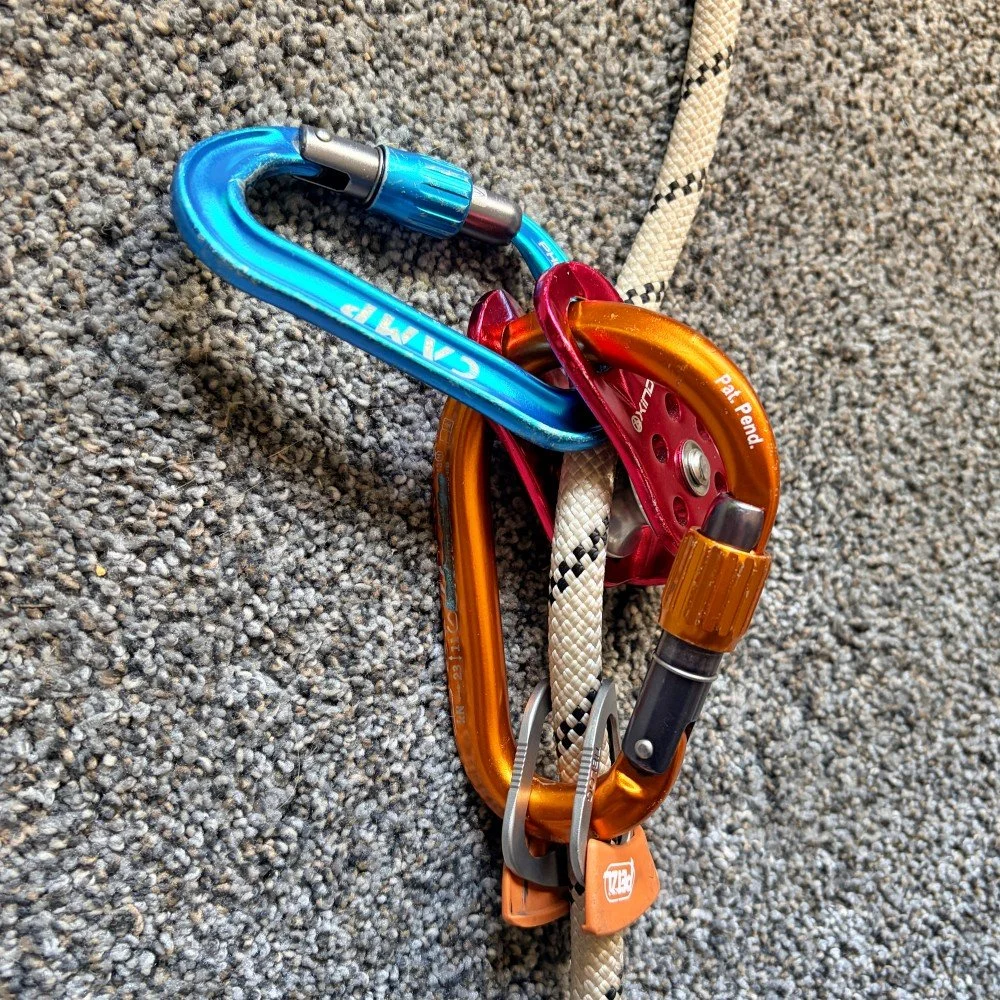
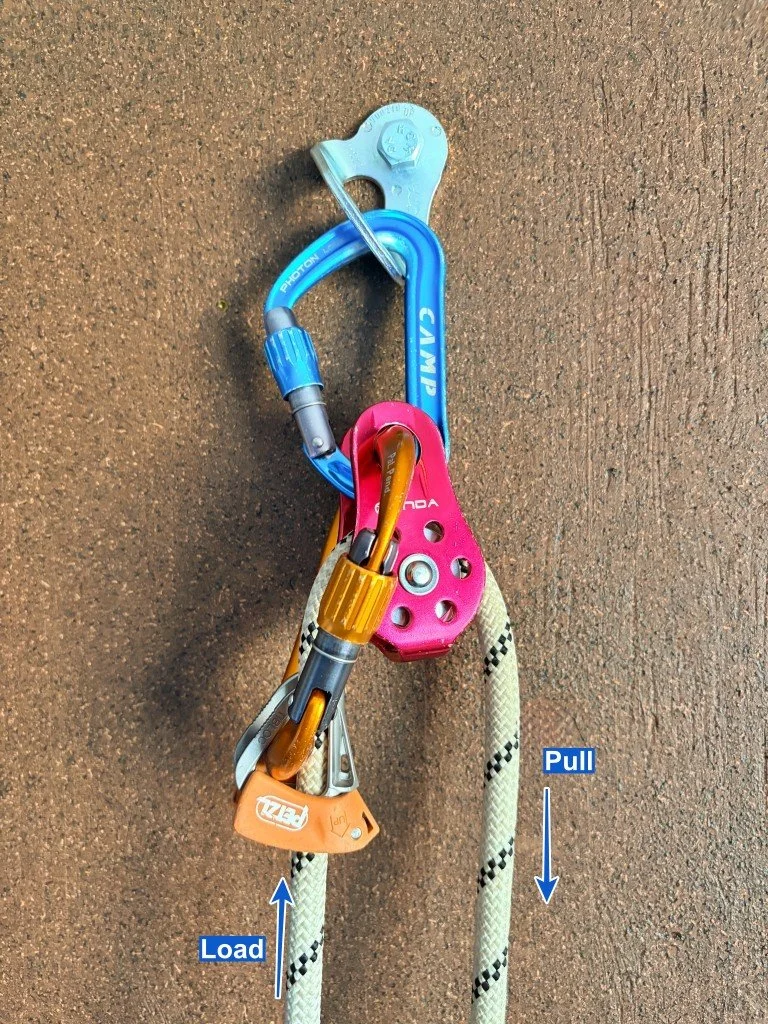
Step 5 - Finally, clip the second (blue) carabiner to the anchor.
This hauling system is very smooth and efficient because of the pulley. The rope runs in a straight line through the system without any sideways torquing or twisting. You also don't lose any of your progress between pulling strokes, even better.
A little Tibloc trick- it may seem that this is a one-direction system and can’t be reversed, but that's not quite true.
To make the Tibloc reversible: push up on the spring loaded orange hood, and then sort of rotate the Tibloc in a counterclockwise direction, which should release the teeth, allowing you to lower your load if necessary.
If you have this gear around, give it a try. It's a clever (and for me, sort of a brain-twister) way to use your gear in a creative way.
Why don't you just clip the Tibloc and rope to one carabiner and haul?
Sure, you can do that. Below is a diagram from my detailed article on the Tibloc about how to set this up the right way.
This can work fine for a smaller load, but because you're hauling through a carabiner, that's only about 50% efficient. Meaning, you need to pull down with 100 kg of force to raise a 50 kg load. Not good. With a bigger load, having a high-efficiency pulley as shown in the example above makes your life a lot easier!

How does the “Twist Test” reveal sketchy bolts?
In a perfect world, every bolt that you clip would always be reliable. Unfortunately, as a recent tragic accident in Greece has shown, even a two bolt anchor is not always 100% trustworthy. Here's a quick field check you can do that goes beyond looking and hoping.
This diagram is from the excellent book “Alpine Rock Climbing Handbook” by Austrian Guide Jürgen Reinmüller. Connect with Juergen on Instagram, @alpinstil.at, and get his book here (printed version in German, eBook in English). The diagram is shared here with permission.
A tragic 2026 accident in Kalymnos Greece is a reminder that even a two bolt anchor is not necessarily always reliable.
Can you trust that glue in bolt? Looking at it can only tell you so much.
For a more “kinetic” test, clip a carabiner to the bolt as shown, grab the gate side, and give it a twist to apply some extra leverage.
The bolt shouldn’t move. If it does, start looking for ways to back it up.
Don't do this with anything larger than a carabiner or you might damage an otherwise good bolt.
This works best with a glue in bolt, because it's all one continuous piece of metal. With mechanical wedge bolt, the hanger is separate from the bolt, so the twist test doesn't really tell you much.
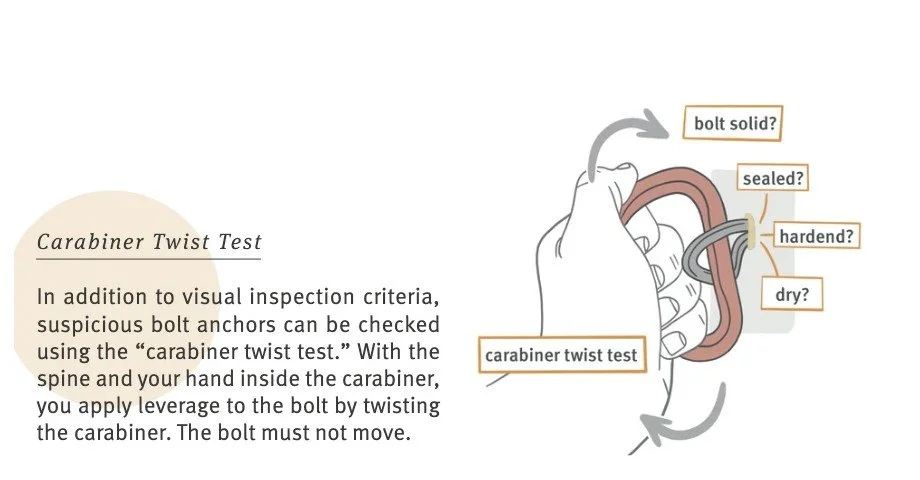
image: from “Alpine Rock Climbing Handbook” by Jürgen Reinmüller
Here's a nice Instagram video from IFMGA Guide Jan Schneider @bergfuehrer_schneider showing how it’s done.

Multi pitch efficiency: Leader organizes the rack
On a long multi pitch climb, saving a few minutes at every belay transition can really make a difference at the end of the day. Here's one easy way to do this. (Yes, the little things add up!)
This tip is from AMGA Certified Rock Guides Lani Chapko and Sam Boyce, theclimbingguides.com. Connect with them for guided trips and clinics, including big wall instruction. Instagram: @the_climbing_school, Lani: @goatsonropes, Sam: @chossdiaries
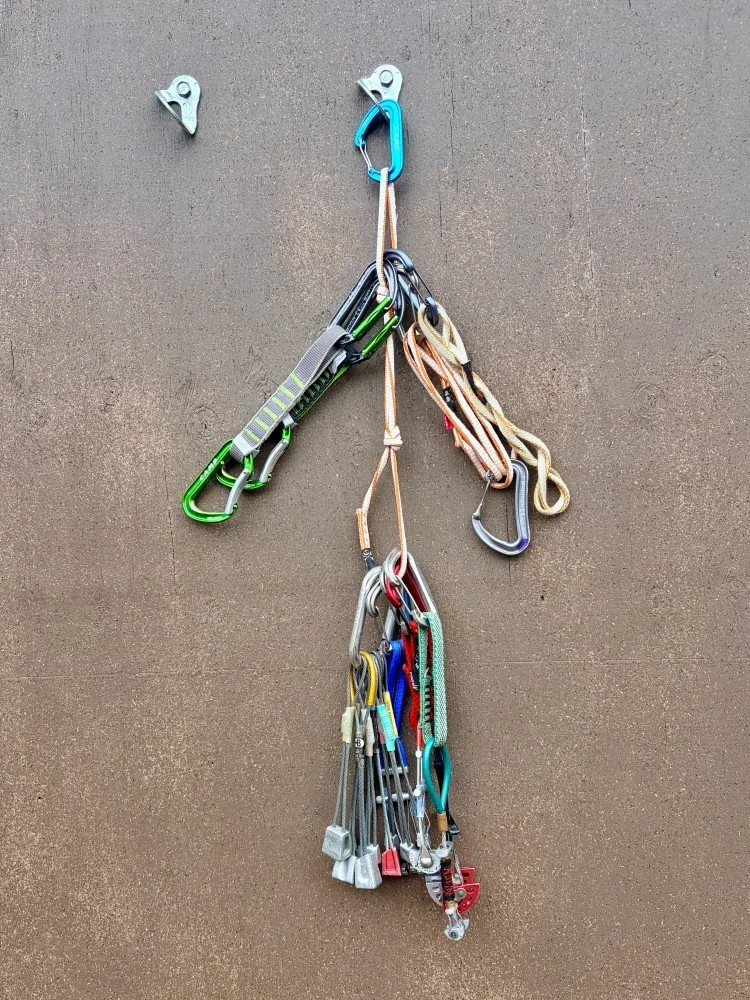
On a multipitch, you can save transition time by organizing the gear and getting it ready to hand off for the next pitch.
An easy way to do this: remove gear from your harness, clip it to a sling, and then clip the sling to an accessible spot for your partner.
If you don't have much gear left, you can clump it all together on one sling.
If you want be more tidy, tie a couple of knots in a 60 cm sling, and clip different flavors of gear to the different loops.
Why does this work well?
You don't have to pass gear hand to hand, reducing the chance of dropping gear.
Lets the second get busy racking as soon as they arrive.
If something gets dropped, it’s the fault of the second not the leader! =^)
Here's a short Instagram video from Lani and Sam showing how it's done. A 30 second transition, impressive!

Petzl Traxion - failure to grab the rope
Progress capture pulleys like the Petzl Traxion are excellent pieces of gear, that are solid and reliable in most situations. However, in these examples, it can fail to grab. Watch the videos here. And read that Petzl manual!
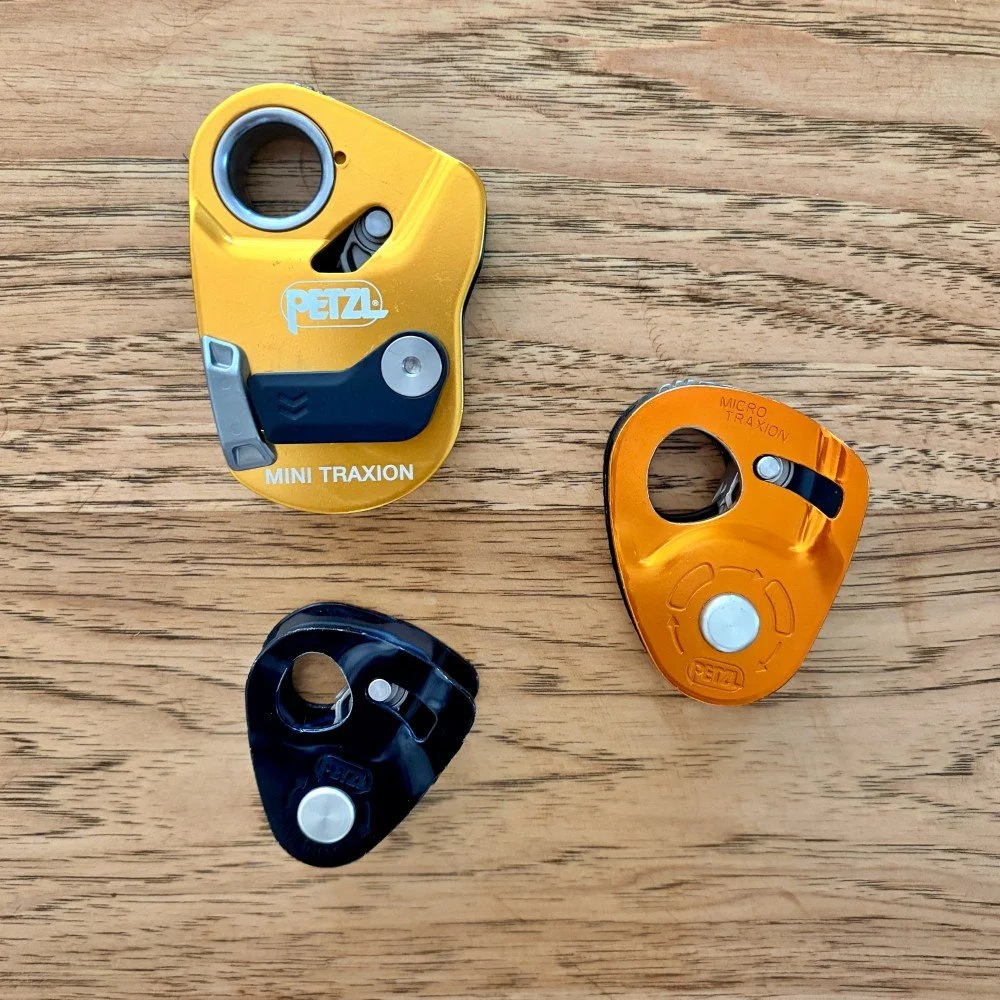
Most of us expect progress capture pulleys to operate flawlessly in just about any environment. Mostly, they do. But not always.
This video was sent to me by one of my Instagram followers. I’m sharing it here with his permission. (I'm leaving his name and Instagram handle out of my article.)
He was top rope soloing (TRS) on some ice, and was rather alarmed when he discovered that his Petzl Micro Traxion, which was his primary backup device, was clearly not grabbing properly onto the rope.
Yes, Petzl does have a clear diagram in the Traxion technical specs that cautions against ice, sticks, dirt, etc.
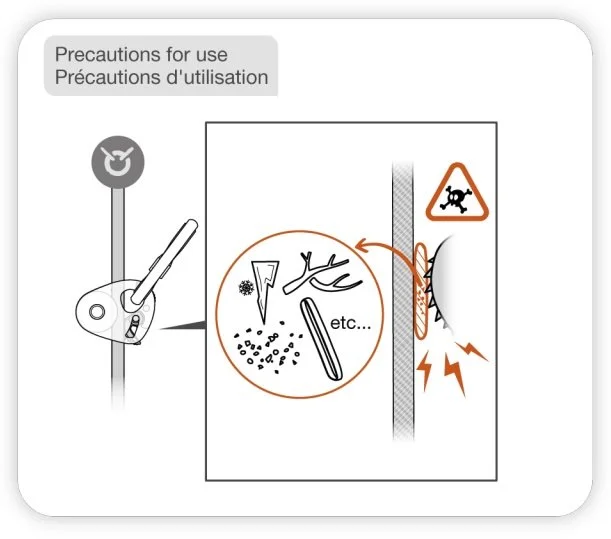
Where’s the second device? Apparently, the climber didn’t have one. It's best practice to have two different progress captured tools for top rope solo.
Would a second progress capture pulley have worked here? Hard to say. If one is slipping, it seems pretty likely that another could slip as well. If you anticipate an icy rope, a second device that has a different rope grab mechanism, such as maybe a CAMP Lift, might work better.
Related tip for crevasse rescue: if you have a pulley that’s laying flat in the snow, take a few seconds and excavate a concave sort of bowl underneath it, so the pulley is hanging in space and not being pressed into the snow. This lowers the chance that snow / ice can jam in the cam.
Takeaways (for me):
Always use a second device as a backup for TRS in any conditions, rock or ice.
Be cautious with using devices like this on icy ropes. This applies to TRS and crevasse rescue.
Consider tying hard back up knots in the rope below the device.
Some of the cool kids are now using this as a belay device. Personally, I’m not a fan. If you choose to do this, read up on it and make your own informed choice.
To be clear, this is not a slam on the Traxion. When used properly, they are very reliable. But as they say, RFM! (Read the Friggin’ Manual).
Here’s the video:
Here’s a similar video on Instagram from @the_climbing_school. This time the rope isn't icy, but tensioned and with an older, glazed sheath.

The better hanging belay: improvised foot stirrups
Are you multi pitch climbing a steep route without much of a ledge at the belay? That hanging belay is probably gonna hurt a bit. Here's an easy way to make it suck a little less.
On one of my first multipitch climbs, I quickly learned how much hanging belays can suck.
Without any sort of a ledge to stand on, all my weight was on my harness. My kidneys slowly merged into one, and my feet went numb.
After that uncomfortable day, I came up with this little trick. It's been a help ever since.
Here's a tip for a better hanging belay: foot stirrups.
On the backside of your rope connection to the anchor, tie a friction hitch.
Take a sling, ideally a wider nylon one, and tie an overhand knot in the middle.
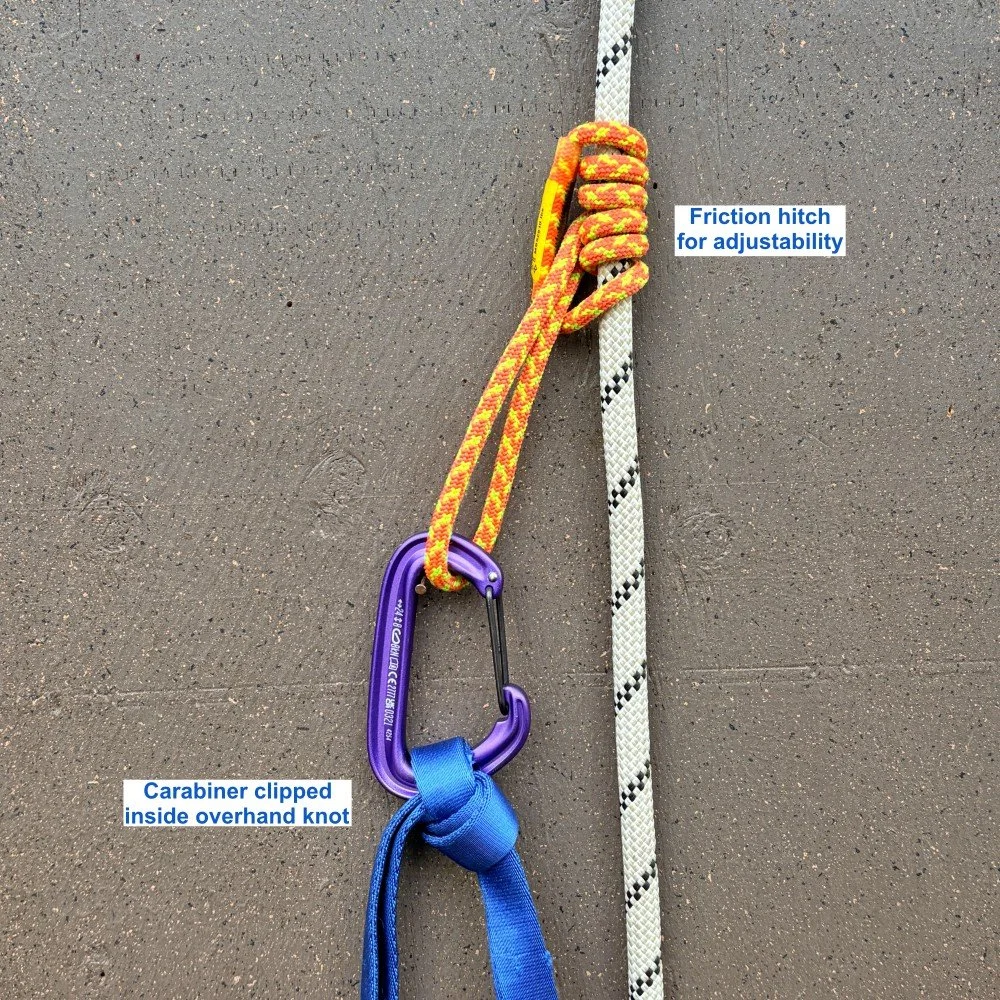
Clip a carabiner “into” this overhand knot.
Clip the carabiner and sling to the friction hitch.
Now put your feet into each loop of the sling! =^)
Done! Give yourself a high five. Now your weight should be a lot more balanced between your harness and your feet. It's not like lounging in a portaledge, but it's a lot better than hanging completely off of your harness!
The friction hitch makes it easy to adjust the height of the foot loops up and down; occasionally changing your foot position makes it more comfortable.
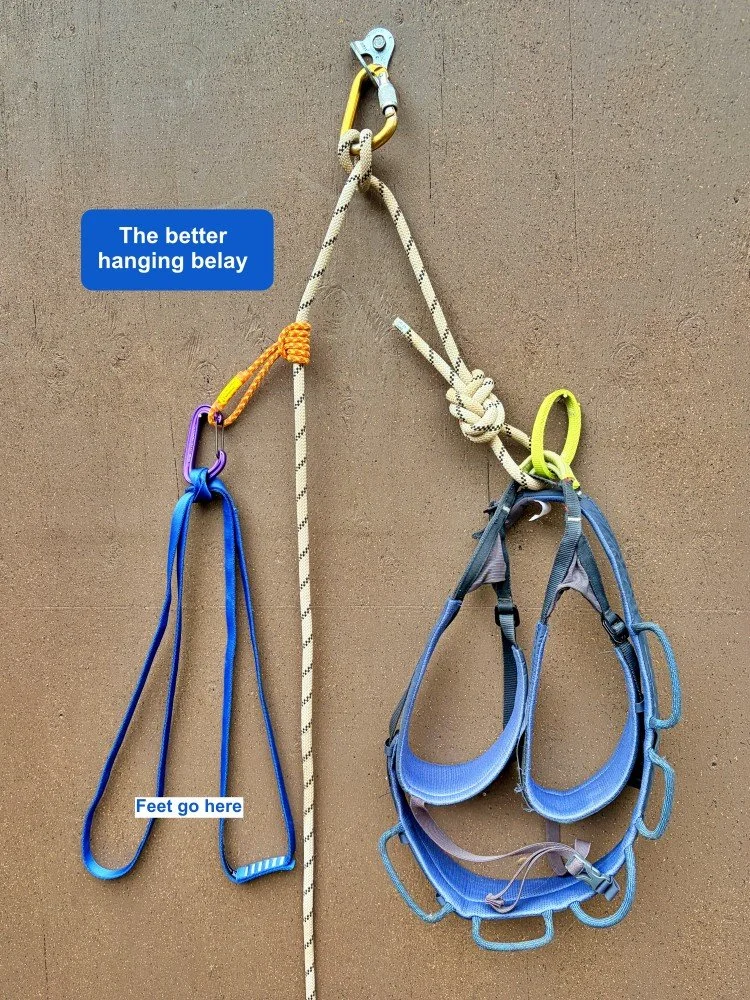
Here's a close-up of the sling, carabiner, and friction hitch. Note how the carabiner is clipped “inside” the overhand knot. This keeps the two arms of the sling from sliding around.

Block or swing: What's your leading strategy?
Learn some of the pros and cons to both block and swing leading.
One of the more famous examples of block leading. Billy Westbay, Jim Bridwell, and John Long, after the first one day ascent of The Nose on El Capitan, 1975.
Photo credit, Mike White

Photo credit, Mike White
When multipitch climbing, you and your partner have a choice to make:
Will one person lead multiple pitches at a time and then the other person takes a few pitches, known as block leading?
Will you alternate leads every pitch, also known as swing leading?
They both have their pros and cons depending on a few variables, so let's have a look.
Block leading
Block leading can be good for bigger days of harder climbing, as one person can get into the “leader-head” mentality. When the second arrives at the belay all tired, they get a rest.
If you're swinging leads, one person is standing still for two consecutive pitches as you move up the cliff. On a cold day, this sucks. When you lead in blocks, you only stand till for one pitch, so both partners stay warmer.
If you’re onsighting or on a climb where the route finding is tricky, block leading allows the person on top to scope out where to go, and maybe what gear is needed for the first few placements of the upcoming pitch.
If you're climbing in a team of three, block leading usually minimizes flubbering around at the belay.
It can be good for more experienced teams who are good at efficient belay changeovers and gear swapping.
For more advanced techniques, such as “fix and follow” or short fixing when aid climbing, block leading is strongly preferred.
(On a related note, when you have a long multi pitch rappel, it's often good practice to have one person be the “leader” and go first on all the raps.)
One early and well-known example of applying block leading strategy was the first one day ascent of the nose on El Capitan in 1975 by Jim Bridwell, Billy Westbay, and John Long. They divided the 30+ pitches between each of the three climbers, depending on their specialty, whether it was free climbing, mixed free and aiding, or mostly all aid.
Here’s a firsthand account of that famous climb, by (the late) Jim Bridwell.
You could use the same strategy on a longer multi pitch. Is one partner better with smaller size cracks because they have smaller hands? Is one partner better with thin face climbing? If you've got several pitches of a certain climb flavor, it may be best to have the person lead it who’s most suited.
Swinging leads
Swinging leads is more common for most people.
It can be better in warmer weather, because the leader can stand around more without getting cold.
Is it better for easy climbs or hard climbs? Opinions differ. When you lead every other pitch, you get sort of a built-in mental rest. On harder climbing, the follower can have a break, instead of climbing back-to-back hard pitches. So, there's some mental / psychological benefits as well as physical ones.
Swapping leads can feel a bit more fair and egalitarian.
Rope management and gear management is also slightly easier because the second has been cleaning the gear on the previous pitch. They have most of it already, plus their end of the rope is on top of the stack or coil.
That's a pretty good summary of the two methods, as I see it.
Just because most people probably learned swinging leads as the standard when they started climbing, doesn't mean you have to use that same strategy on every route. On your next multi pitch, talk it over with your partner and maybe try something new. You might like it!