
Trees for climbing anchors: Part 4, Multipitch

Premium Members can read the entire article here:
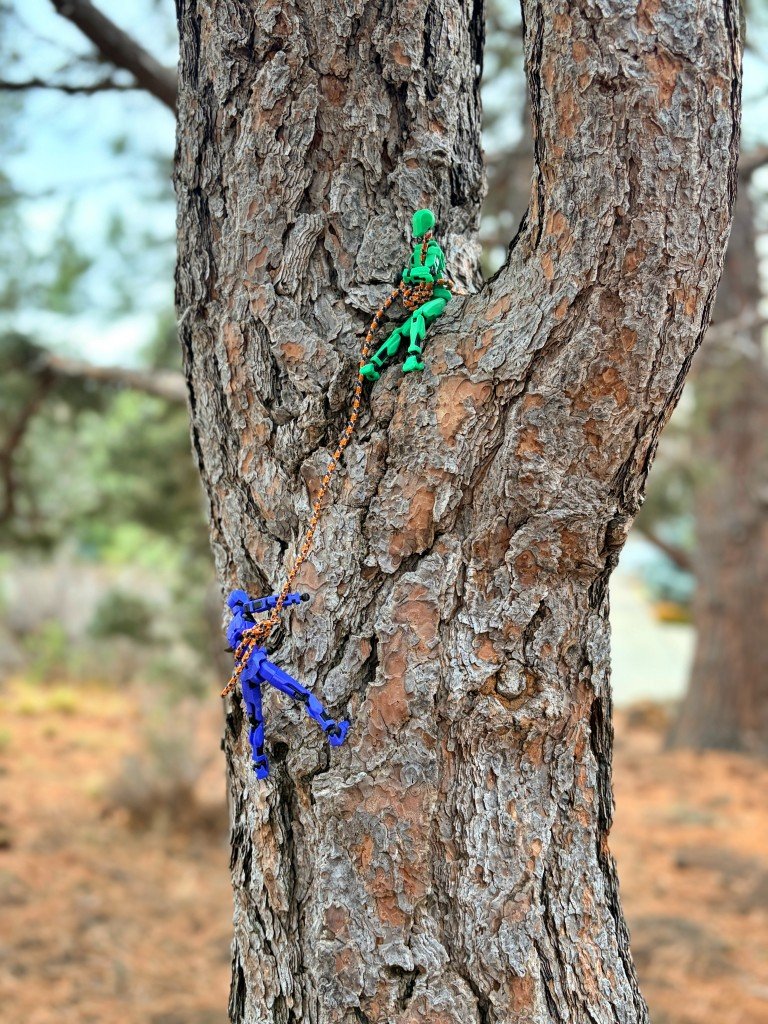
Trees can be some of the best climbing anchors, whether it's for top rope, rappel, or multipitch.
This is a big topic, so I'm tackling it in four different parts:
Let's get to it.
Keep rigging simple when possible
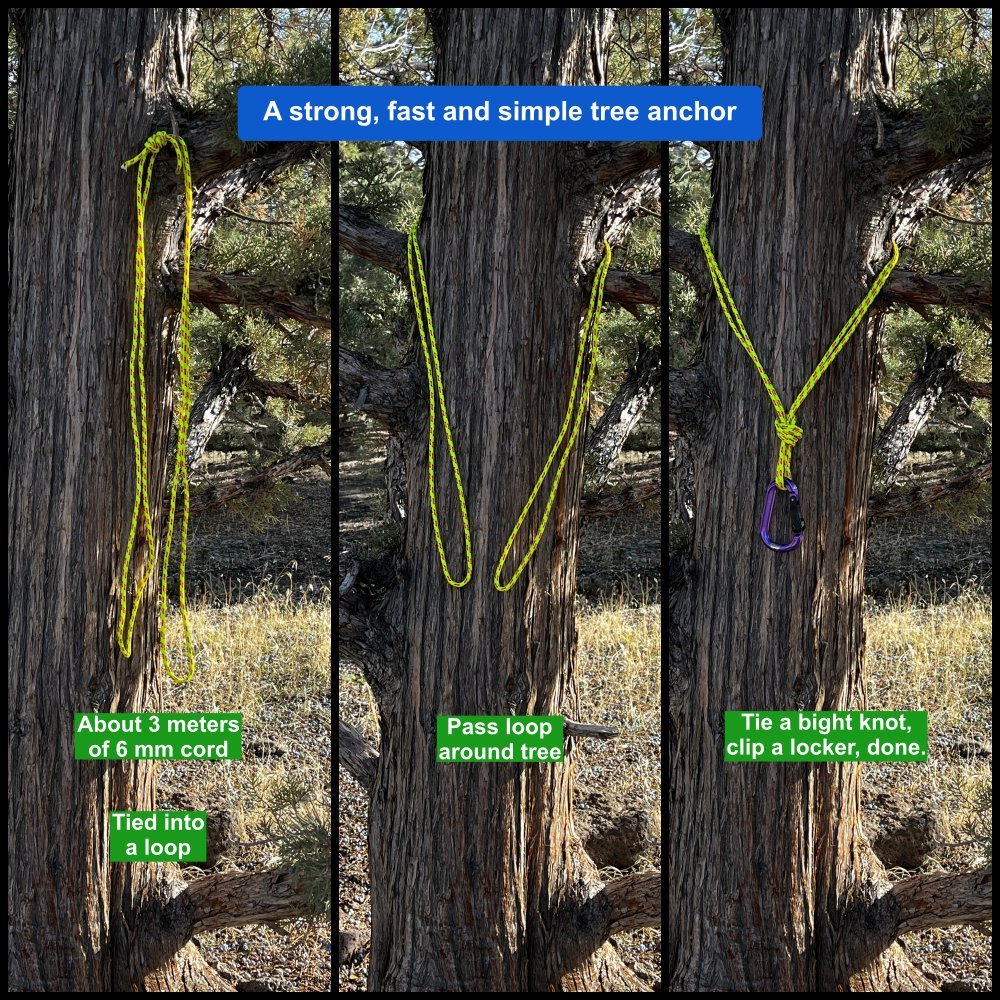
A 240 cm sling or about 3 meters of 6-7 mm cord are very helpful for building tree anchors. Here's a simple way you can rig it.
If there’s a decent size live branch at a convenient height, pass the sling above the branch to hold it in place. This assumes that the tree has a large enough diameter so you can safely put your sling at around head height. If you have any doubts, attach the sling near the tree base to reduce leverage.
Basket hitch the sling or tied loop of cord around the tree. If you have a sturdy and live branch, pass the cord over the top of the branch to hold it in place.
Tie a bight knot for a redundant master point. If you're short on cord, you can make it a girth hitch master point.
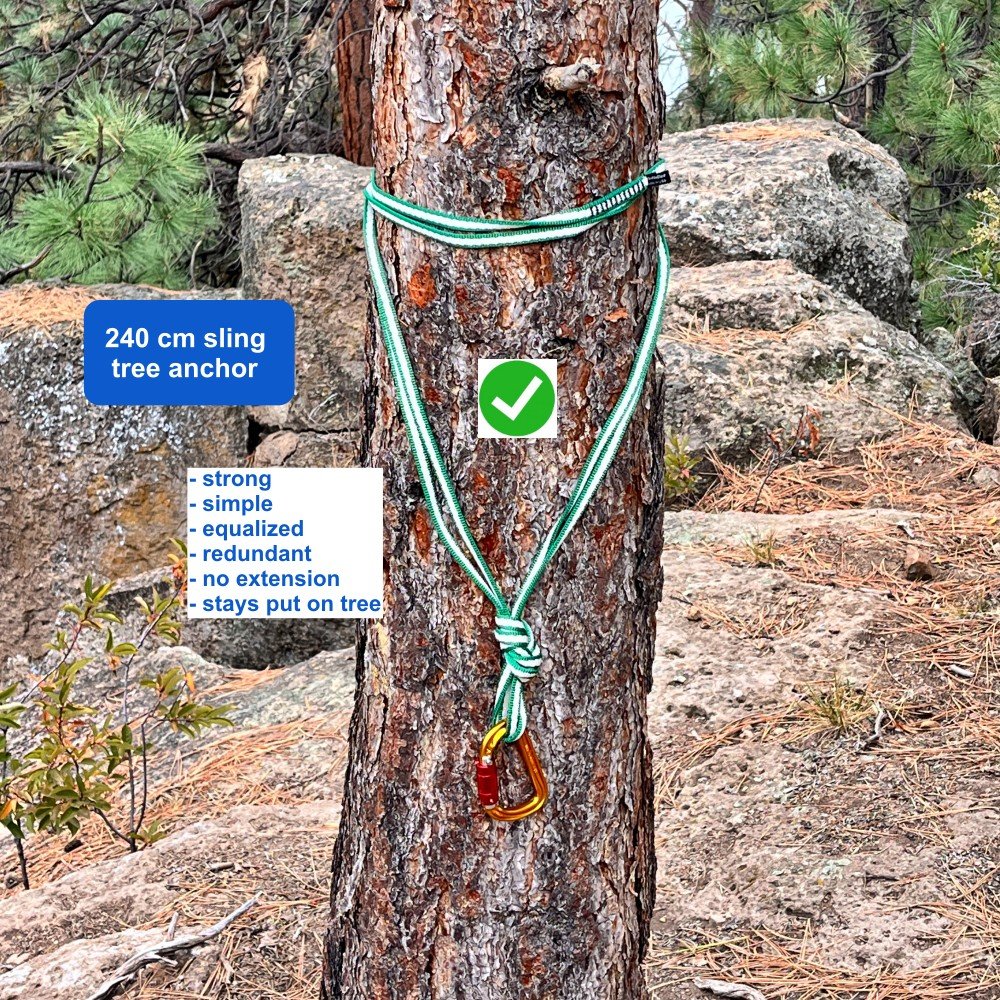
Done! This anchor is fast to build, simple, strong, redundant, equalized, no extension, all that good anchor acronym stuff. =^)
Ways to attach a sling so it doesn't slide down the tree
If there's no branches, attach a cordelette or 240 cm sling as shown below. The extra wrap should keep it nicely in place.
Here's a short video of me tying an anchor like this.
If you have a 120 cm sling and a smaller tree, you can make a “shoelace wrap” anchor.
Start with the sewn part of your sling on the front of the tree.
Make a basket hitch, and bring the sling arms to the front of the tree.
Wrap the ends a couple of times around each other to hold it in place. (That's the “shoelace wrap” part).
If you have enough cord left, tie a girth hitch master point to make the entire thing redundant.
If you don't have enough cord, simply clip both ends of the sling with a locking carabiner.
Photo: “shoelace wrap” with redundant girth hitch master point.
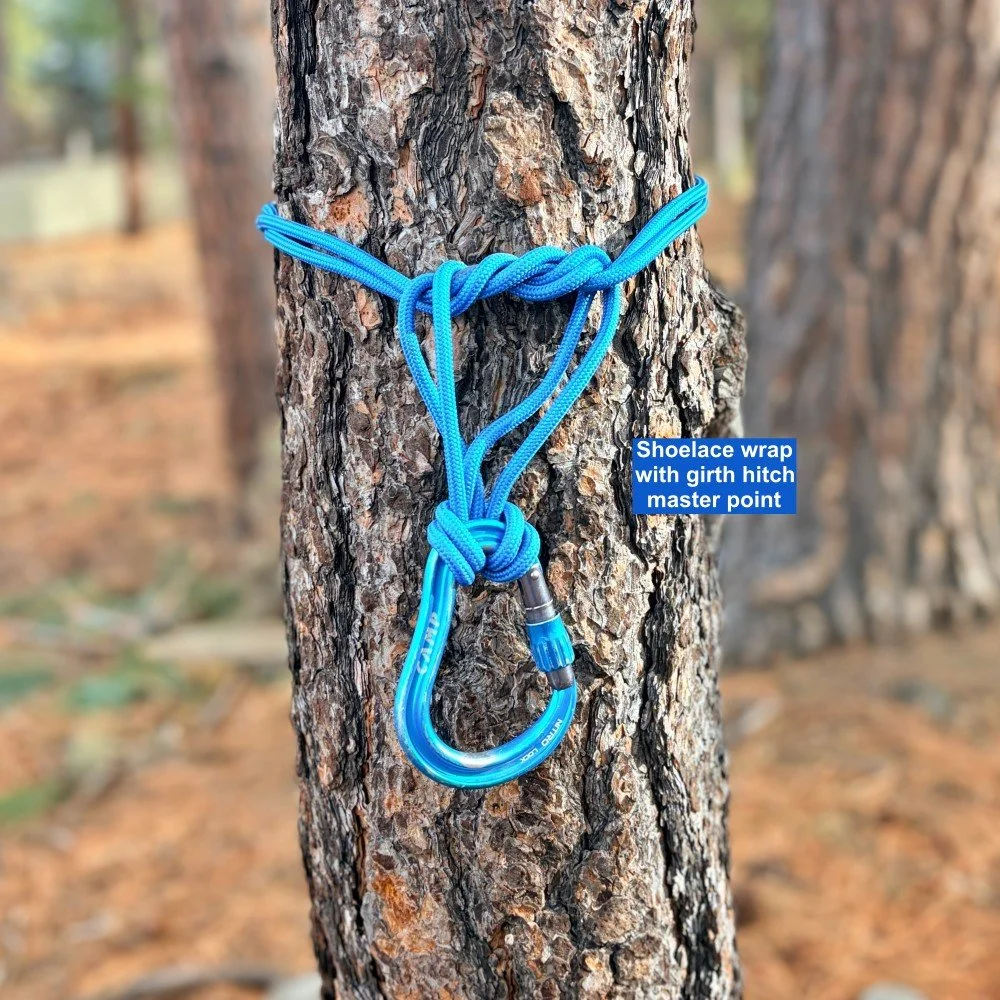
Photo: “shoelace wrap” with basket hitch (not redundant)
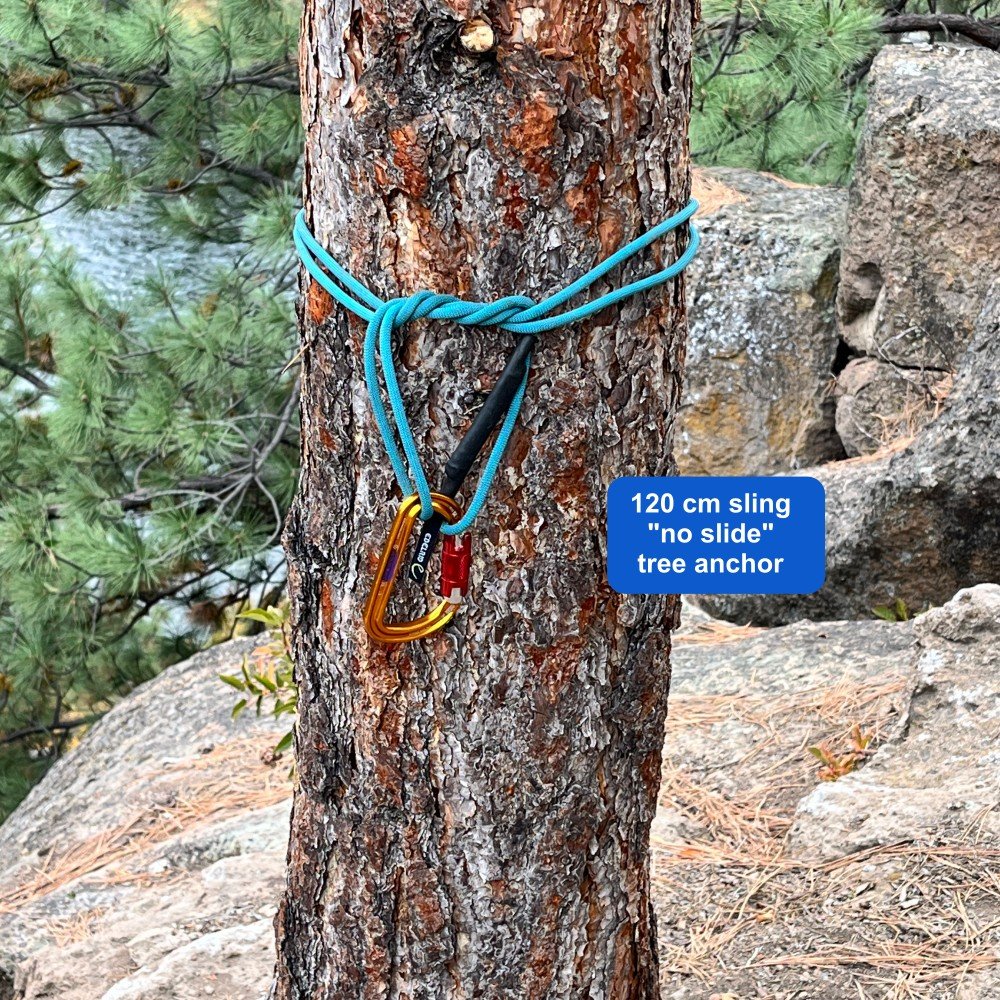
I first saw this “shoelace wrap ” method from IFMGA guide Dale Remsberg on Instagram. Dale caught a LOT of crap from when he posted this, with comments along the lines of “that's not redundant, you're multiplying the load because of the bad angle, you're gonna die, blah, blah, blah.”
Well, guess what, Dale is right and the haters are wrong. Yes it's redundant and yes, it's plenty strong. How do I know?
I tested it with Ryan Jenks from HowNOT2.com;
It broke at 16 kN!
Then we cut one strand, and it broke about 8 kN. #SuperGoodEnough!
Here's a short video of me demonstrating this flavor of anchor.
For multi pitch tree anchors, the leader is tied into the end of the rope, so you need to use rigging methods that don’t require the end of the rope.
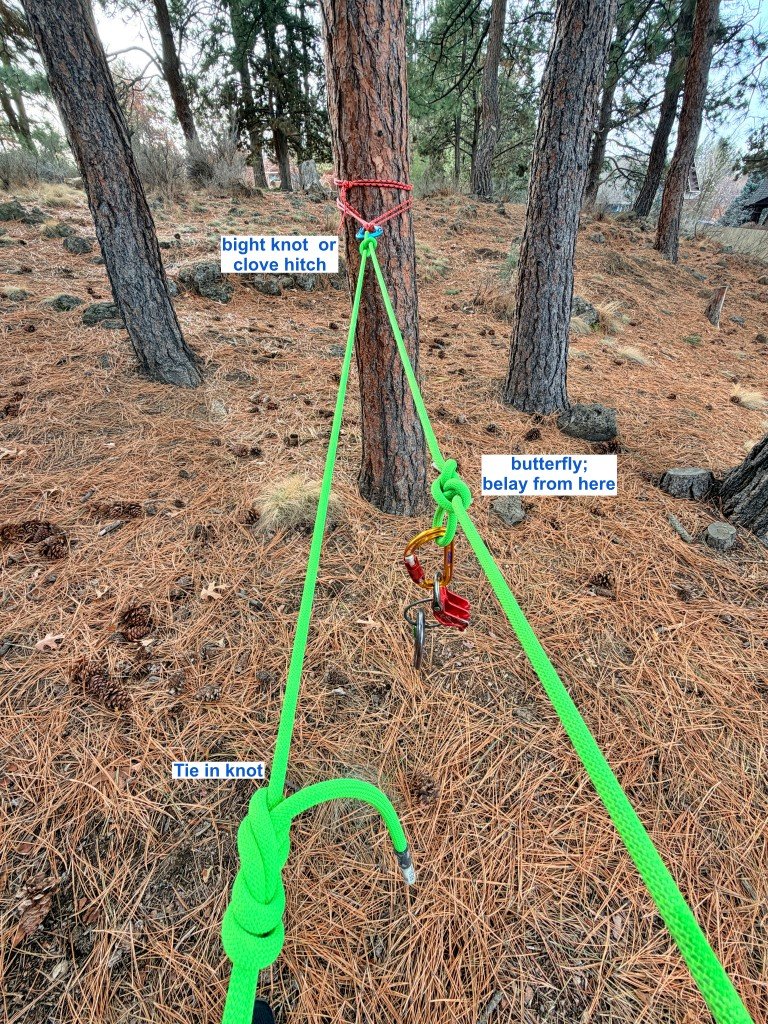
Method 1: Make an anchor on the tree, clip to it, belay from backside of anchor point.
Got a long sling or cordelette? This is probably the easiest method.
Pass a long (240 cm) sling or cordelette around a tree.
Tie it off to make a master point.
With your rope, tie a clove hitch or a bight knot and clip it to your master point, with enough rope so you can stand at a convenient spot. This length can be a short or as long as you need.
If you make your connection with a bit more rope than you actually need, you can take up the slack by clove hitching to your harness, or tying an overhand knot to take up the extra rope.
Tie a butterfly knot on the backside of your connection to the tree. Belay your partner from that butterfly.
Advantages to this method: if your partner takes a fall and loads the rope, it doesn't pull your strand down, only the belay strand. Also, there's no chance of getting tree sap on your rope.
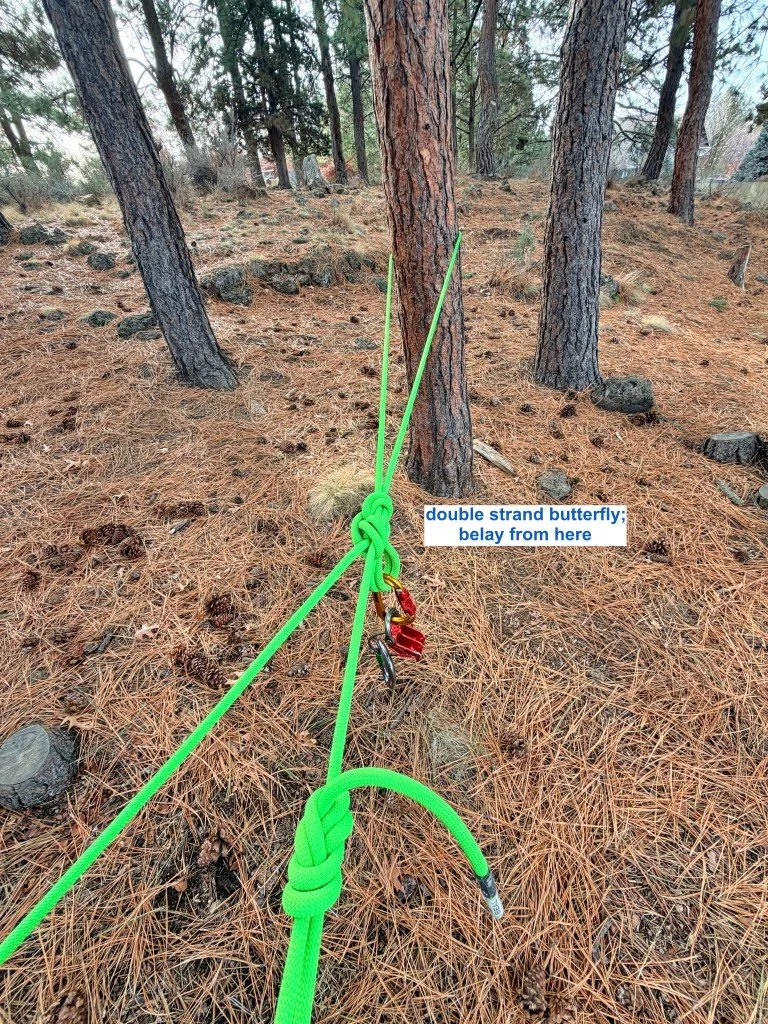
Method 2: Walk around the tree, tie a BHK in both strands, belay from BHK
This method works well if 1) you can walk around the tree, and 2) you don't have a long sling or cordelette.
Downsides to this method: 1) The rope can slide down to the base of the tree, so anticipate this. 2) If your partner falls or needs a take, it loads the strand you’re tied to, so this might be more comfortable if you're sitting on a ledge. 3) Chance of getting tree sap on your rope, yuck.
Walk around the tree, then walk to where you want to belay from. This could be right next to the tree, or it could be some distance away.
Pull up about 2 meters of rope, and tie a BHK (Big Honkin’ Knot; / 2 strand butterfly or overhand) in both strands. The BHK both secures your position, and gives you a convenient spot to belay from. I'm a fan of the 2 strand butterfly, because it's easier to untie after it's been loaded.
Belay your partner up from the BHK knot.
What's a tree anchor “elevator”?
How is the shelf on a tree anchor different than a shelf on a bolt anchor?
What's my take on the Connecticut tree hitch?
