
Trees for climbing anchors: Part 3, Top Rope

Premium Members can read the entire article here:
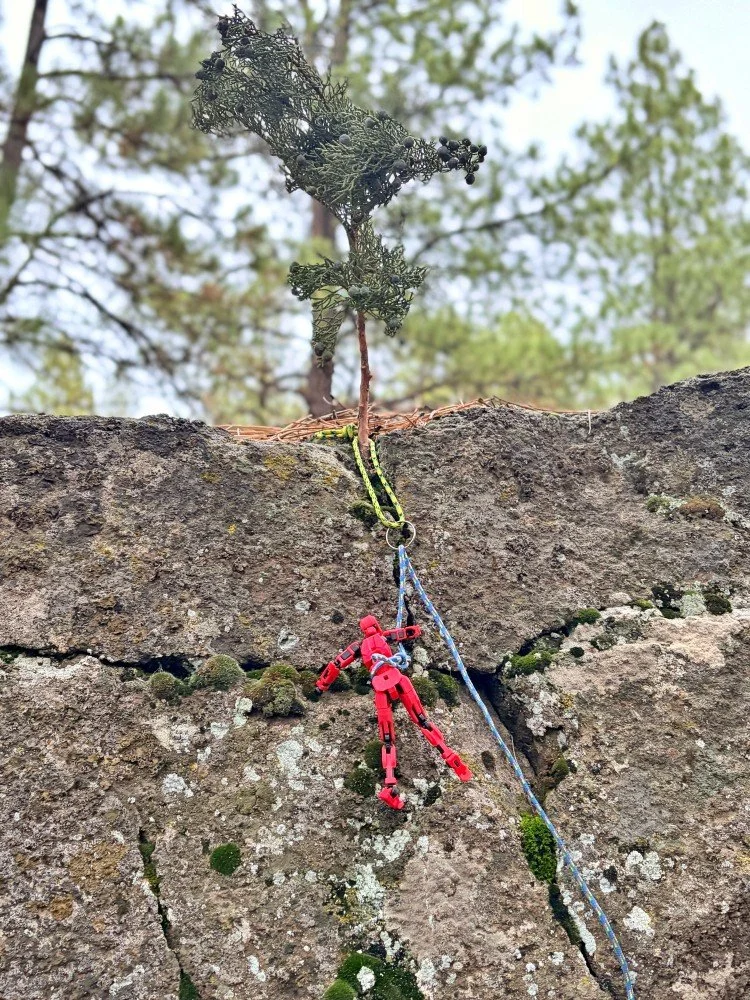
Trees can be some of the best climbing anchors, whether it's for top rope, rappel, or multipitch.
This is a big topic, so I'm tackling it in four different parts:
Let's get to it.
If you have cliff top access, some decent nearby trees and a rigging rope (a separate rope in addition to the one you're climbing on) you’re all set to build a solid top rope anchor.
Here's one way to do it.
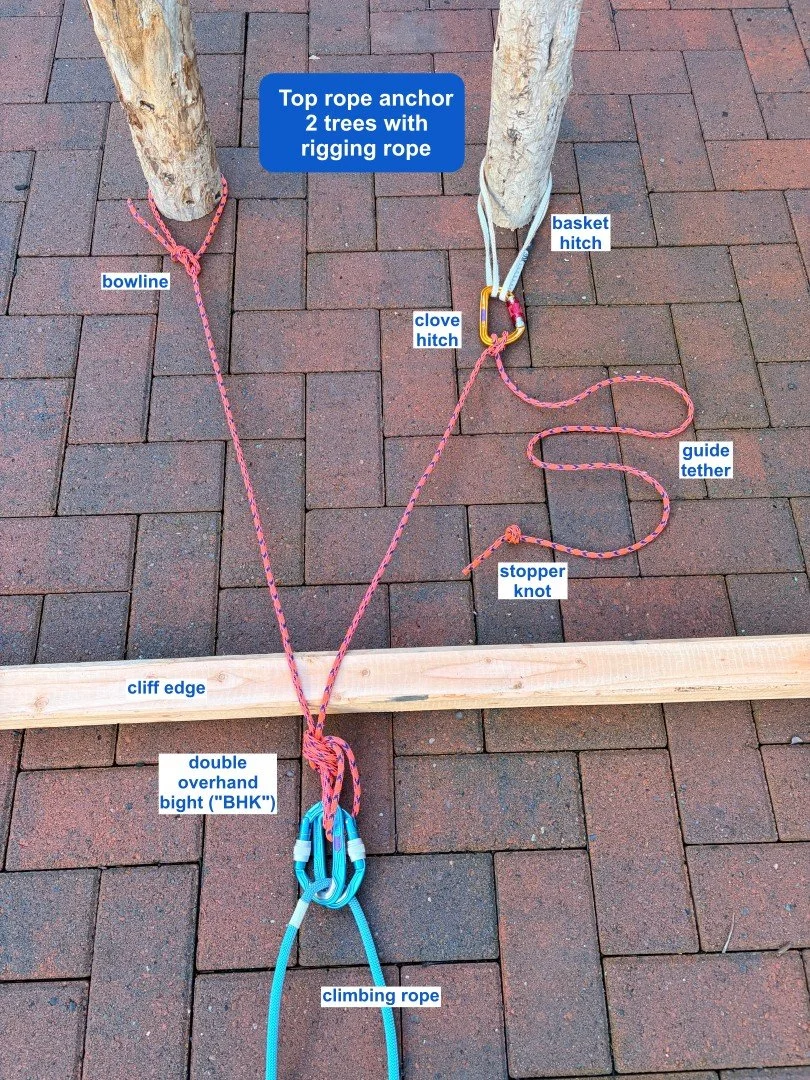
Tie one end of your rigging rope around a solid tree. A bowline is a good choice.
Walk out toward the edge of the cliff. If it’s sketchy, loose rock, exposed, whatever, you can belay yourself with a friction hitch or Grigri. Bring your actual climbing rope along with you.
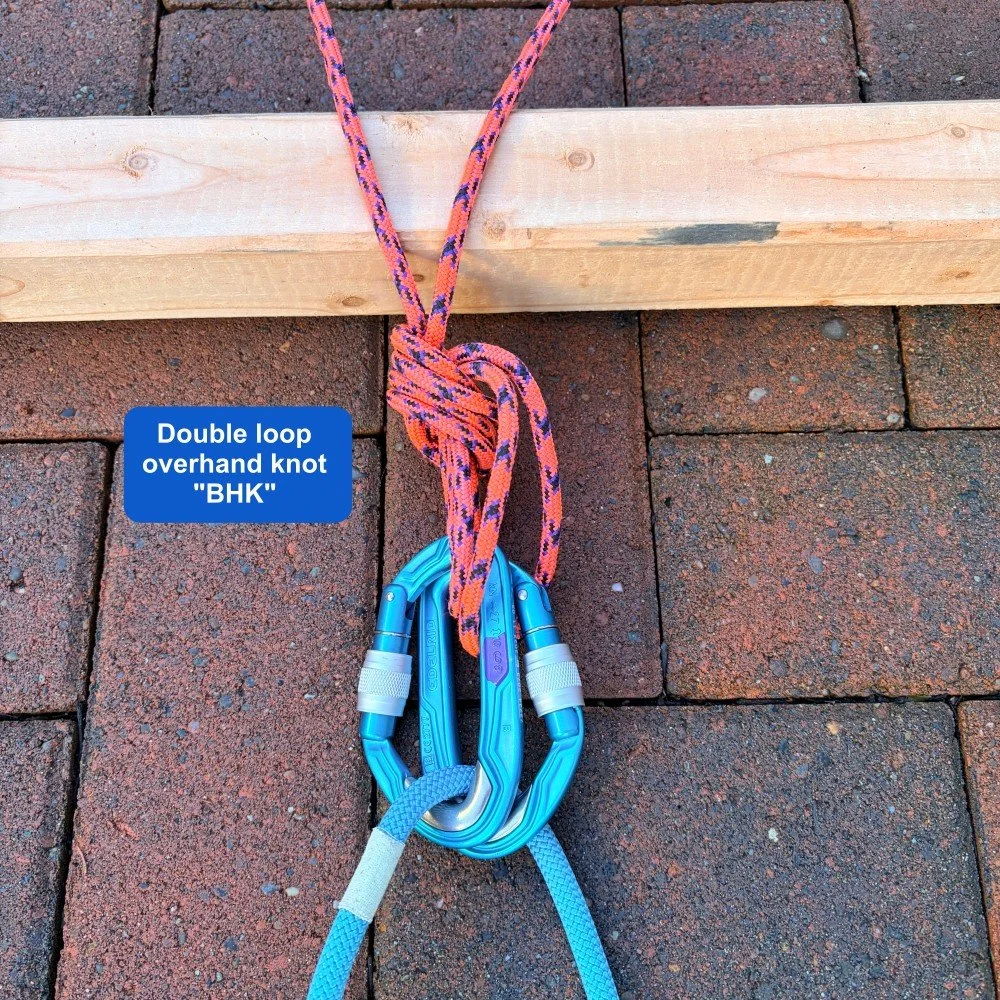
When you're at the edge, pull in a few meters of slack on your rigging rope. Tie a bight knot for your masterpoint. For two redundant loops, tie a BHK, or double strand overhand. (You can also tie a figure 8, which gives you one loop.)
Clip two locking carabiners, opposite and opposed, to the master point.
Clip the middle of your climbing rope to the two locking carabiners.
Toss both strands of your climbing rope down the cliff.
Walk back up toward your first anchor. Find a second tree. Basket hitch a sling around the tree, and clip a locking carabiner to the sling.
Pull up on the other arm of the rigging rope that's going down to your master point. When you feel it getting a little snug, that’s the weight of the rope going down the cliff. Tie a clove hitch (or figure 8 on a bight) and clip that knot to the second tree.
If the cliff edge is rough or sharp, consider putting some kind of padding under each rope strand at the cliff edge to help protect it.
Done, ready to top rope!
See a video at the bottom of this page for a step-by-step.
Here's a close up of the BHK, or “Big Honkin’ Knot”.
Here's a short (0:48) video on how to tie the BHK.
Keep the rigging low on the tree
For rappel anchors and multi pitch anchors, it’s often convenient to have your rigging about head height on the tree. That's not the case for a top rope anchor.
There's no real advantage to have your top rope rigging high on the tree.
By rigging at the base of the tree, you eliminate any chance of the rope slipping down the tree, the master point suddenly shifting under load, and you have maximum strength by minimizing leverage.

What about protecting the tree?
Conifer trees tend to have bark that’s thick and tough, while deciduous trees often have bark that’s thinner. The loads on the tree from top roping are gonna be minimal, but in some cases you might want to protect the tree.
Some ways to protect the tree include using scrap carpet, a floor mat from your car, or a backpack between the tree and your rigging. These often need encouragement to stay put over the course of the day, as they can fall down if the anchor isn’t under regular tension.
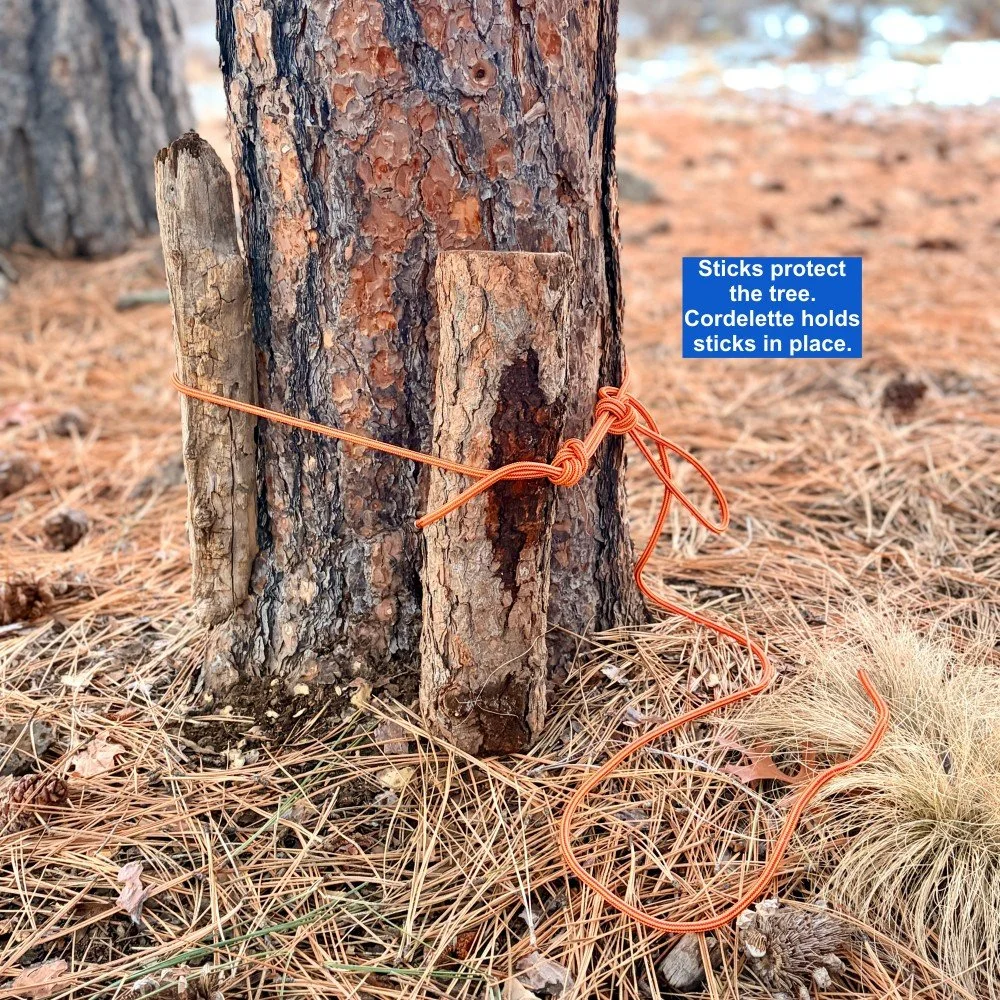
Here's another option: find some sticks / short branches (or maybe rocks) and put those between your rope and the tree trunk. The force goes onto the sticks and not on the trunk.
To do a better job of holding those branches in place all day, you could use a cam strap, or tie a trucker’s hitch with a wrap or two of a cordelette.
For top rope anchors with a rigging rope and convenient trees, you'll need to secure two strands of the rope to the tree(s).
There are LOTS of ways to do this! Here are a few of the more common methods for climbers.
Probably the simplest is to pass a long sling or cordelette around the tree, tie a figure 8 on a bight in the end of your rope, and clip that bight knot to the sling with a locker.
If the sling has a girth hitch master point or overhand/figure 8 on a bight, then the sling is redundant.
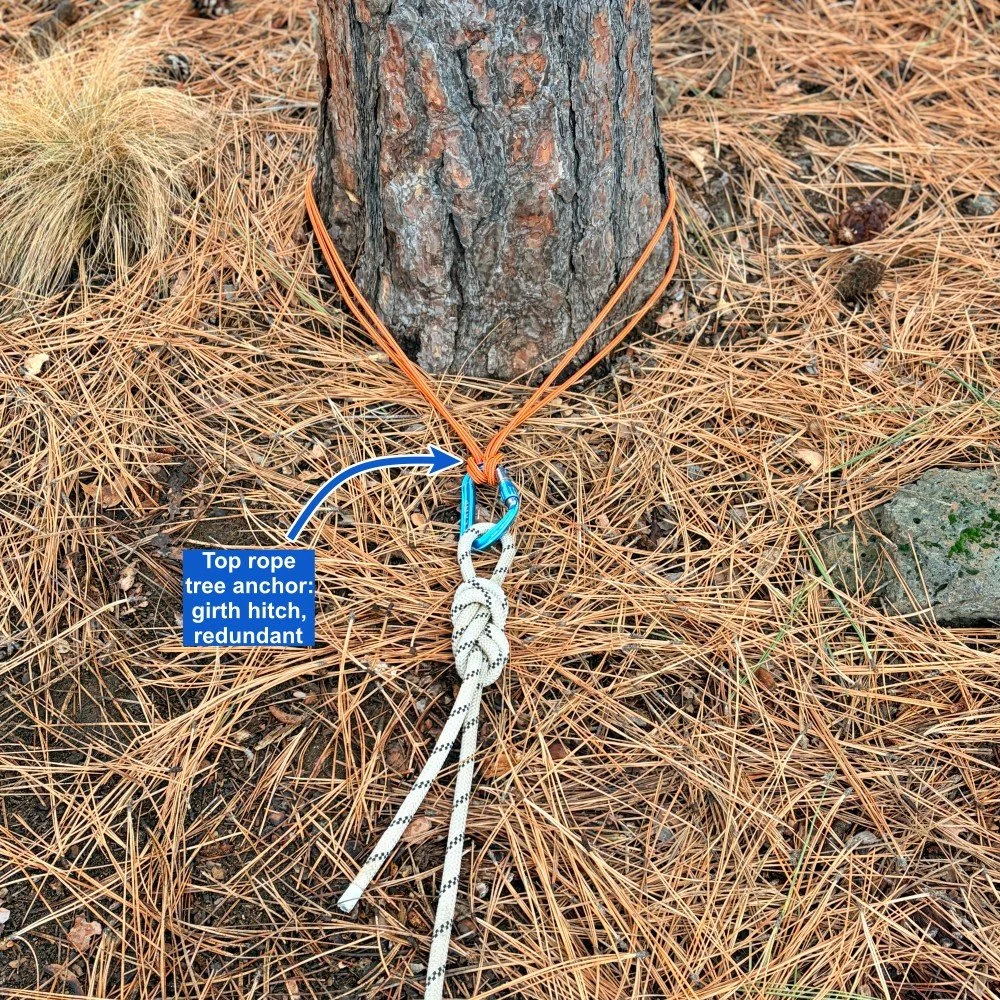
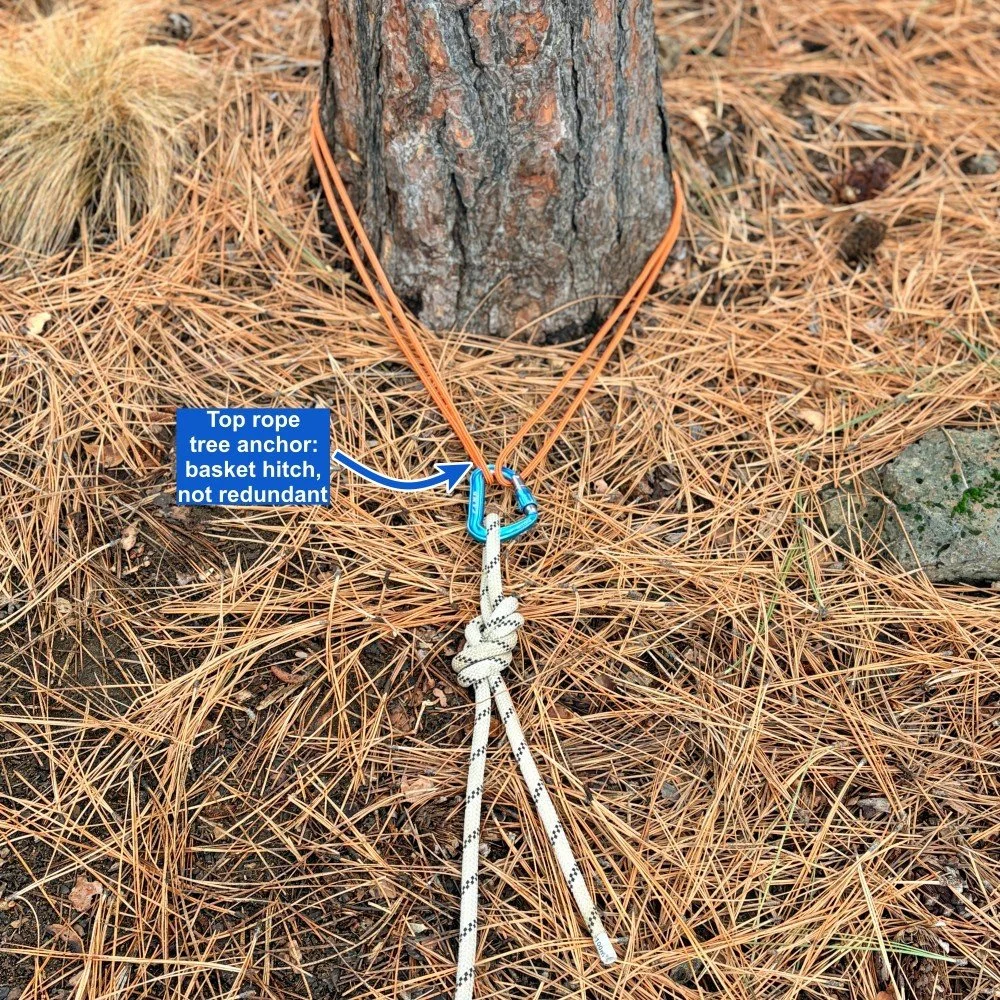
If you tie a a basket hitch like this, it’s plenty strong, but not redundant. If one strand is cut or fails, the entire anchor fails. Very unlikely, but possible.
You can also skip the sling, and tie the rope directly to the tree. Here are some ways to do that.
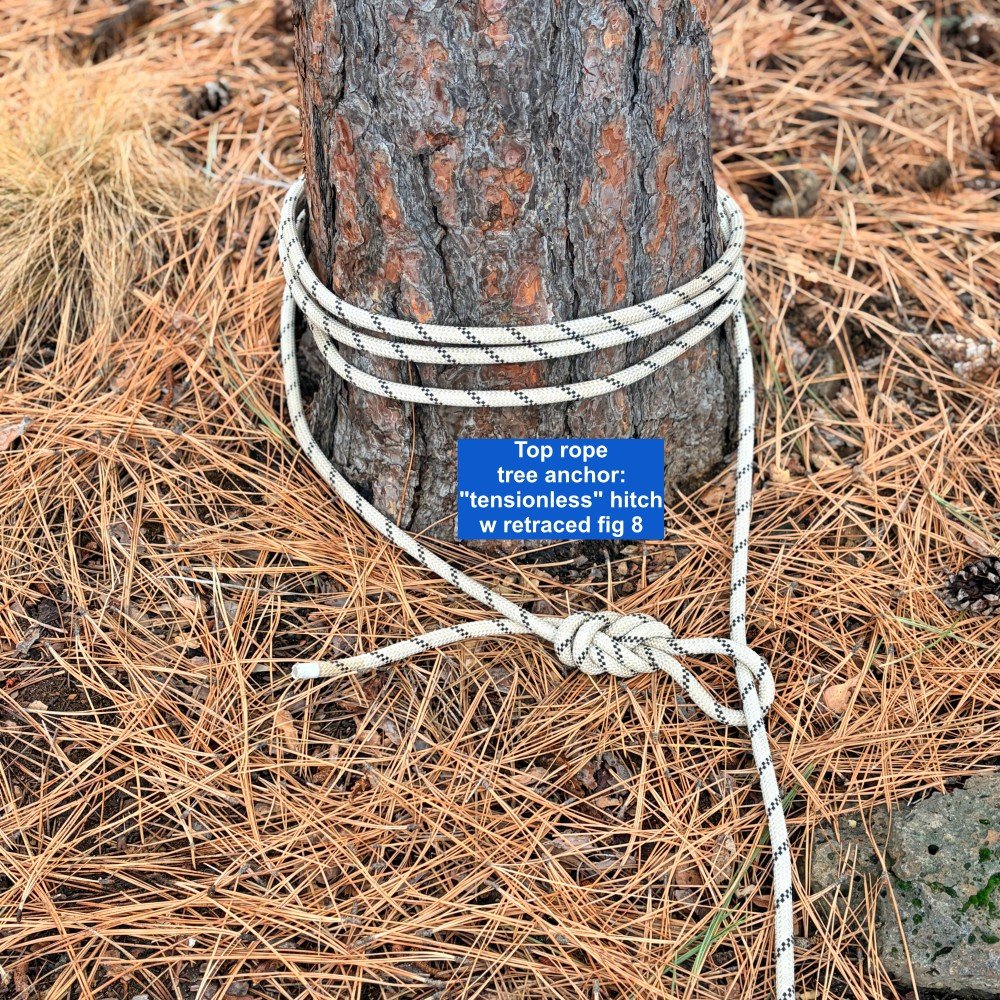
Retraced figure 8
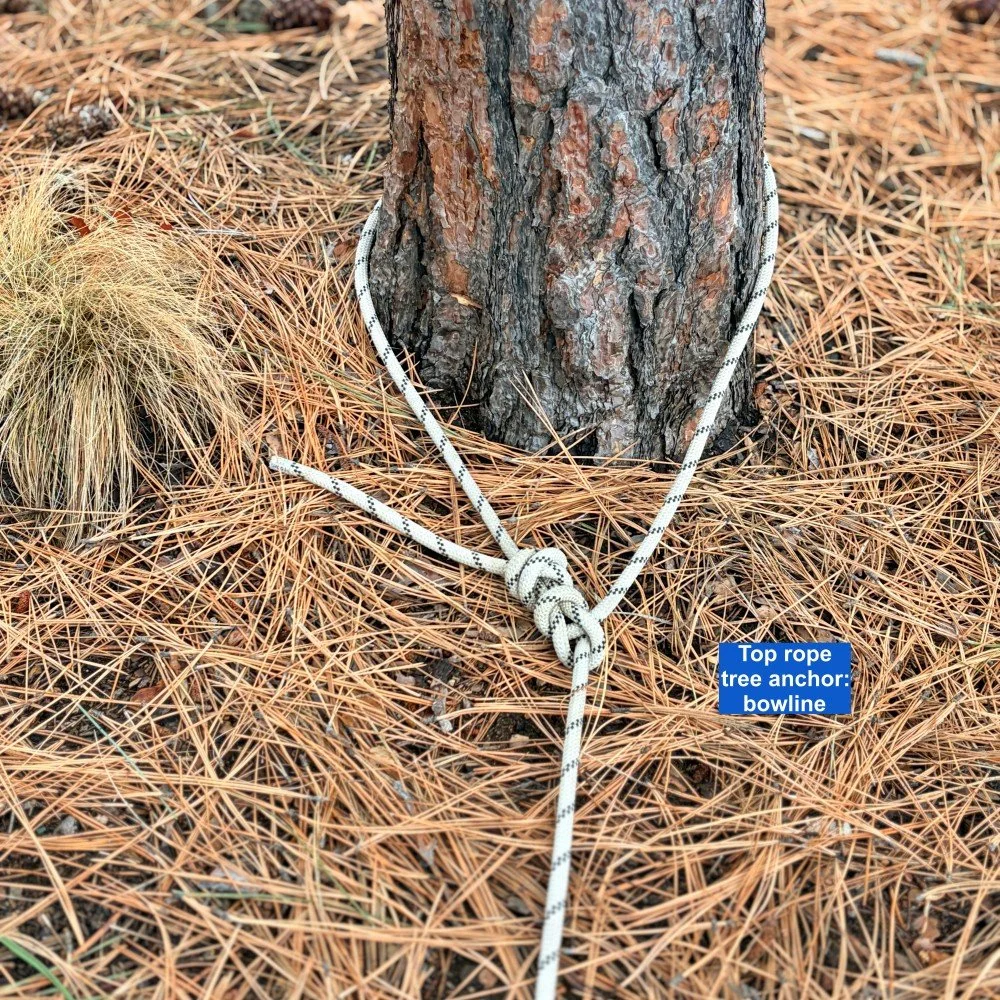
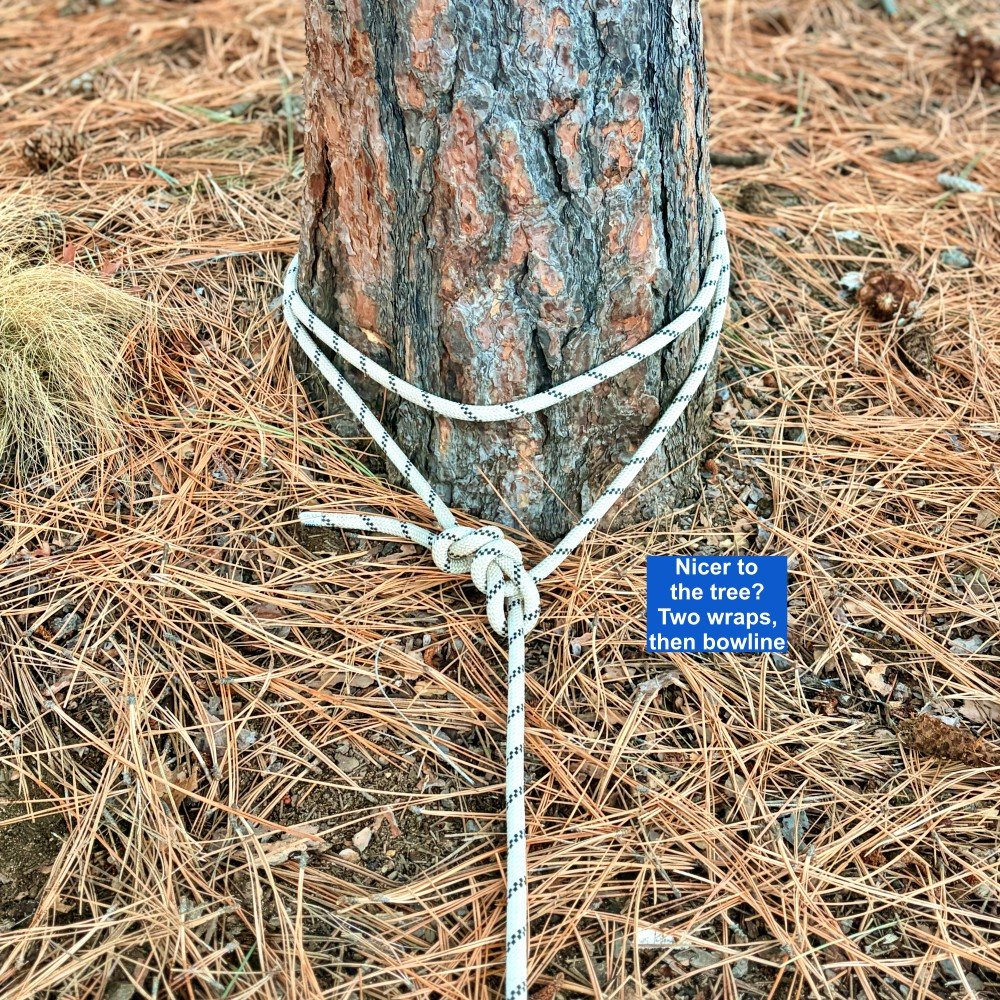
Bowline
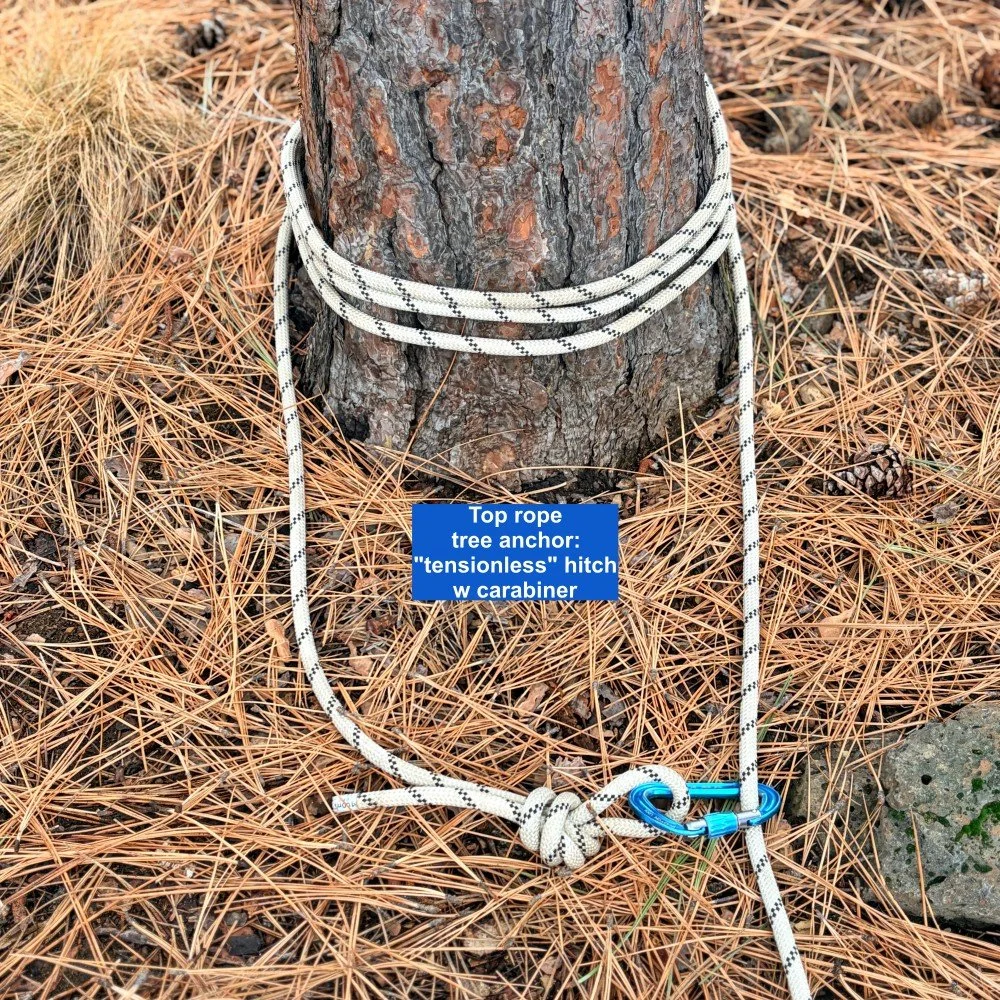
“Tensionless” hitch
Tying your rope directly to the tree can be nice because it uses minimal gear. Possible downsides: may get sap on your rope, and the tensionless hitch requires lots of extra rope and a bit more time to set up.
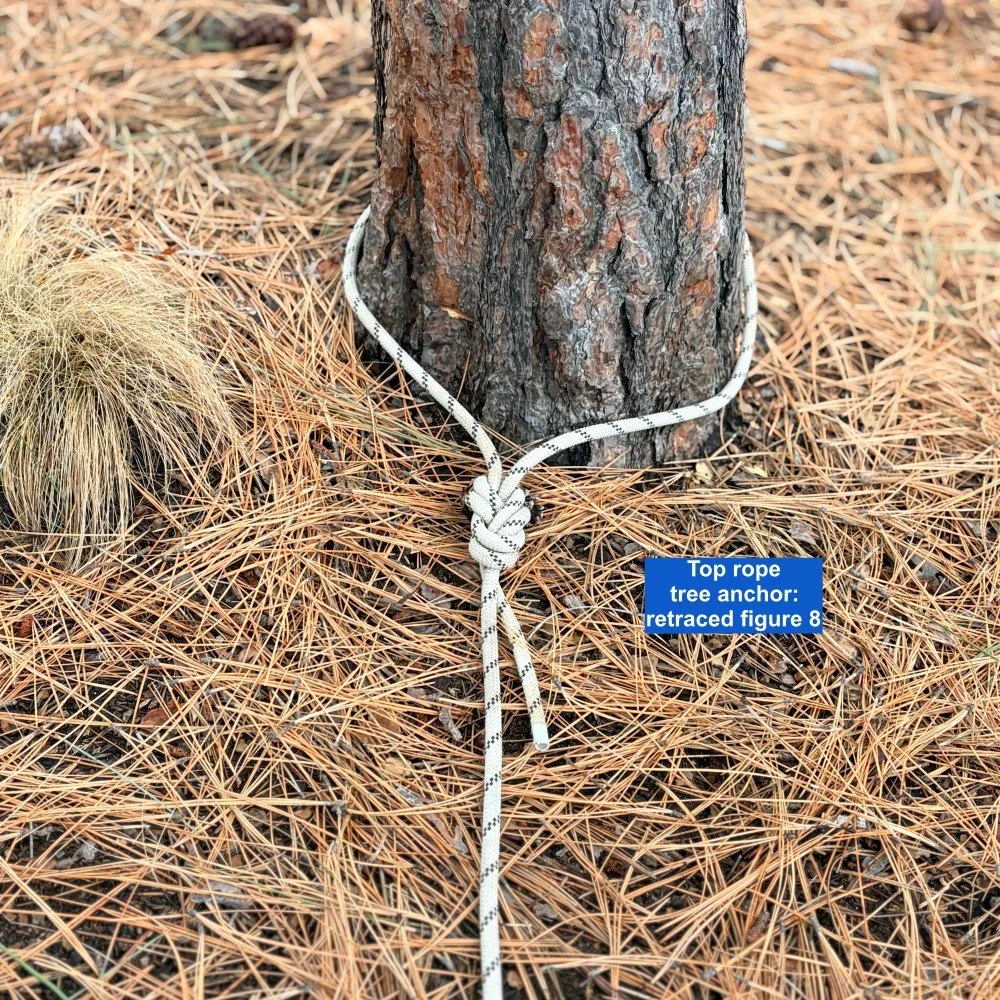
1. Retraced figure 8
A knot you know and love. Be sure and tie your 8 in about the right spot to give you enough slack. Hint: pull up more slack then you think you need. Should not be a problem to untie after loading, because you're top roping, not taking lots of whippers on it.
2. Bowline
Probably the fastest and simplest way to tie a rope directly to a tree. Be sure and leave a nice long tail and tie a stopper knot.
3. “Tensionless” hitch
The rope is basically held in place by friction, because of the several wraps of rope around the trunk. After wrapping the trunk 3-4 times, you can tie a bight knot and connect that to the load strand with a locker, or you can tie a retraced figure 8 around the load strand, no carabiner required.
If the tree has fairly smooth bark, you might want to take a few extra wraps.
This also tends to spread the load out around the tree in different places which may minimize damage to the tree bark. Here’s a more detailed article on the tensionless hitch.
Finally, here's a sort of a hybrid between the bowline and tensionless hitch. Take two wraps around the tree, then tie your bowline. The extra wrap of rope spreads out load and is probably nicer to the tree.
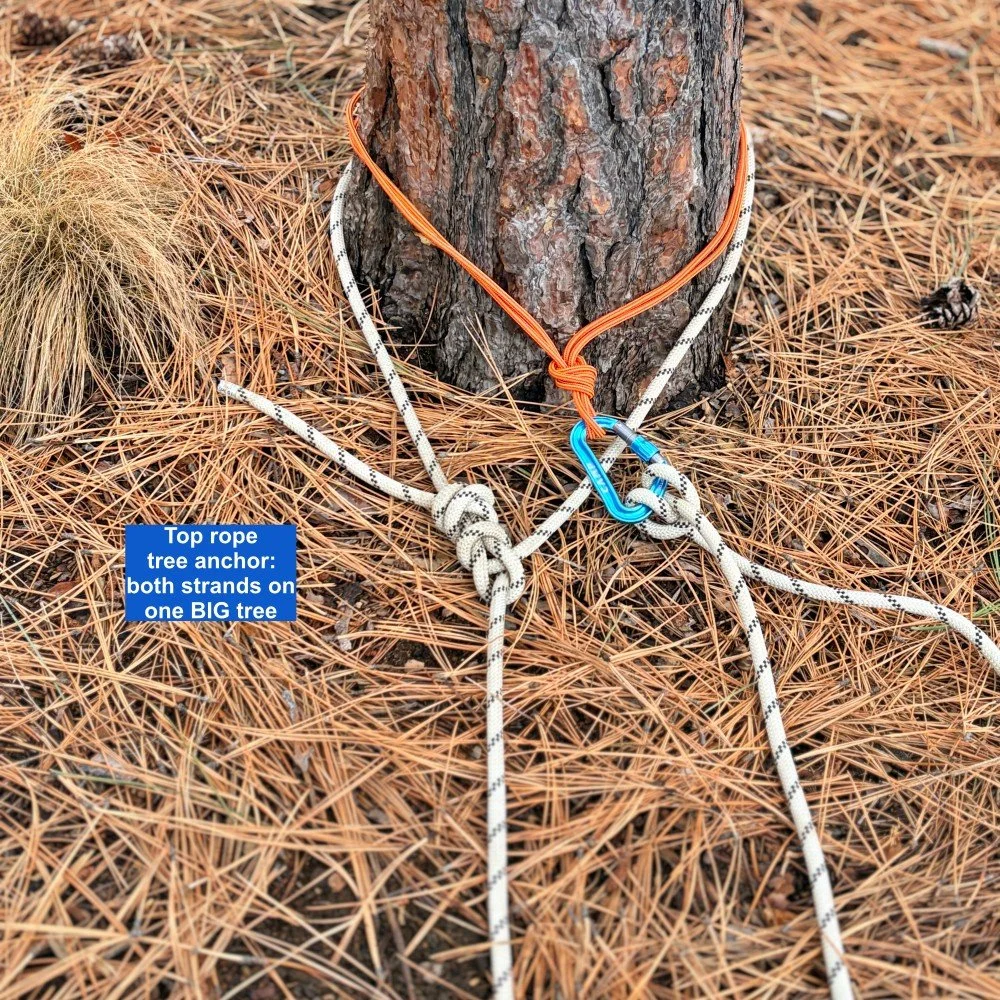
Can one tree be your entire top rope anchor?
Yes, if it’s unquestionably strong. If you're making a top rope anchor out of a rigging rope, you can use the same tree for two different arms of the anchor.
One nice benefit when doing this: both arms of the rigging rope are coming straight from the tree, so you can use a single rope protector if needed on the edge of the cliff.
What if I have two small trees, how can I rig that?
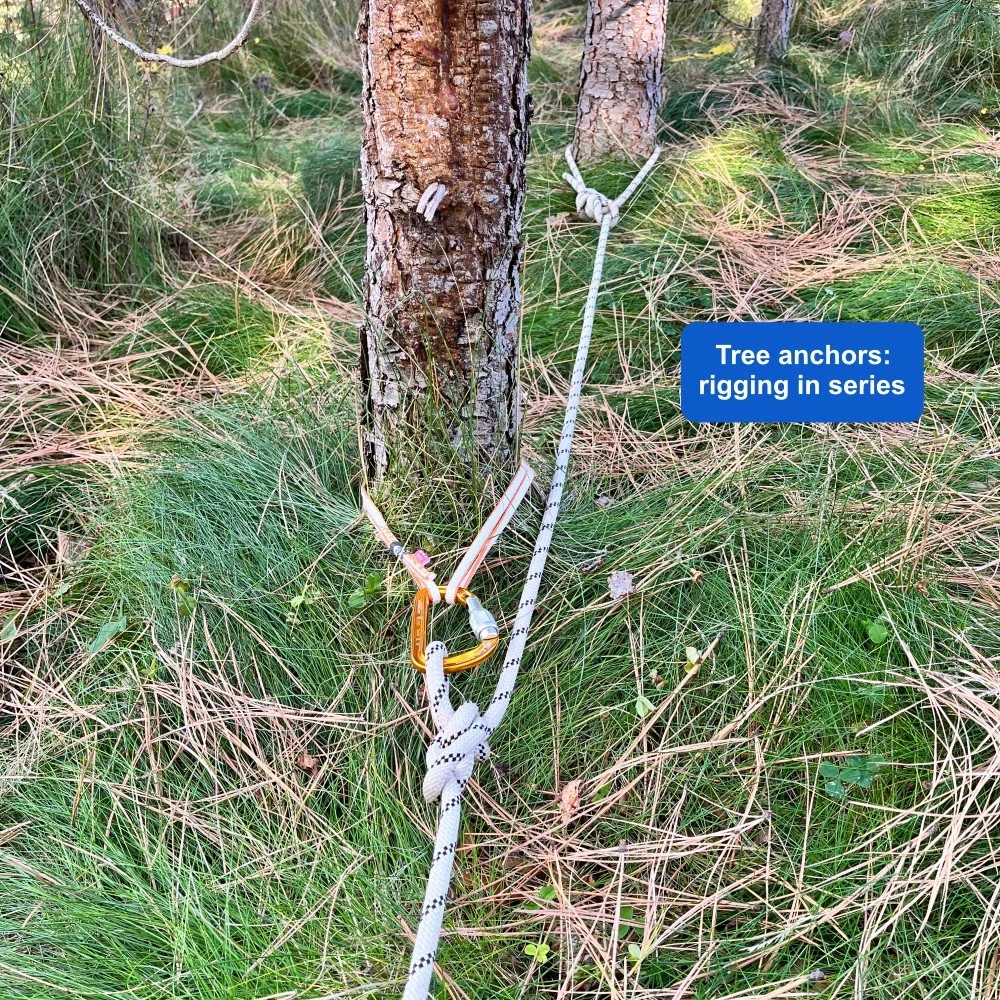
There are many options. You could equalize two questionable trees, just like you would with placing gear. You can also use trees in series, provided they are growing more or less in line with the direction of pull, sort of like this.
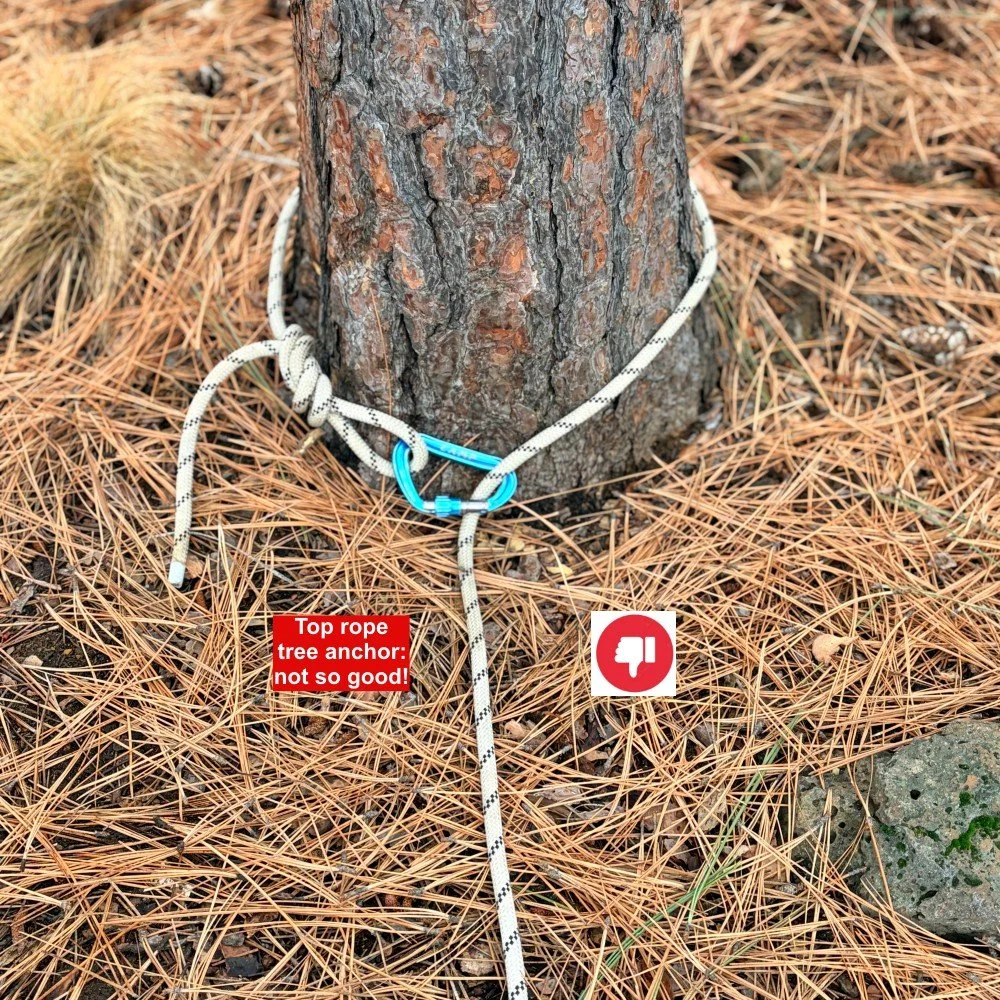
Avoid this . . .
This is a pretty common beginner technique for securing the end of the rope to a tree. It’s probably gonna be okay, but definitely not best practice. The carabiner is being loaded in a weird way, and there's simply lots of better ways to do this.
Here’s an improvement over the anchor just above.
Butterfly in the load strand, clip the bight knot in the end of the rope to the butterfly. Much better loading of the carabiner. Still non-standard rigging, but nothing wrong with it. (Hint - go practice your bowline . . . =^)

How can you use a single rope protector if the rope is tied to two trees that are far apart?
If you’re top roping from the top of the cliff, and there's a tree a long distance from you, how can you set up your anchor?
Want to see a video showing this anchor rigging, start to finish?
