
Use your climbing rope as a “cordelette” anchor

Premium Members can read the entire article here:
British climbing expert Andy Kirkpatrick made a recent Substack post about setting up fixed ropes for rappelling. His article had an interesting diagram I'd never seen before.
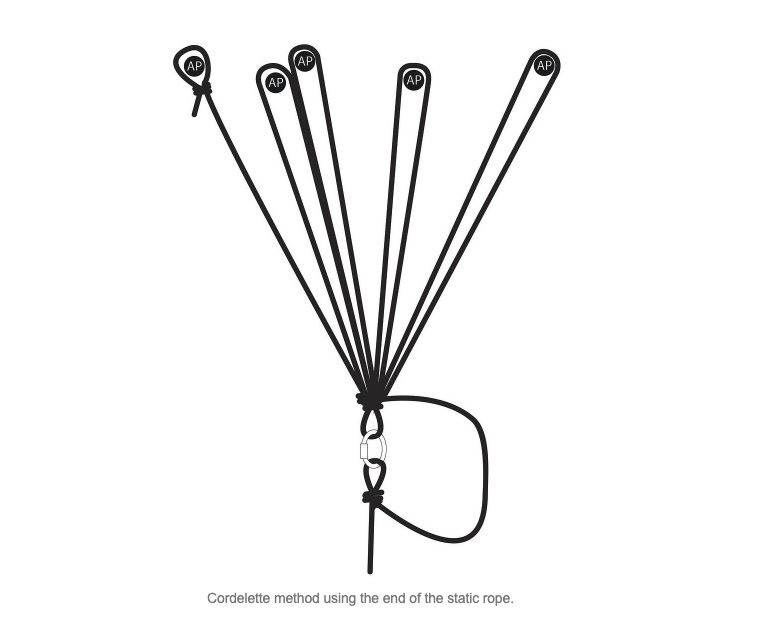
image: Andy Kirkpatrick, shared with permission
Andy's somewhat cryptic caption: “Cordelette method using the end of the static rope.”
Now, I've (thankfully) never made a five point anchor in my life, but this was a new #CraftyRopeTrick for me, so I had to play around with it.
I'll admit I was a little skeptical, but . . . hot damn, it works!
There are some other techniques (see below) that work well for two anchor points that are close together.
However, Andy's method really shines if:
you have more than two anchor points, and/or,
the anchor points are far apart, or far back from the edge of the cliff
Here's how to rig it a “rope as cordelette” anchor, step-by-step.
(To make a clear example, here the anchor points are close together. In the real world, they could be quite far apart or spread out.)
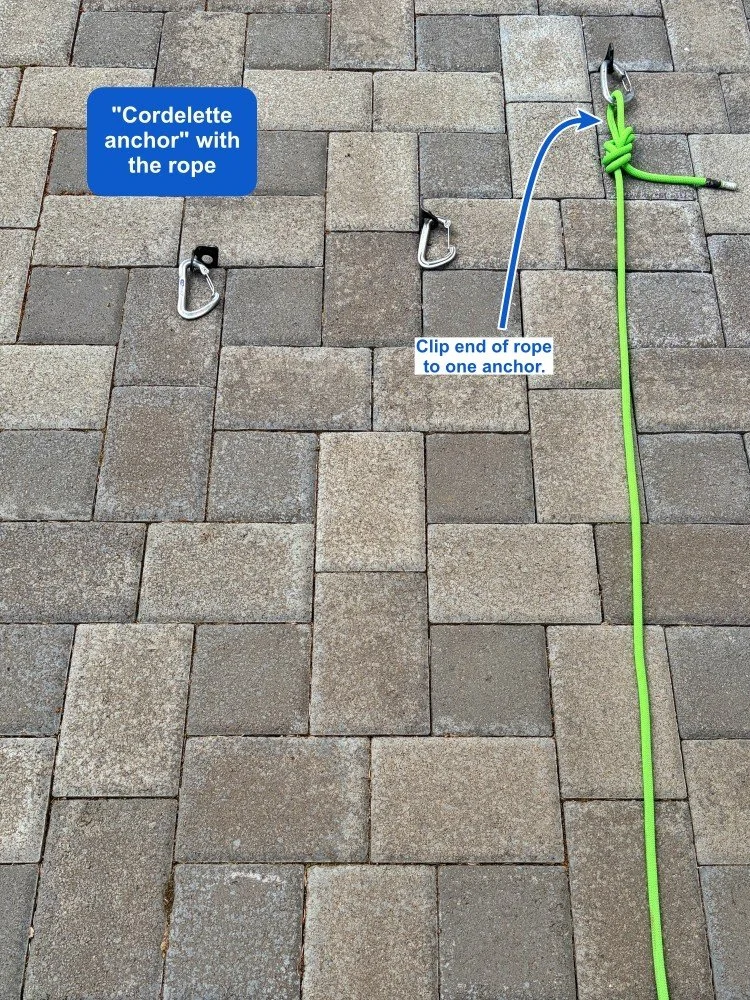
1 - Tie/clip the end of the rope to one anchor point.
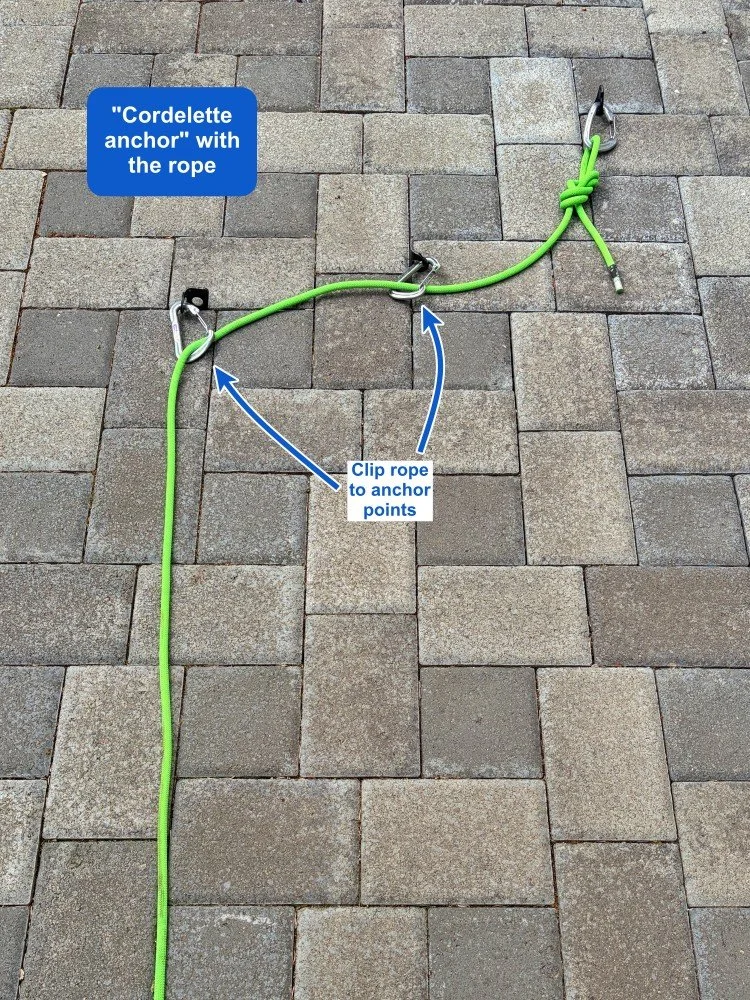
2 - Clip the rope to one or more additional anchor points.
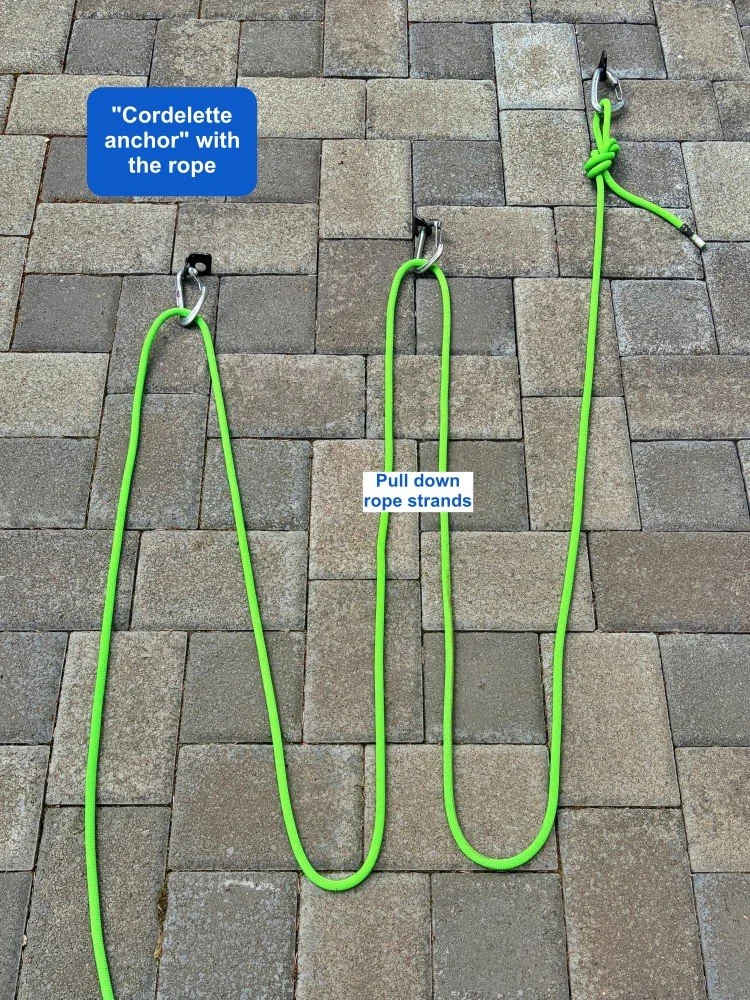
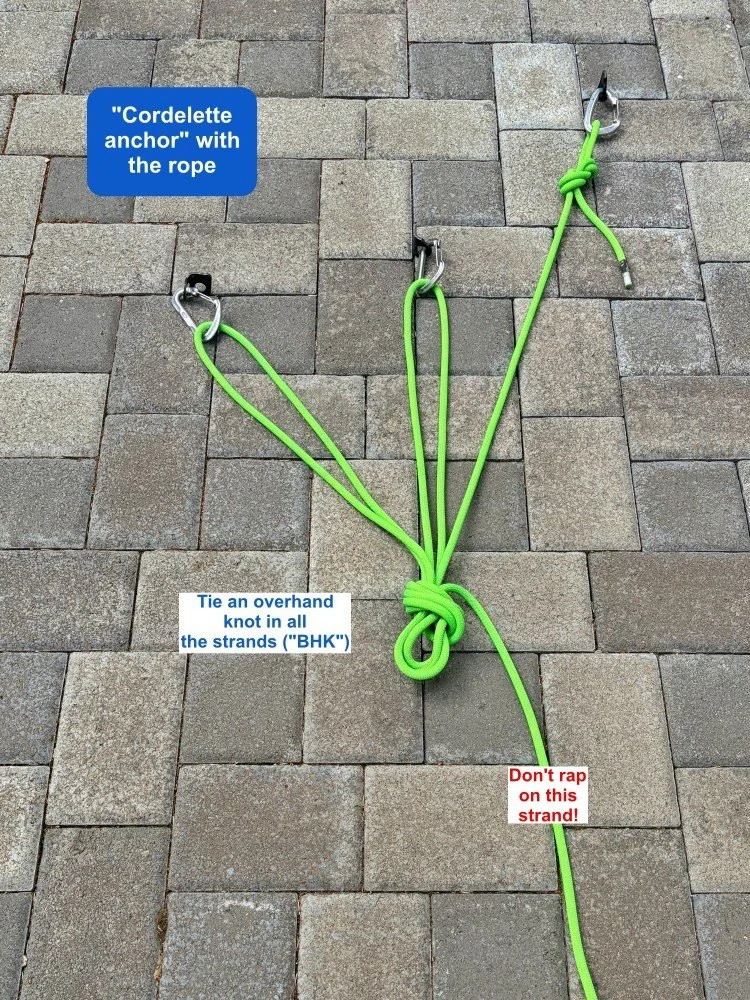
3 - Pull down the strands to make a sort of “W” shape.
4 - Tie a overhand with ALL the strands (aka “BHK”, or Big Huge Knot) to make a master point.
At this point, you might be tempted to rappel on that single strand of rope that's coming out of the knot. But that wouldn’t be a great idea, because that loads the knot in a weird way, and doesn’t apply your weight properly to the master point.
There are a couple of additional steps that cleverly solve this problem, read on!
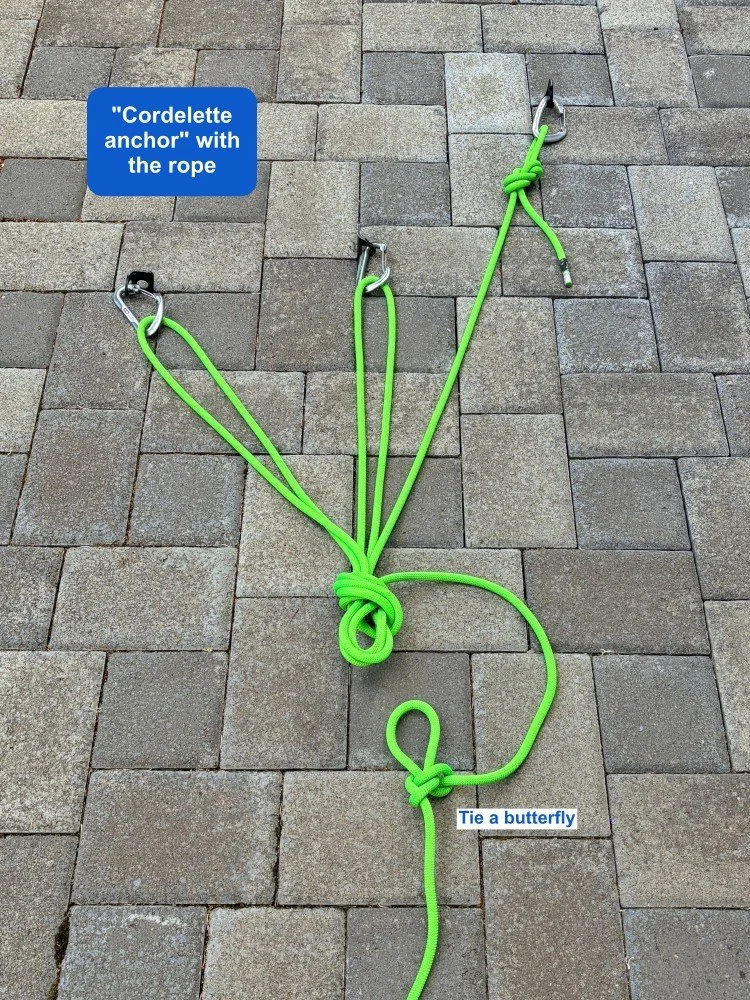
5 - KEY MOVE: tie a butterfly (or other bight knot) in the strand coming out of the knot, with a fair bit of slack between the butterfly and the BHK.
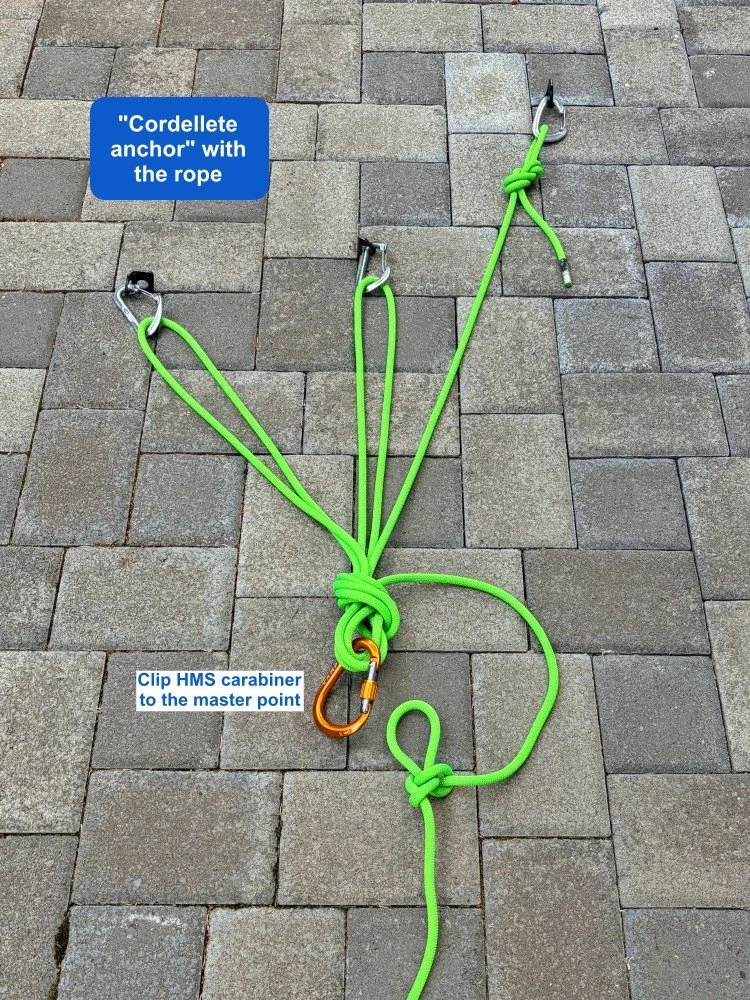
6. Clip a large locking carabiner to the BHK master point.
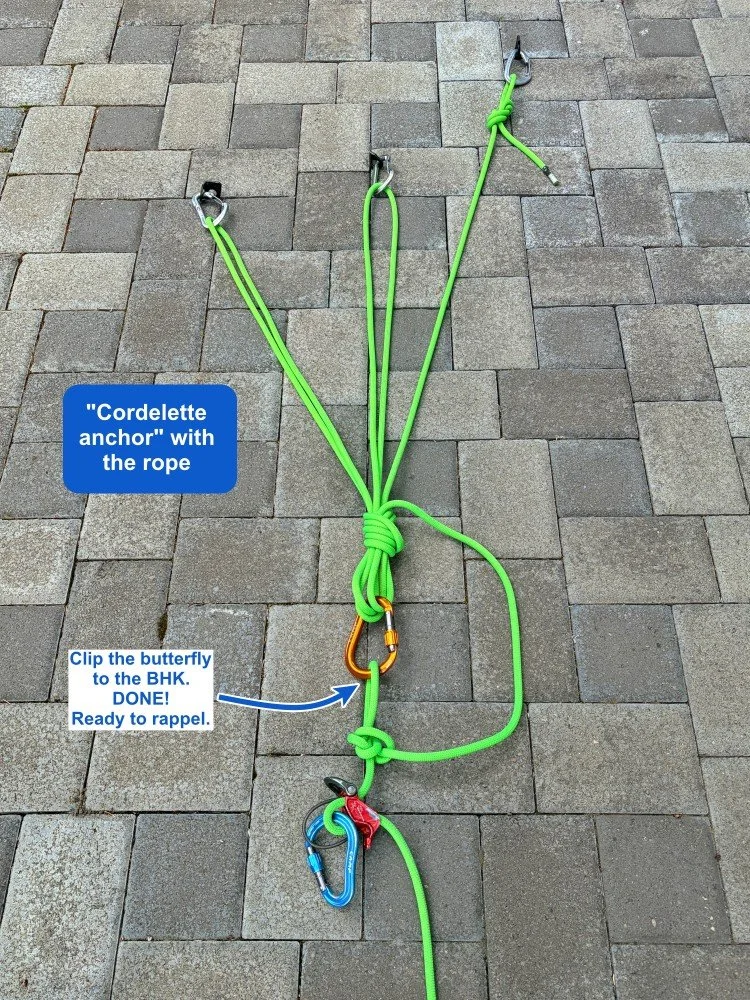
Clip the butterfly to the master point. Give yourself a high five, you're done!
Now you can rappel single strand with the masterpoint properly supporting the load.
What are some other general tips about this method?
How does it work with two anchor points instead of three?
Want to see a more traditional way to fix a rope on two anchors?
