

Premium Members can read the entire article here:
Back in the day, I saw a slideshow by the great Hans Florine of his Yosemite big wall speed climbing exploits.
If memory serves, there were a few slides showing him jumaring amazingly fast up fixed ropes on El Cap, using only a length of 1 inch webbing between the ascenders and his feet, rather than the standard aid ladders.
That’s simple, lightweight, and inexpensive, three things every climber should like!
Here's how you can make some “aid stirrups” for the second to clean the route.
Typically, ascending a rope on a big wall is done with the ladders that you use for leading, but stirrups have several advantages, as I cover in this detailed article.
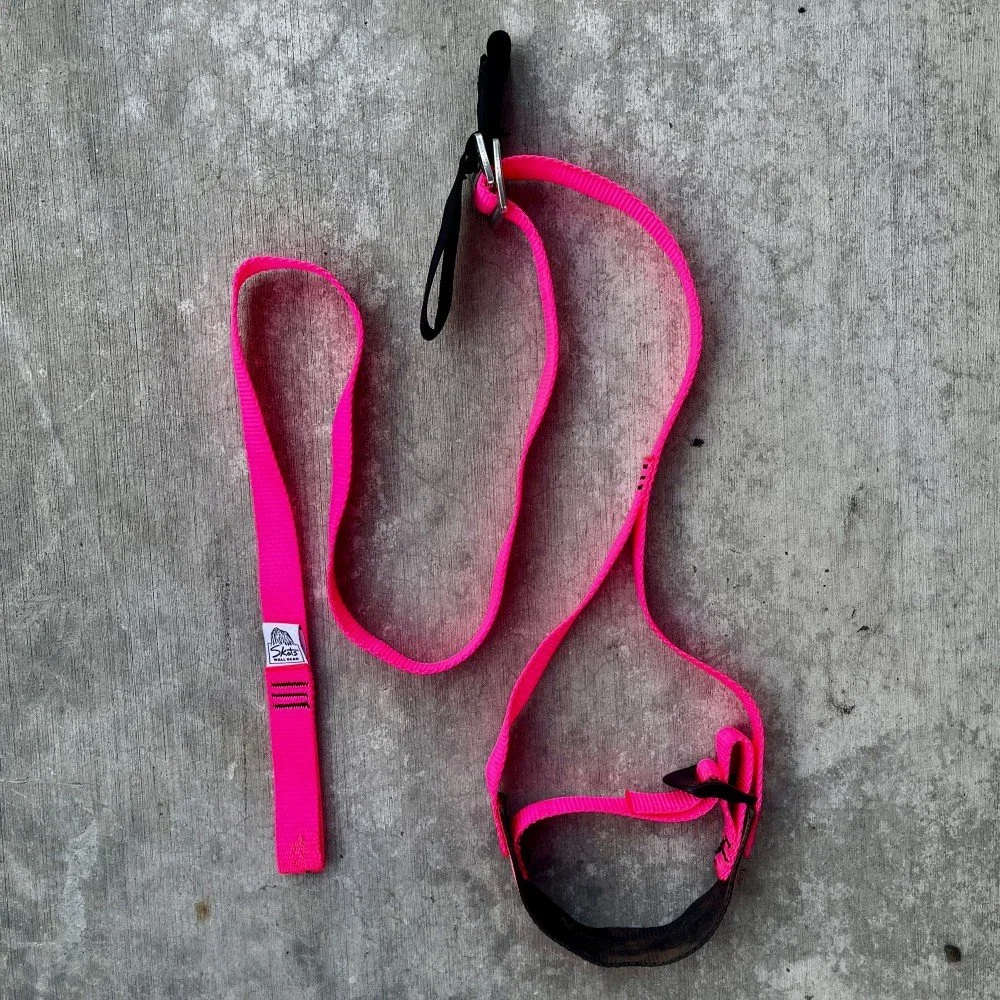
Personally, I’m a fan of these sweet stirrups made by Skot's Wall Gear.
But like I said, if you want a DIY, low cost version to start or experiment with, you can try this setup.
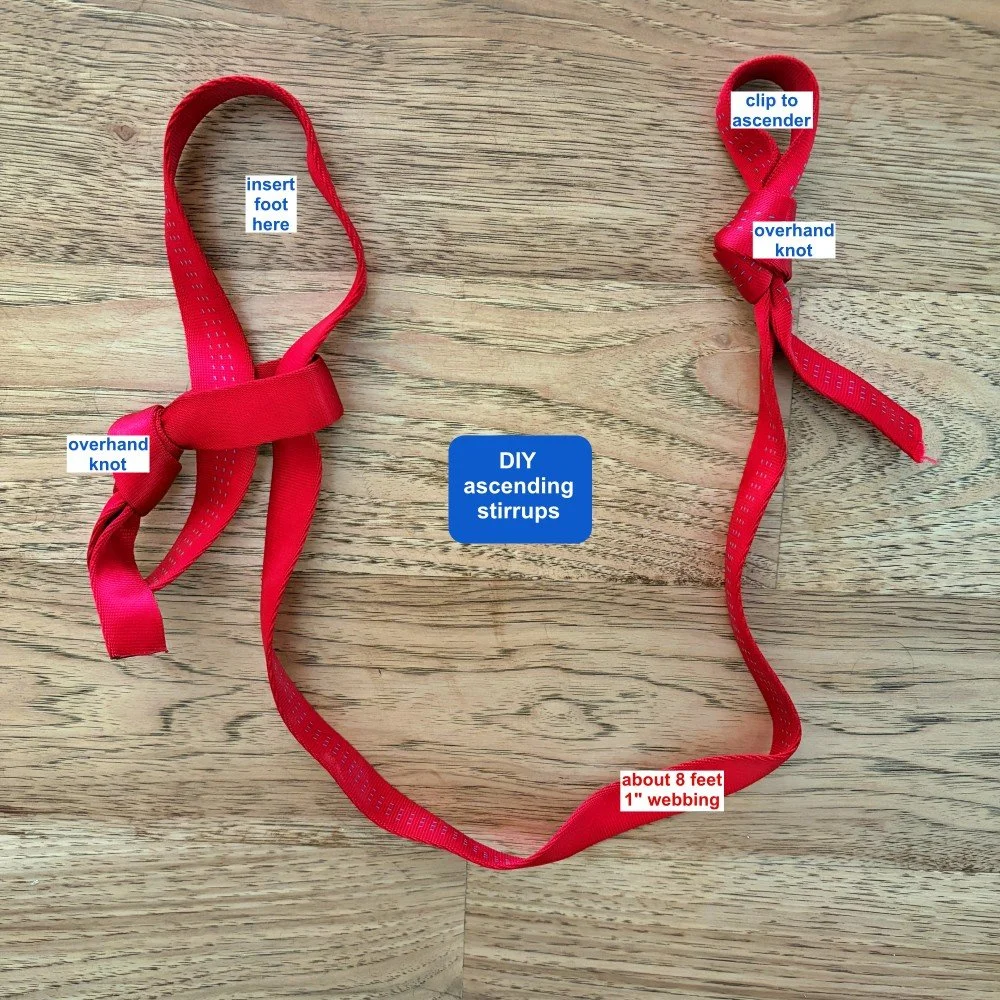
Begin with about 16 feet / 5 meters of 1 inch tubular webbing. (This makes 2 stirrups. If you're tall, buy more webbing, it's cheap.)
Tie a small overhand loop in each end. (In the photo above, my loops are a little too big; you could go slightly smaller.)
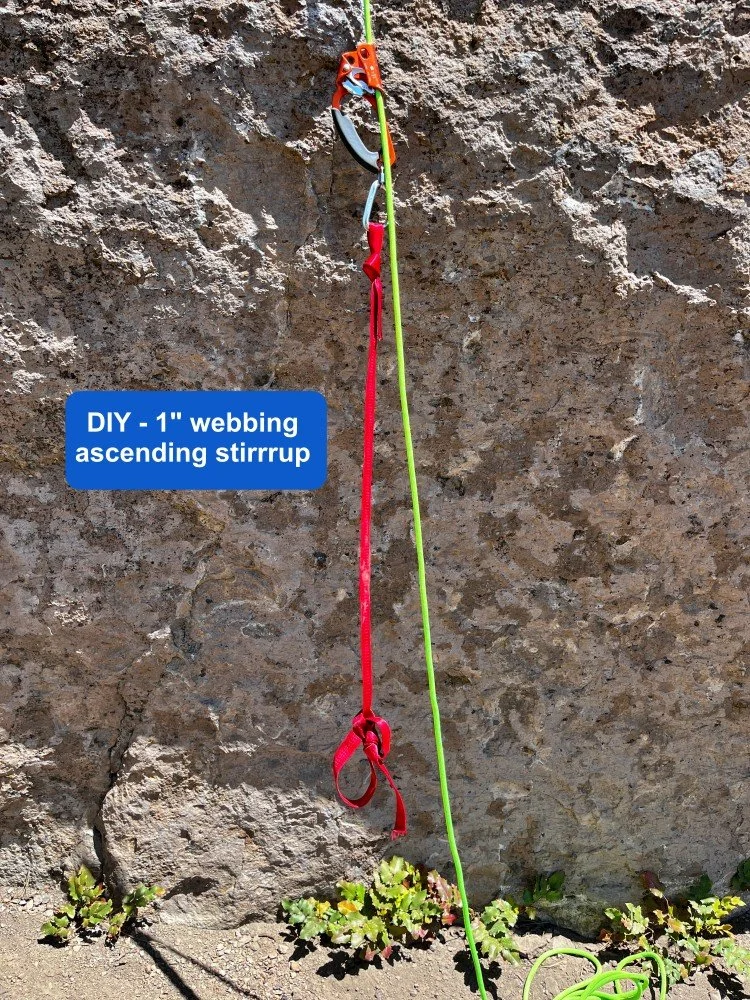
Clip one loop to your ascender with a non-locking carabiner.
Push a bight of webbing through the other overhand loop. This bight becomes an adjustable loop that cinches down down on your foot when you weight it.
Don't cinch these knots down tight yet. Practice on a fixed rope to get the length dialed in. You are almost certain to make some small adjustments to the length, so be patient with this. Have some needle nose pliers on hand if the overhand knots need encouragement to loosen up.
Here’s what it looks like prior to lift off. Handled ascender clipped to rope, non-locking carabiner clipped to ascender, small overhand loop of stirrup clipped to the carabiner.
Required but not shown for clarity:
Tether connecting your harness to the ascender with a locking carabiner
Second ascender, carabiner, stirrup, tether and locker for your other foot
Why do you want to color-code your stirrups?
Why does one need to be longer than the other?
How can you be sure that overhand knot never comes untied?
What's a key technique for efficient rope climbing?
Want to see a video of expert ascending technique from a speed climb on the Nose?
