

Alpine Tips

Double portaledge, or two singles?
Buying a portaledge is $$$! You want to be sure and make the right choice. What are the pros and cons to a single versus a double ledge?
A portaledge is probably the single most expensive item of gear or you'll ever buy for climbing. So, you want to be sure you get the right one for you. Double or single? There are arguments for both approaches, but consider:
Double portaledge benefits
a double weighs a lot less then two singles - maybe not a big deal when you are hauling, but you'll definitely notice it on the hike out. (Metolius Bomb Shelter example: about 11 lbs. for a single compared to about 13 lbs. for a double)
a double is less $$$ than two singles
a double usually is faster to set up then two singles
a double can be easier to set up at a cramped bivy; while two singles often requires some crafty placement, with one of them sometimes in a Less Than Ideal (LTI) position or off of a marginal anchor, or both
Even for the solo climber, a double offers you more room inside to put your gear, lounge on, and hunker down in in the event of a storm.
(Downside in a storm: the doubles can become a larger sail, potentially tossing you around.)
Why might you choose a single portaledge?
If you are fairly small, a single is easier to set up, or you're fairly tall, giving you room to sleep diagonally.
Singles typically get more “square footage of bed space” per person
If you know you have stinky feet or snore a lot or have some, show we say, intestinal issues, having a little distance and privacy and your partner might be a good thing. Ergo, single.
Recommended double portaledge: Metolius Bomb Shelter or John Middendorf's D4 ledge, available at bigwallgear.com

image: www.metoliusclimbing.com
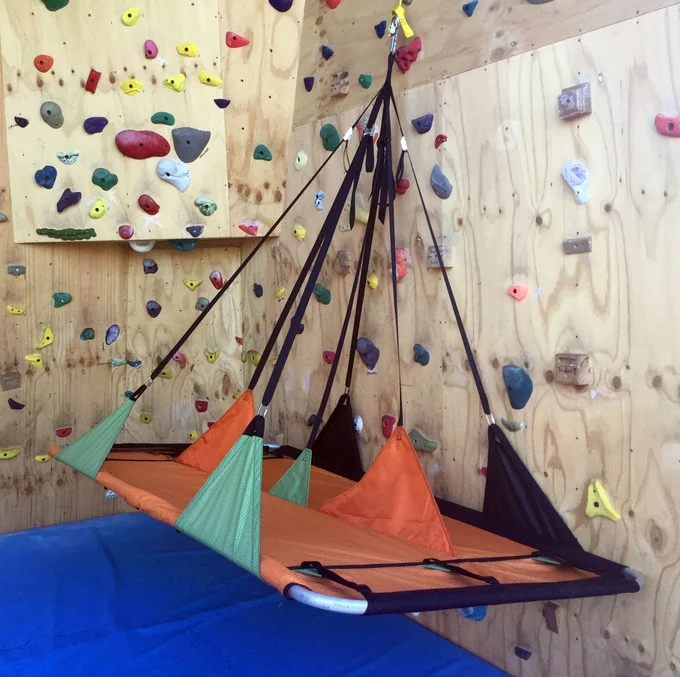
image: https://www.kickstarter.com/projects/1188459201/the-d4-portaledge

Mini carabiners for your big wall bivy
You're gonna need a lot of carabiners when it's time to set up camp. Get the smallest, least expensive, fully rated and ideally color-coded carabiners you can find.

To make an organized camp on a big wall, you’ll need 10-20 spare carabiners to clip things securely onto your ledge.
Avoid scavenging carabiners from your lead rack to clip stuff to your bivy. (Ask me how I know this.) This will definitely slow you down in the morning when you break down your camp and then need to restore the carabiners to the proper spot.
Designate these carabiners to a specific piece of gear at home, not at the base of the route.
Personally, I prefer carabiners be properly rated for actual climbing, and not the El Cheapo little “keychain” carabiners that you might get at the hardware store check out. You might remember that the little pink carabiner is not load rated, but what if your partner doesn't know that? What if it's dark and you accidentally grab the wrong one? Considering your wall rack probably cost more than $3,000, dropping another $50 to get some camping carabiners isn’t that big a deal.
Get all of them the same unique color. That way you know they’re for camping-only, and you don't get them mixed up with your lead rack.
Lots of manufacturers make tiny wiregate carabiners. A good choice is the CAMP Nano.
Lots of cool colors
Fully load rated at 21 kN
low cost, about $7
Hopefully everything you bring on a big wall has its own stuff sack or clip in point. If you need to add clip points onto pretty much anything, some wonderful cord to use is bank line. It's inexpensive, super strong, and holds knots very well.
If you’re not big wall climbing, mini carabiners also work great for hanging a lantern or headlamp from your tent, attaching light items to the outside of your backpack or hanging your food to keep it away from critters.
For the big wall cheapskates . . .
If you do choose to save a few bucks and get a accessory carabiner that's NOT rated for climbing, this accessory carabiner from Avant is a good choice.
Hopefully it’s wildly obvious that this is not something you ever want on your lead climbing rack, even if you grab it in the dark!
Be sure your partner knows it's only for camping and never for climbing.
This is an accessory carabiner from Avant Climbing, available at Hownot2.com.


Big wall haul rope options: length, diameter, static or dynamic?
Big wall climbers have to choose between three variables when choosing a haul rope. Here is one great option.
This tip is from big wall expert Mark Hudon. See more great tips and El Cap route photos at his website, hudonpanos.com
There are lots of different flavors of rope to choose from, but here’s one that should suit just about everybody:
10 mm
60-70 meters
static rope
10 mm minimum because you want burley; haul ropes take a LOT of abuse!
60-70 meters long, because you can use the tail of the rope as a lower out line, and 70 meters is long enough for any pitch. A 60 meter rope should work fine for most routes as well.
Static, because hauling on a dynamic rope is not so fun; you have to pull all of the stretch out of the road before you even start to move your haul bag. However, some big wallers like using a dynamic rope for hauling, reasoning that if the lead rope were to be damaged, you could continue on with the haul rope. Like with most things in climbing, this can come down to subjective preferences, so give each one a try on a practice wall and see which method you like.
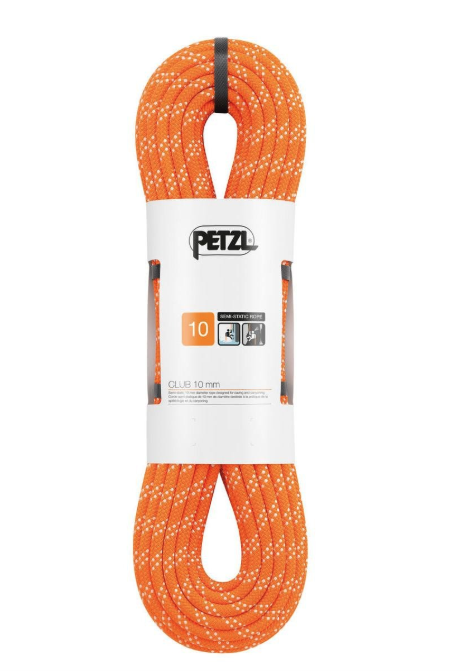
Petzl "club" 70 m static rope. image from gotyourgear.

Big wall - what's the leader’s first tasks at the anchor?
Yes, you just had a hair-raising lead, and all you want to do at the anchors is catch your breath and maybe pop a Valium. Sorry, you've got a few tasks first.
This tip is from big wall expert Mark Hudon. See more great tips and El Cap route photos at his website, hudonpanos.com
Once the leader arrives at the anchor after a big wall lead, they have one main task: Get your second off of the anchor below you as quickly as possible, and THEN get comfortable.
But the second can't do much until the leader does 3 things:
Build a simple strong anchor as quickly as possible
Fix the lead rope for your second
Set up your haul system and pull a few strokes to get the haul bags off the anchor
Do these in order. (If communication is difficult because of wind, a long pitch, or the route going out of sight, when the second sees the haul bags start to move, they automatically know that the lead rope is already fixed for them.)
Only after all this happens can the second start breaking down THEIR anchor and start cleaning.
After these 3 tasks are done, only THEN can the leader take a break!
When you're big wall leading, resist the temptation to kick back, take pictures, relax, etc. right when you get to the anchor; you still have work to do.
Side note: Should the leader pull up slack rope before fixing?
Usually, no.
However, on a shorter pitch, it might help for the leader to pull up the lead rope until it comes tight-ish on the second before fixing. Doing this means the second doesn’t have to carry the entire weight of the rope hanging below them as they’re cleaning, which can save them quite a bit of energy. (Of course, if there are any lower outs or other sneaky maneuvers where the second requires extra rope, be sure to leave them enough slack to make that move.)