Canister stoves for climbing

Premium Members can read the entire article here:
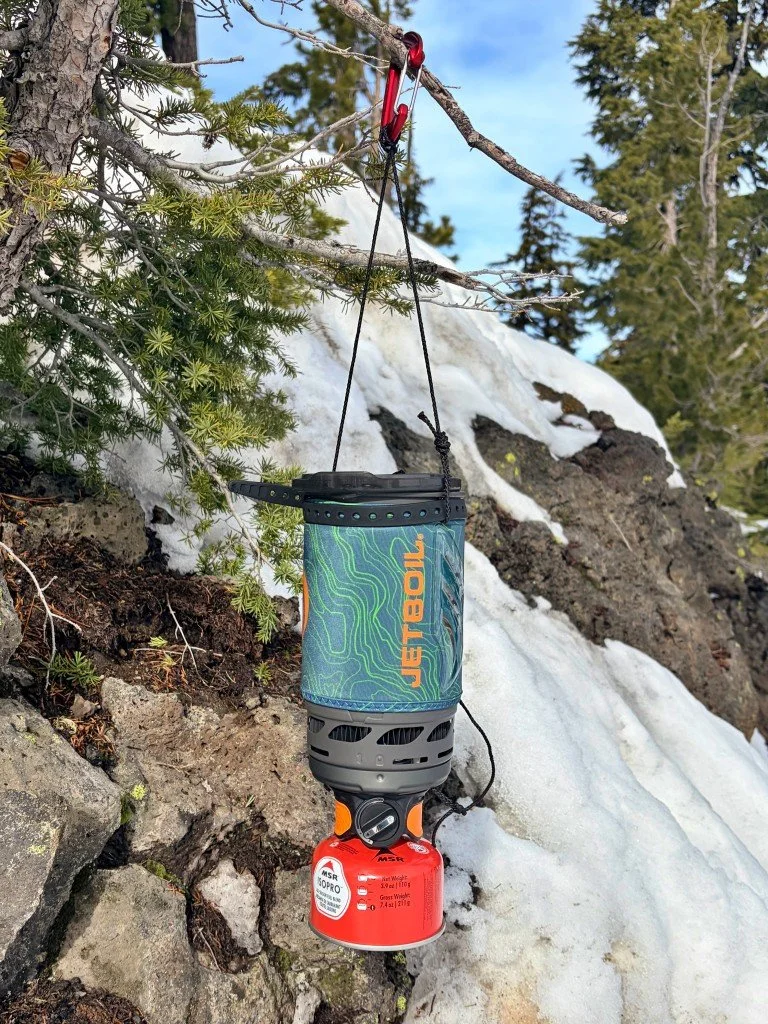
Unless you're on a long and cold expedition like Denali, or to a part of the world where fuel cartridges are hard to find, canister stoves like the Jetboil and MSR Reactor / Windburner are the standard for mountaineering.
Here’s some assorted #CraftyStoveTricks:
General tips (and cautions)
Melting snow with a canister stove
How much fuel is left in the can?
Hanging stove safety tips
A great way to make a hanging stove
Cold weather performance boost
General tips and cautions . . .
Generally, it's best if you only use your stove to boil water. If you’re going to actually cook food in it, be sure it’s completely clean before you use it to melt snow . . . or the following might happen:
from Andy Kirkpatrick:
“A great story to illustrate this point was Colin Haley's solo of Mount Hunter. Being very thirsty and dehydrated, with little gas left, he stuffed his Jetboil stove with snow and just cranked it up and waited for it to boil. Unbeknownst to Colin, the remnants of his last meal in the pan just turned to carbon, creating a foul-tasting and undrinkable slushy, meaning he was not only out of gas and water but also had a mouth full of foul poison.”
Jetboils don't work too well in the wind. MSR Reactor / Windburner stoves do. If you think you'll be using your stove a lot in more exposed areas, the MSR stoves are the way to go. (The Reactor is the snow-melting blast furnace. The Windburner is for lighter duty.)
On that note, be VERY careful with a windscreen and a canister stove. The stove can overheat, melt, maybe even explode. Fortunately that’s never happened to me, but I've heard a few stories! If you do use a windscreen, keep it back away from the stove, at least 4 or 5 inches. Or leave it partially open with the screen side facing the wind so the stove doesn't overheat.
Be VERY careful about using any stove in any enclosed are, like a snow cave or zipped up tent! Carbon monoxide is a silent killer. Always have adequate ventilation, and don't go to sleep while the stove is running.
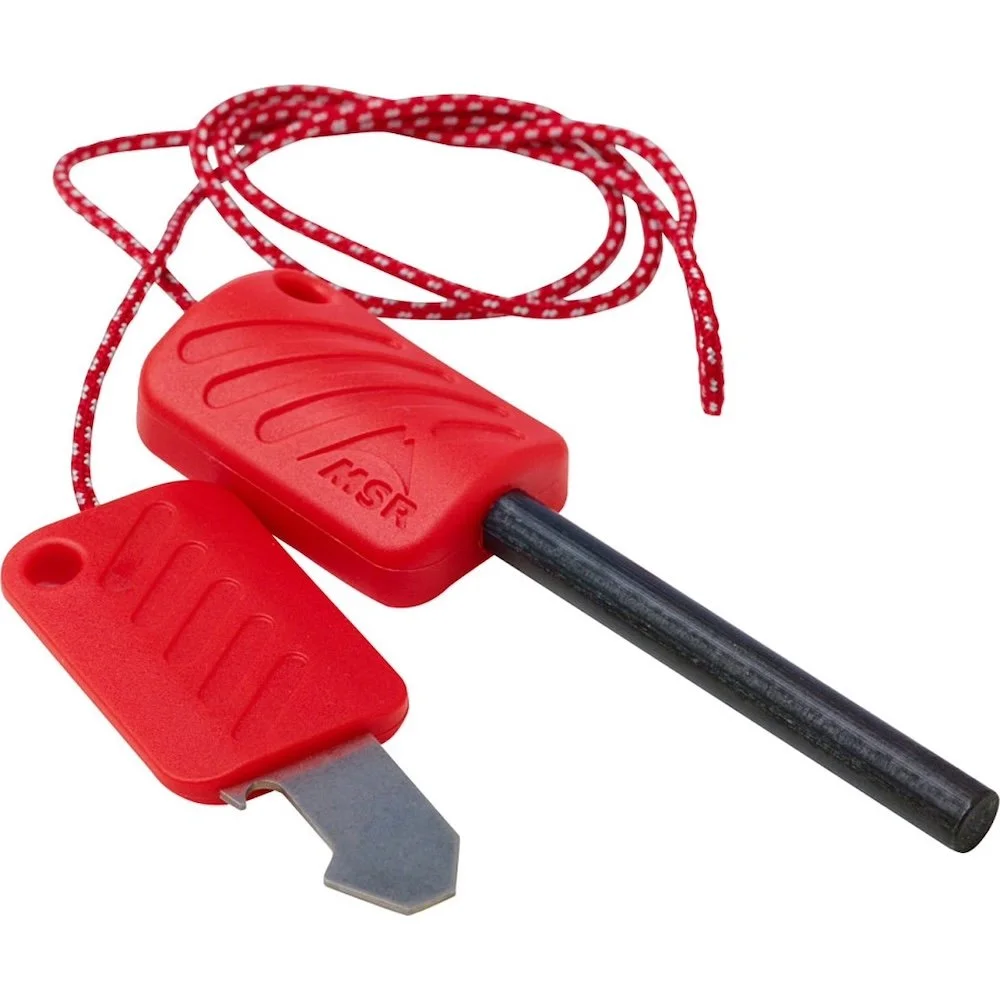
The built-in piezo igniters are handy . . . when they work. Always carry a backup way to light your stove; at least a lighter. Some sort of sparking device works when it's wet, cold, at high altitude, and never runs out of fuel. (Check out the photo below, even MSR sells their own branded fire steel.)
Melting snow with a canister stove
Most important: start with a small amount of actual water in the bottom of the pot, bring it to a near boil, and then introduce snow/ice slowly. Doing this prevents scorching the pot or even damaging your stove.
Go slow. When you’re starting without much water in the pot, keep the heat down low. If you crank it too fast, you'll evaporate, not melt.
Look for snow or ice with higher water density than fluffy surface snow. If you can find actual ice, try to smash it up a bit before you put it into the pot.
Consider melting snow during the warmer part of the day, rather than at night when it's colder.
To get clean snow, collect it far away from a well-used camp. A stuff sack can work well to transport it back to your tent.
It's nice to have a small cup to scoop snow into the pot. Be careful with some plastic cups; they can break in the cold.
Keep the lid on loosely. If you set it tight, excess pressure or steam can cause problems.
Your pot can get top heavy with a lot of water in it. It can be a bit safer to use a hanging system when you're melting snow, see below.
Better yet, look for any source of melt water. If there's a rock outcrop nearby with snow above it, and you have moderate temperatures, you can probably find some sort of trickle running down the rock. Use that first.
Here's one way to “harvest” water trickles, from IFMGA Guide Ian Nicholson. @washingtonalpineguide
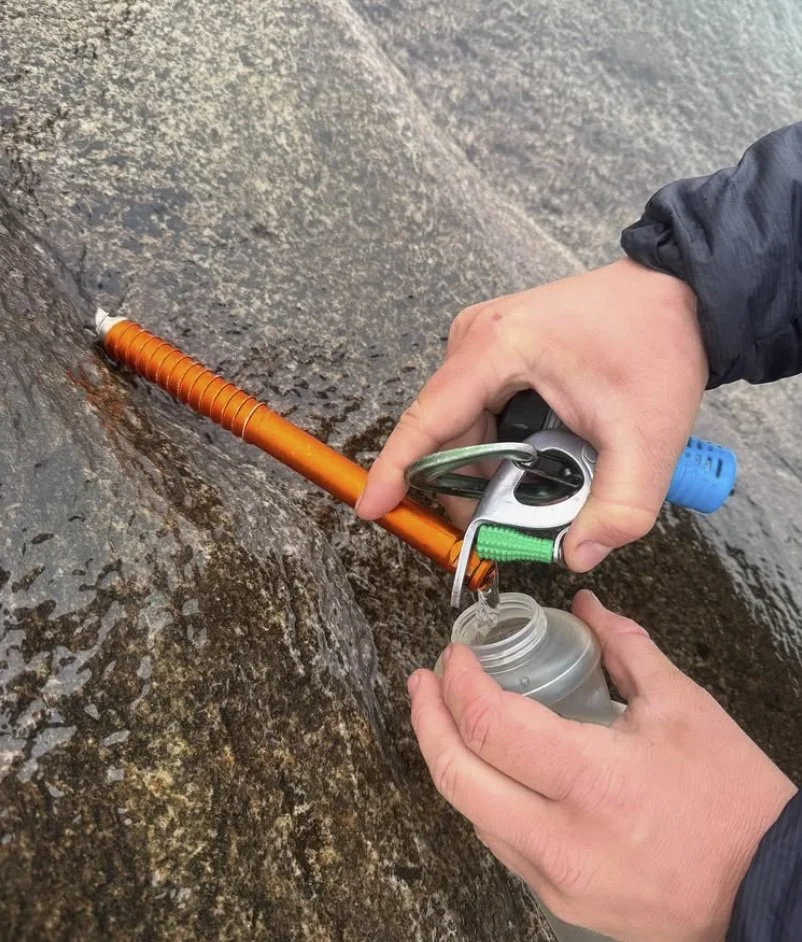
image: @washingtonalpineguide https://www.instagram.com/p/DNlPznJOW_M/
How much fuel is left in the can?
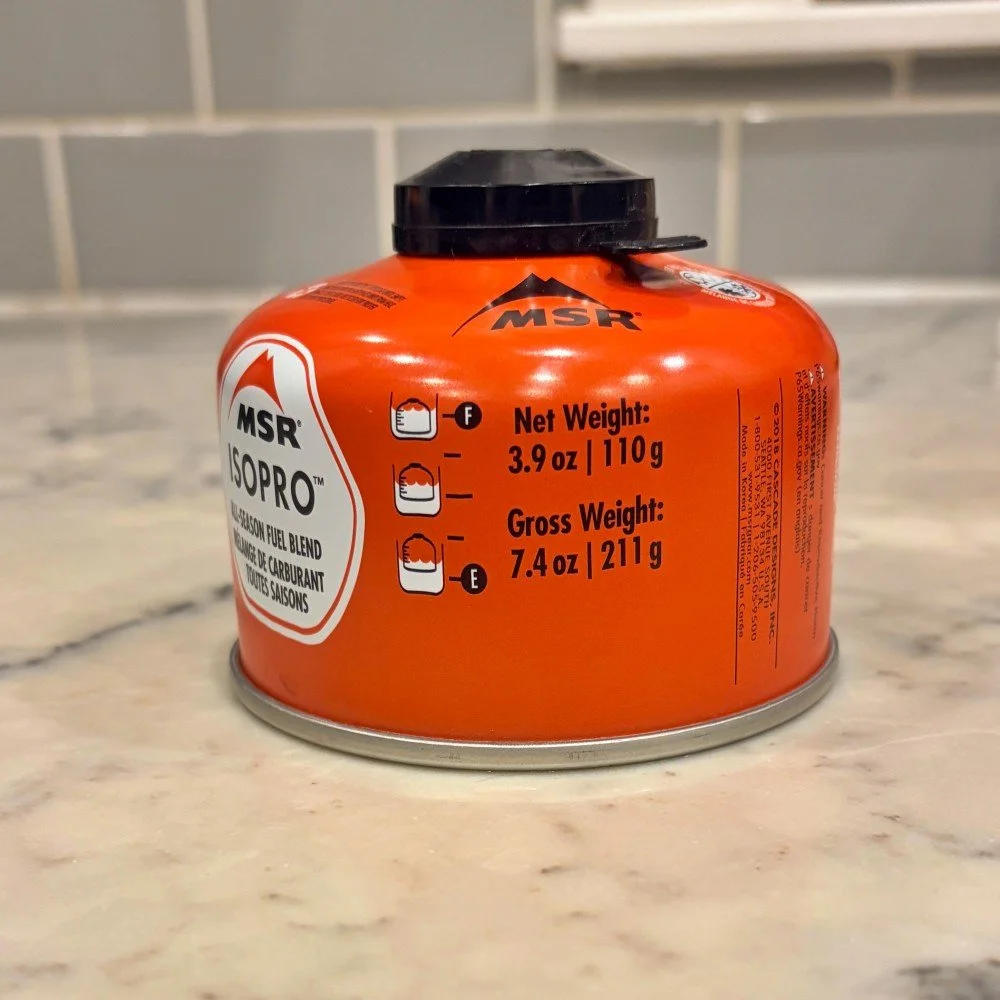
Probably the single biggest annoyance with canister stoves is never quite knowing how much gas is left. Here is a clever trick that's straight from the MSR stove product manager.
“The canisters will float upright when placed in water, and the water line will vary depending on how much fuel is remaining in the canister. If you float a full canister and then float an empty canister, you can measure those water lines and mark them on your new canisters, then re-measure after the canister has been partially used. If the water line is halfway between the ‘full’ water line and the ’empty’ water line, the canister is half full.” Source
MSR cannisters conveniently have “Full” and “Empty” lines on the outside of their can, thanks MSR!
If you want to do a little math and have a scale handy, you can weigh the canister, and subtract the weight from the gross weight of 211 grams. That should give you an estimate of how much fuel remains.,
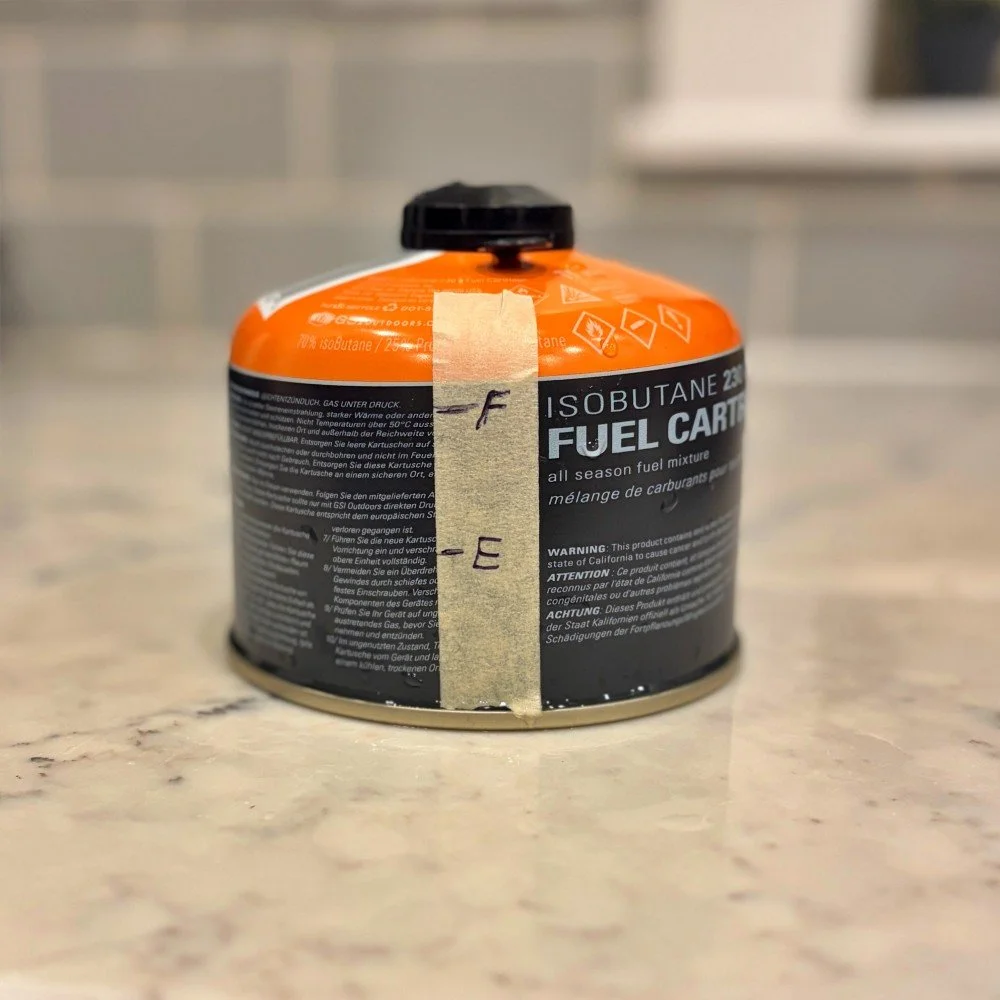
For other fuel canisters that don't have full and empty marked, you can put some tape on the can.
For cans I've tested, empty is about halfway down the side.
Want to learn some safety tips for using a hanging stove on a portaledge?
How about a great way to make a DIY hanging stove?
What's a safe and effective way to boost your stove output when it's cold?
